Introduction:
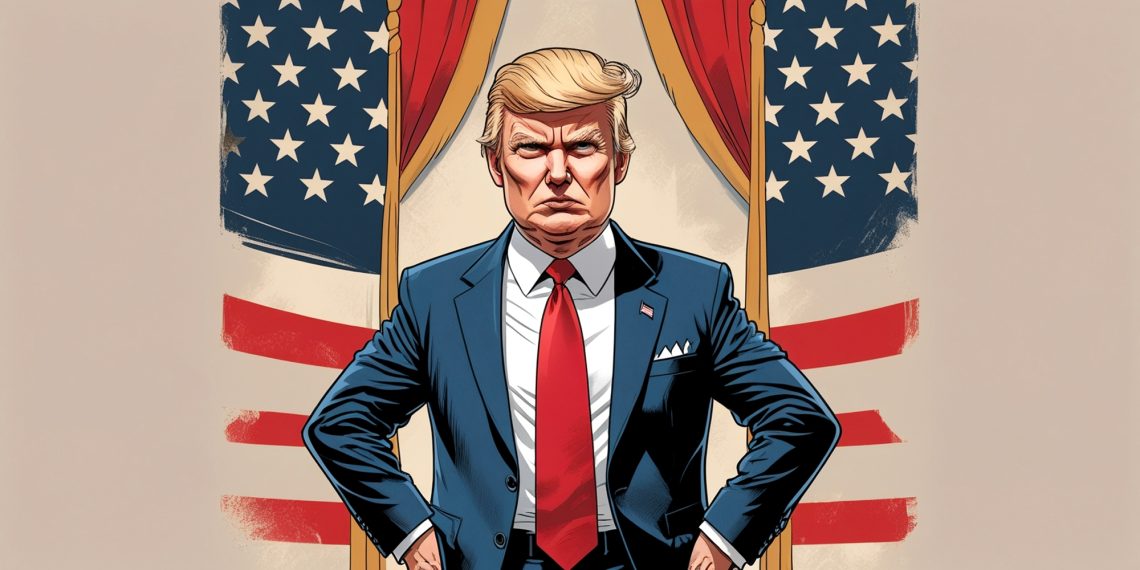
The populist ideology constitutes the very core of the overall framework of presidential diplomacy and more specifically delineates the practice of U.S. President Donald Trump in the contentious field of foreign policy. Populism stands as the essential and significant link of Donald Trump’s multifaceted diplomatic negotiation processes. Moreover, populism, in its essence, refers to an authoritarian and exclusionary form of political governance where political and social unrest necessitates disproportionate state intervention to effectively establish some semblance of social coherence based on feelings of profound polarization and widespread alienation among the populace. This disproportionate intervention in domestic national affairs is also reflected strongly in American foreign policy as dictated by the Trump administration. In Trump’s unique diplomatic strategy, the slogan “make America great again” is realized through a method of strategic unilateralism which intentionally does not abide by the principles of hegemonic stability commonly accepted in international relations. The phrase “America first” is, in practical terms, translated as “America alone,” which ultimately creates a model of diplomatic bullying and assertive behavior on the global stage. Donald Trump’s approach to diplomacy represents a fundamentally new direction for the United States because it constitutes a complex mixture of populist governance principles and the distinctive personal characteristics of the president himself. This intertwining of political ideology and individual personality ultimately shapes the nature of U.S. interactions with the rest of the world.
Scholars are currently engaged in an insightful and ongoing debate regarding the appropriate framework for analyzing the complex foreign economic policies that characterized the Trump administration. Some researchers and analysts strongly argue that the President’s notable shift toward a more erratic and unilateral approach to foreign economic relations represents a normal swing of the pendulum, reflecting the consequences of a far too rapid globalization process that has been occurring over the last few decades. In their view, Trump distinctly epitomizes the re-emergence of a form of diplomatic populism that had long been lying dormant, overshadowed by an American establishment that gradually, yet eventually, became carried away by the self-congratulatory euphoria of post-Cold War globalization. This perspective leads to an interpretation of Trump’s tariff tantrums as measured responses to a profound loss of control over a complex economic process—one that has unfortunately left large swathes of middle-class America feeling neglected and behind, grappling with the economic challenges and dislocations resulting from an increasingly interconnected global economy.
Methodology:
In this article, we question this interpretation. At first glance, the tactics employed by the Trump administration appear to provide substantial evidence in favor of those scholars who have long cautioned against the many dangers associated with state-based neoliberalism. This system has often been criticized and discredited for its inherent pro-business bias, which is frequently accompanied by a significant loss of social sensitivity and concern for the wider public welfare. However, by taking a cursory peek under the surface, our paper provides a comprehensive methodology that sharpens the analytical lens through which we may view and understand Trump’s trade policy. Rather than adhering to a verbose and erudite postwar ideal of unchallenged American hegemony, our model of populist diplomatic power adopts a more form-based approach to analysis and interpretation. In our vision, the Trump presidency should not be viewed as merely a forerunner; rather, it represents the first putative Christian soldier in a much larger global shift toward a reality characterized by one world with many systems. In this landscape, diplomacy will increasingly resemble a game involving incredibly unequal and peerless contenders. Yet, far from leading by setting a positive example for others to follow, the new American populist diplomacy unfortunately resorts to old-style bullying tactics and coercive strategies that undermine the potential for productive international engagement.
Contextual Background:
The 2016 US election campaign not only copied but also notably magnified various features that had previously characterized its populist predecessors in numerous countries across Latin America, thus adopting language that seemed responsible and rhetoric that appeared innocent. In echoing sentiments that have found a distinct place in political discourse in the past, especially concerning the realm of administration, the messages articulated by both Hillary and Trump were limited and somewhat superficial; they consisted of mere scraps of information. However, these messages had a clear and significant bearing on broader emotions that many voters held. Their discourses made potent appeals to historic traumas, effectively reviewing and tapping into their audience’s pigeonholed identities and deep-seated fears, thus fostering a connection that was undeniably impactful and resonated with many. Each candidate skillfully navigated the complexities of public sentiment, using carefully crafted phrases and targeted themes to not only connect with their base but to also ignite a fervor that spread throughout the electorate, leading to pronounced engagement and responses from voters.
The bitter feelings harbored by US citizens are not altogether unfounded. Indeed, it is evident that the world economic hegemony, which is at present beginning to be questioned and challenged, is primarily situated in the economic field. Considering this backdrop, the prevailing discourse among nationalists fervently aims not to lose any semblance of national strength that remains. Accordingly, there exists a widespread and palpable feeling among the populace that the country is being overcome solely in the territory of the material, while critical elements such as collective intelligence, national genius, and greatness are being unceremoniously left aside and almost ignored. The deep-seated resentment felt by these and other identities targeted by Trump and his messaging is fundamentally based on this principle of national identity, which many feel is under siege. The former great country, once a beacon of power and prosperity, is perceived today as diminished, not so much due to external forces, but rather because of its struggle against its own demons, namely those who have betrayed its ideals, values, and the very essence of what it means to be American.
The Trump Populism:
The Trump administration is widely recognized and often criticized for its overt brand of populism, which has become a defining characteristic of its political approach. Trump frequently describes himself in grandiloquent terms as a “self-financed,” “self-made” individual, positioning himself as someone who was “hired to take on the people who didn’t do a good job,” meaning those who have historically held power within political and governmental structures. He consistently makes accusations against the people who surround him, charging them with various forms of corruption, a profound waste of precious resources, and significant loss of control over the entire US governance system. With his rhetoric, he aims to convey a powerful image of what he describes as a “relationship of the people with the president,” fostering the idea that this relationship is one in which the people have the privileged ability to actively participate. Trump emphasizes the importance of the necessity for citizens to take on the role of checking and balancing “the executive, legislature, and judiciary,” reinforcing the view that their voices, their desires, and their active participation in the political process are not only necessary but fundamentally essential for the effective practice of self-governance in the United States. Through his populist rhetoric, he expresses a desire to return political power to the people, proclaiming that they “in a democratic system of checks and balances are and should be sovereign.” His discourse is framed as “solely for the people,” portraying it as “a discourse for the ‘ordinary’ or ‘common’ people,” referring to those who embody beliefs in hard work, family values, God, country, and the concept of freedom itself. This portrayal is integral to his populist appeal, aiming to establish a profound connection with his audience and resonate with their everyday experiences and aspirations.
Nonetheless, Trump does not tire of ridiculing opposing viewpoints, systematically creating social schisms, and persistently discrediting the very essence of democracy. He continues to minimize the severity of the COVID-19 pandemic, displaying a pattern of behavior where he shrinks from responsibility whenever mass protests break out. This not only showcases his detachment but also highlights the most narcissistic behaviors of his political career. The pressing need to investigate the Congressional elections’ declared results, which were viewed as fraudulent by Trump’s team, with the invocation of Article 25 of the US Constitution, demonstrated a farcical political scenario to the world. It ultimately translated into a typical political campaign driven by baseless claims of election irregularities. If the election had been treated as a plebiscite for the maintenance of a president or a regime, it would not have seemed out of place in the context of a revolutionary uprising; it did not respect the value of the people’s vote, nor did it honor democracy or the rule of law, moving ever further away from the ideals that are supposed to characterize the United States of America. The unsettling question remains, “Does Donald Trump really represent the ideological foundation of a profound populism that many believe needs to be recognized and understood for what it truly is, and should it be regarded as an aberration of republican ideology in contemporary discourse?”
Key Policies and Rhetoric:
Trump’s master narrative is a crude, but effective populist message aimed at wielding power to advance “the people.” This master narrative incorporates several important keys that help us to accurately map the paleo populist moments in the sphere of international relations. First and foremost, Trump has made bold promises to reverse the long-term economic decline that has heavily impacted American manufacturing and blue-collar jobs, which have historically been the backbone of the nation’s workforce. Second, Trump’s rhetoric is notably other-directed, positioning business-as-usual Washington alongside corporate power and trade partners as entities that are taking advantage of the United States. His language is explicit and confrontational, often painting a stark picture of who the adversaries are and what they represent. It purports to offer a narrative of an ongoing struggle for the very soul of the nation while simultaneously effectively mimicking elements of both anti-politics and anti-Washington narratives that have gained traction among disillusioned voters. The agenda he propagates is not genuinely “America First” in any multilateral sense. This stands in stark contrast to the approach that has been historically championed by conservative foreign policy strategists over the years. While he has regularly associated trade partnerships with what he claims to be the US national interest, what Trump truly craves is the freedom to play the bilateral game. This kind of game involves the White House and the President himself branding bilateral and multilateral negotiations as inherently dysfunctional and ineffective. In Trump’s version of reality, US power enables the country to turn the tables on medium-sized and large countries, favoring the bilateral approach to international relations. This zero-sum aid-to-bilateral negotiating pattern serves to paint third parties as less acceptable players within the complex dynamics of great power politics, thereby solidifying his narrative in the minds of his supporters. Ultimately, this narrative is designed to resonate with those who feel left behind and propels a focus on a very specific and confrontational approach to how America engages with the rest of the world.
The provision and availability of public goods also significantly inhibits countries where most American troops are stationed. This situation allows these nations to vividly recall how they often pay unfair prices for their own security needs, thereby putting NATO’s collective security at risk. Discussing these monetary aspects enables him to create multiple embarrassments that can be quite damaging. Besides these essential security arrangements, there is also a crucial focus on trade. In recent years, following the election of Trump, the extensive and aggressive use of tariffs, along with the trade policy pursued by Washington, inaugurated the onset of a very different trade policy era that diverged sharply from previous approaches. The cautious containment strategies made by earlier administrations have radicalized a key political fault line in international relations, heightening existing tensions and opening a potential rift that goes to the very root of America’s dominance—a phenomenon often referenced in the context of the Thucydides Trap. Trump’s tariff actions initiated a wide-ranging trade war that was perceived as being against all trading partners without exception. The Trump administration resurrected and implemented measures from the Cold War era that ultimately came to undermine established multilateral trade rules that had previously been upheld. The notion of independent national security is still frequently invoked in order to justify countermeasures such as tariffs and retaliatory actions against perceived threats. America First generals often find themselves offended and frustrated when someone attempts to limit the latitude they have concerning sensitive goods and advanced technologies. Multilateralism and third-party guarantees are also consistently championed by Washington, particularly in the ASEAN region. Nevertheless, these guarantees appear to be conferred in inverse proportion to the closeness of the United States to its security partners and investments, especially when contrasted with its other, more ambitious, and sly allies and frenemies in the area. As a result of these dynamics, America’s traditional allies now find themselves at the receiving end of this geopolitical strategy, suffering through what can be described as a Thucydides gestalt moment, where old alliances are tested in the face of new economic realities and shifting power balances.
Concept and Examples:
Certainly, it is not the primary purpose of this article to take up the case of the Ukrainian president Volodymyr Oleksandrovytch Zelensky, which is still dominating the news and media hypes, but to ask a conceptual question: why does Trump persist with his continued use of “diplomatic bullying,” especially in the face of both significant domestic criticism and the negative responses coming from various foreign actors? The various costs associated with diplomatic bullying seem to weigh heavily on Trump’s stubborn continuation of tactics that have already demonstrated their potential to produce substantial and detrimental consequences. Despite this, the president has remained resolutely consistent in confronting other countries with a stark, aggressive, and often confrontational form of bargaining that is characterized by a high level of bluster and bravado. The reality is that his actions have been widely perceived and interpreted negatively as bullying, and his approach has faced considerable criticism on that basis, both domestically within the United States and from his foreign interlocutors around the world. This situation presents a puzzling contradiction. The incentives to pivot toward a more cooperative approach seem overwhelmingly compelling, pointing toward the adoption of tactics and strategies that are in direct opposition to differentiated identity construction. Instead, what is evident is a glaring shift away from these possibilities, leading toward a fulfillment by the United States of its expected role in the trading relationship, which would ideally promote collaboration and mutual benefit rather than antagonism.
Certainly, the broad consensus that has emerged around the argument that Trump’s approach is largely driven by electoral considerations could easily be viewed as a sufficient explanation for such seemingly perverse behavior. However, it is also important to acknowledge that the constructivist critique of dyadic approaches when it comes to signaling the interests of a given polity may have abrogated the exercise of power in ways that are more thorough than what is strictly plausible or reasonable. A constructivist perspective would be particularly problematic when the power relationships between various countries become most intense and pronounced. The norms of diplomatic interaction, much like the norms governing other forms of speech, communication, and gesture, have by and large been established and dictated by those parties with vested interests in bargaining outcomes. However, these norms, which initially served specific bilateral functions, have taken on a life of their own and have evolved significantly beyond their original purposes. As a consequence, other actors within the international sphere have increasingly found themselves compelled to navigate around these entrenched norms, rendering them highly influential over time. It appears unlikely that one could simply dismiss these perspectives outright as irrelevant; indeed, arguments positing that “structural power” underpins the development and maintenance of such norms warrant serious consideration. In short, the ways in which power is utilized certainly matter in these contexts, and to this extent, it can be argued that constructivists have got their analyses somewhat reversed. Diplomatic interactions and the intricate dynamics of international negotiation continue to represent arenas where states operate not solely in response to the audience of their interlocutors but also with awareness of stakeholders that range from domestic actors to those operating on a transnational scale.
Case Studies:
A second extension of this model delves deeper into the intriguing concept that policy reversals by victim countries can lead to unexpected disappointments for the bullying country involved. This dynamic is particularly noteworthy, as many presidents often adjust their policies specifically to maintain support from public opinion and to explore avenues for diverting attention away from potential foreign policy setbacks that may emerge. The model outlines several forms that this phenomenon can take. First and foremost, there are instances where bullies do not exert complete control over policies, allowing victim countries to confidently alienate the bully when reversing a policy becomes too costly—a situation where maintaining the existing policy may incentivize the bully to adopt a softer stance in their approach. Additionally, it is essential to note that policy reversals frequently indicate deeper, underlying societal shifts occurring within the victim country. This motivates such victims to persist with certain policies, thus signaling that any reversals will indeed incur costs. This strategic maneuvering also permits a more hopeful perspective on international relations, particularly when society appears to be on the cusp of a significant transformation. Transitioning from theoretical frameworks to empirical observations, the intricate nature of victim-bully interactions reveals a multitude of exchanges and behaviors that have not been thoroughly examined within the existing literature. Notably, certain victim countries have consistently stood their ground in the face of formidable threats, even in instances where significant asymmetries in military or economic capabilities exist. Especially in the context of recent years, a degree of relative calm characterized the international stage during both the campaign and inaugural periods, during which attention was predominantly focused on unraveling the intricacies of the threats directed at a diverse array of countries, rather than on matters related to security policy. In this current section, we aim to thoroughly document various bullying endeavors while probing into how the responses and policy reversals may not only fail to meet but also underperform the minimal assumptions posited in the existing model, opening the floor for further inquiry and discussion.
North Korea:
In September of the year 2017, during his first ever speech at the prestigious United Nations assembly, President Trump made a bold and alarming proclamation that he would completely and destroy North Korea if the United States was compelled to defend itself or protect its allies in any way. He did not hold back in his rhetoric, as he mockingly referred to Kim Jong-un as Rocket Man, describing him as being on a perilous suicide mission. Furthermore, this was not the first time Trump had made provocative statements regarding North Korea’s aggressive missile tests. Just ten months earlier, while actively campaigning for the presidency, he had tweeted: “The next time the North Koreans test a missile, let it splash down harmlessly into the ocean.” This statement highlighted his position that the United States and its allies should not engage in a reckless game of escalating tensions, which had only served to raise the stakes of propaganda on both sides. In contrast, North Korea’s leader, Kim Jong-un, is deeply invested in maintaining and showcasing a strong and resilient North Korea; a weaker North Korea is not in his plans. Trump’s unconventional Twitter-based model of diplomacy continued to have an impact even after the historic meeting that took place between the President of the United States and the North Korean leader, Kim Jong-un, on June 12, 2018, in the city-state of Singapore. During this significant encounter, they signed a document outlining security guarantees for North Korea along with a mutual commitment towards the complete denuclearization of the Korean peninsula, a process that many observers viewed with skepticism given the complicated history between the two nations.
It started just before the crucial meeting, with sharp insults and pointed observations directed at Kim Jong-un: Kim Jong-un arrived in the bustling city of Singapore on a Sunday, creating a very interesting and quite unusual situation that had the world’s attention. However, the meeting concluded with a singular president, who was determined to be unpredictably strategic in the future with the North Korean leader: initiating a new, complex relationship with North Korea, through the formal signing of a significant document focused on security guarantees and the mutual commitment to denuclearization of the Korean peninsula. On the dates of February 27-28, 2019, President Trump and Kim Jong-un traveled to Vietnam to resume important denuclearization talks but surprisingly left without reaching any substantial agreement. This may be a case where both leaders are winners after their groundbreaking first meeting in 2018 and do not want to exhibit any hint of weakness in subsequent meetings, thus challenging each other in a struggle for dominance on all fronts, creating an environment charged with tension and uncertainty.
Impact of Trump’s Diplomatic Bullying:
The profound impact of imposing tariffs on economic partners, along with the corresponding effects on importing companies, has resulted in a significant negative influence on the overall world trade order and GDP growth. In the ongoing trade war between China and the United States, China’s economic growth has dramatically plummeted, which has, in turn, adversely affected global economic growth as well. Despite the occurrence of multiple negotiation meetings aimed at resolving these issues between the two economic powerhouses, the negotiations have regrettably reached a deadlock and have constantly been postponed or delayed time after time. The adoption of such a protracted trade war approach is notably unprecedented in the landscape of international economic relations. Furthermore, as China continues to extend its political influence globally, one must question why it would consider entering into a trade agreement that contains sufficient loopholes, effectively allowing it to act in a manner that serves its interests best, thus enabling it to further push its political influence and governmental goals to their absolute extremes? After enduring a year rife with trade friction, the latest round of trade discussions has yielded some tangible progress as a trade agreement was signed, but one may wonder how much this agreement truly matters in the grand scheme of things. What long-term effects will the United States continue to exert on China within the realm of economic interactions and relationships?
Diplomatic Impact: The ongoing trade war with the Chinese counterpart serves as a significant bargaining chip in the complex web of trade negotiations. These negotiations, specifically across the strait, focus primarily on critical issues such as the protection of property rights, achieving a favorable trade balance, addressing the problem of forced technology transfers, and the essential transformation of China’s management system to align with international norms. Additionally, the excessive state subsidies provided to Chinese enterprises have become prominent points of contention. All these factors have ultimately evolved to become subordinate conditions for a comprehensive trade agreement between the two nations. On a diplomatic level, various countries have shown their support for proposed legislative bills and emerging structural bipartisan agreements, which play a vital role in shaping the future of trade relations. The underlying purpose behind these efforts is to generate enthusiasm among companies for transitioning their investments from China to alternative overseas destinations. Nevertheless, there has been considerable pushback against the relocation of American companies, indicating there will likely be intensified efforts aimed at enticing American enterprises to return to the United States. Strategies may include implementing favorable tax codifications that incentivize repatriation. The broader diplomatic aim of containing China is intricately linked to the objective of preserving future American hegemony in a rapidly changing global landscape. In the context of rising populism, the liberal ideals that China advocates are increasingly being misunderstood, leading to a situation where democracy is mischaracterized, akin to turning the devil into prey. Such bravado and assertiveness have yielded tangible benefits in various critical economic sectors, including telecommunications, machinery, petroleum, and computers. However, this strategic pursuit often overshadows the overarching goal of advancing the general welfare of the United States and its North American partners in trade and economic matters.
Global Perception and Alliances:
Calculating the survival time for the international order that was constructed following the end of World War II poses an extremely challenging and complex task, given the inherent uncertainty and difficulty associated with accurately predicting the future. However, by actively seeking to build organizations that prioritize sole country interests and simultaneously weakening the longstanding political alliances that have historically connected Western countries, along with fostering and creating tensions with other political entities across the globe, Trump takes a fundamentally opposite approach to the one that was followed by the generation of administrators who originally built this post-war order. The strength and resilience of these alliances were established because of shared interests, mutual benefits, and the moral legitimacy that was enshrined in the American dominant power and influence after World War II came to an end. However, in light of the ongoing evolution of the distribution of global capabilities, along with the implications of Trump’s various policies, it raises the important and legitimate question of whether it is indeed possible for Washington to effectively lead and guide a new international order that is suited for the complexities of the 21st century, or whether it will face significant challenges and hurdles in doing so.
When former President Bush Jr. initially called upon the countries that were considered Friends of the United States to come together and form the coalition during the early stages of the attack against Iraq, he faced significant criticism. Detractors accused him of unnecessarily dividing the world into distinct and opposing camps. Following this line of thought, the attention focused on the global stage began to raise serious questions regarding the future of the world order as we know it. In recent years, Trump’s approach to international relations has only served to intensify this troubling trend. His bullying tactics and aggressive rhetoric have made it evident that the United States is taking a harder stance on multiple fronts. In relation to China, Trump’s administration has not only attacked Canadian trade, but has also placed trade practices under strict scrutiny, signaling the potential for a troubling breakdown of multilateralism that has been long established. This concerned position taken by the leader of the United States has understandably alarmed a key ally in Asia, Japan, which has been experiencing economic growth at a slower rate than what was anticipated.
Responses to Diplomatic Bullying:
The annexation of Crimea represented a significant and direct challenge to the entire Euro-Atlantic community as well as to the established international order that had prevailed since the conclusion of the Second World War. In response to this aggressive and illegal act, Europe, along with the United States and Canada, took decisive actions by imposing a series of coercive unilateral diplomatic and economic sanctions targeted specifically at Russia, with the primary aim of putting an end to its aggressive military and political maneuvers. This response seemed to reflect a common Western strategy aimed at countering Russian expansionism. However, in a surprising twist, President Trump’s initial reaction was to downplay the strong US condemnation of Russia’s actions regarding Crimea, indicating a willingness to entertain the notion of accepting Crimea as part of Russian territory. Over time, official sanctions against Russia were extended and even became more stringent under Trump’s administration. Nonetheless, it became apparent that the US was not demonstrating real and unwavering support for Ukraine. This stance marked a notable departure from the previous administration, which had consistently provided solid support for the sovereignty and territorial integrity of Ukraine. Instead, the Trump administration appeared to be seeking a normalization of relations with Russia, often acting as though the situations in Crimea and eastern Ukraine were non-issues of little significance, thereby raising concerns about the US commitment to international norms and alliances in Eastern Europe.
Trump’s critique of the European Union (EU) and the North Atlantic Treaty Organization (NATO) can be thoroughly understood when examined through the framework of certain political and international relations theories. Trump’s notable anti-EU and NATO rhetoric aligns closely with the perspective that U.S. security commitments often render allies more cautious in their own defense initiatives. Furthermore, there is a prevailing sentiment that the positions certain allies take can incur more costs than benefits, particularly from the viewpoint of the United States. In this context, the so-called ‘Trump doctrine’ mirrors the concept of selective expansion, a thesis which posits that the United States should refrain from committing itself overly to all nations or organizations indiscriminately. Instead, it advocates that U.S. commitments and resources should be predominantly directed toward those states and partners who actively share in the responsibility to uphold and sustain the global order, thus ensuring a more equitable distribution of burdens among allies. Trump has articulated this view in a very open manner, often challenging existing norms and expectations. What is particularly intriguing about the recent diplomatic behavior exhibited by the United States on the global stage is not so much the essence of the critiques made by Trump and his administration, but rather the unconventional way they are expressed and enacted. The main consequence of Trump’s approach is that he has effectively augmented his bargaining power in relation to Western allies. Many of these allies have historically participated in a biased burden-sharing arrangement concerning their contributions to both the alliance and the overarching common security agenda. This situation has posed significant economic and diplomatic challenges to various countries that have come to rely on U.S. leadership. In summation, we contend that the United States, under Trump’s leadership, employs forms of diplomatic pressure or what some may term “bullying,” to further its security agenda and interests on the international stage. This specific brand of diplomatic intimidation is not directed against any single state or a defined group of states. Instead, it selectively impacts a portion of the allied nations, who are in varying degrees of compliance with U.S. expectations and demands.
Conclusions and Future Outlook:
How convincing did various democracies find Trump’s populist and transactional approach to their relations with the United States? Was Trump’s populist diplomacy effective in coercing democracies into compliance with U.S. demands, or did the democratic polities act as a check on Trump’s attempts at diplomatic bullying, thereby exposing the inherent limits of U.S. hegemony as a direct consequence of Trump’s particular brand of populist abuse of it? In my introduction, I established the domestic limitations regarding the kind of significant changes any foreign actor could impose on the United States. This chapter has sought to estimate the extent to which Trump’s populist diplomacy was truly capable of achieving its intended outcomes. What conclusions can we draw about the longevity and vitality of the liberal international order while confronting such a drastic shift in the signals being sent to both domestic and international audiences? What legitimately valuable insights does this experience provide us regarding how the liberal international political economy might evolve in response to these challenges? This empirical investigation should serve as a catalyst for further research. Specifically, which factors contribute to resilience or, conversely, lead to pushbacks against populist diplomacy? What role does the so-called liberal institutional priesthood play in addressing and resolving disputes, as well as in forming new coalitions? Ultimately, this chapter should stimulate more in-depth research into the field of populist diplomacy, including the advancement of populist power resource theory to better articulate the conditions that enable leverage. I maintain that Trump’s actions pushed democratic resilience to its limits and revealed the underlying causes of such resilience in the face of adversity. Future research is, without a doubt, necessary in order to paint a complete picture. If the long-term consequences of Trump’s presidency are only destined to become fully apparent in the forthcoming years, then it is undoubtedly time to roll up our sleeves and commence the rigorous process of collecting essential data for the public opinion research that is necessary to adequately test these various claims and judgments.
* Professor of International Relations and Diplomacy, Sakarya University, Secretary General of the Arab Thought Forum, Jordan