Some positive developments for Turks and the Turkic World, positioned on the fringes of power balances in recent centuries and sidelined by history are happening within the context of international developments, balances, disruptions and emerging opportunities.
When this painful realpolitik situation is combined with internal stabilisation yet to be achieved and underdeveloped civilisational structures, the situation becomes more apparent. The recent events triggered by the Russia-Ukraine war seem to be paving the way for new avenues.
Essentially, within the context of India’s proposed North-South Corridor, Russia is initiating a new five-year project called the Efficient Transportation System in the north-south direction. In an era when alternatives for global movement of goods are sought, this situation appears to offer certain opportunities for our geography, historically central in trade flows like the Silk and Spice Roads.
Within this framework, it is foreseen to strengthen the infrastructure for international flows, increasing capacity through ports, waterways and railway networks. Undoubtedly, new international talks, balances and agreements are expected to form around this flow of goods.
In this context, there is a proposed railway construction between Iran and Russia from Rasht to Astara, which if realised, would mean an increase in the flow of goods and cargo between Russia, Iran and Azerbaijan. It is observed that Azerbaijan approved the North-South corridor agreement with Russia in February. A new route envisaged by this project involves opening a new railway line from Azerbaijan’s Imishli to Iran’s Parsabad, and it is expected that this framework, involving Russia, could handle a goods flow of up to 30 million tons by the end of 2030. Meanwhile, the railway companies of Kazakhstan, Turkmenistan, Russia and Iran have conducted talks on cargo transport in a north-south corridor.
These developments are being pursued in relation to increasing goods transport capacities according to the roadmap signed in 2024. Within this context, a new railway line construction along the Trans-Afghan corridor is planned, with goods travelling from Uzbekistan and Afghanistan through to Pakistan and Southeast Asia and in the opposite direction from China to Europe via Central Asian countries is also anticipated.
It appears that Russia is considering developing trade partnerships through the Turkic and Islamic world to escape recent predicaments. The North-South Transport Corridor, extending from Russia’s Baltic ports to the Persian Gulf and India, is a grand project encompassing land, rail and waterways as seen in different directions throughout history.
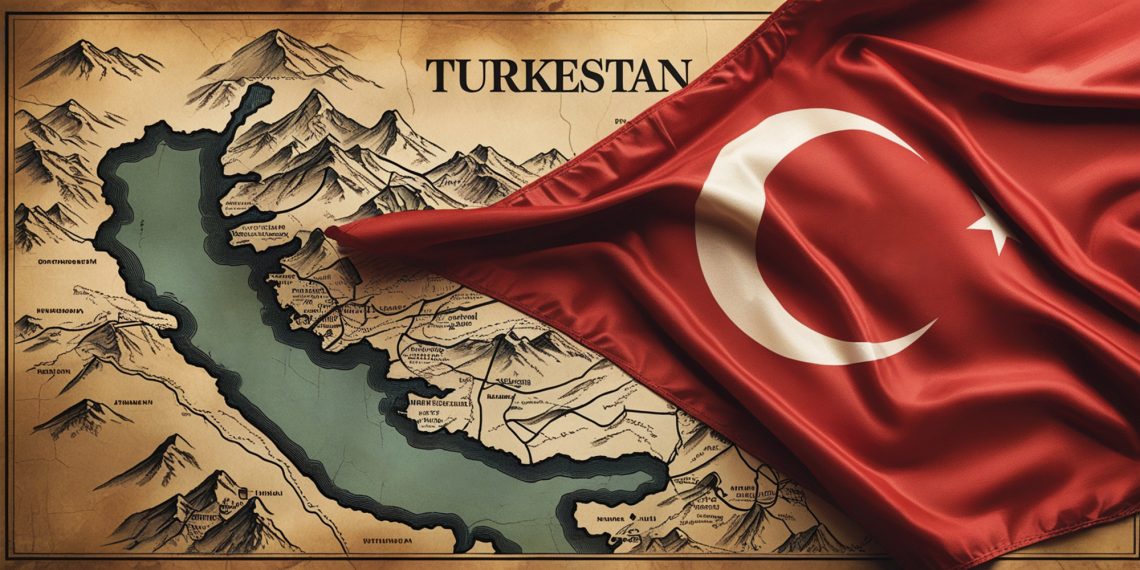
This route is also envisaged to connect to other directions through the Trans-Caspian Sea route, which is of historical significance for the Turkic world and Turkey. The Trans-Caspian Line, which we prefer to call the Great Turkistan Road, moves through Azerbaijan, Kazakhstan, Uzbekistan and Turkmenistan, when connected to Turkey, it is clear that it will create an infrastructure significantly strengthening the internal social, economic and cultural connections of the Turkic World. This route foresees a transportation timeframe of 10-20 days compared to the 30-45 days via sea from Russia to India, reducing costs by 30-40%. Clearly, the reactions of the USA, UK and EU countries to this global economic movement are also important. However, recent global developments, such as priorities like curbing China’s rise, suggest that powers considering Russia and the Turkic World in their strategies could facilitate advancements in this context. This route (NSTC: North-South Transport Corridor), pioneered by Russia to establish its supply route, is anticipated to strengthen commercial and economic relations between Iran, Caspian basin countries, the Persian Gulf, India and China alongside reducing the load on the Trans-Siberian Railway through the establishment of a logistics centre in Samara. Global geo-economic competition continues over supply corridors as before.
A route discussed since the 2018 between India, Russia and Iran continues to develop in light of new developments today. With this narrative framework, the main route of this corridor begins in Mumbai, India, reaching Russia’s Astrakhan via sea from Bandar Abbas on the Persian Gulf and Bandar Anzali on the Caspian Sea in Iran and then by railway it continues through St. Petersburg to Europe.
This corridor is considered a rival to the Suez Canal and China’s New Silk Road project, expected to reduce costs as mentioned. Notably, the primary focus is on transporting goods that deteriorate quickly and cannot be carried via the Suez Canal. The capacity of this route, with the ability to handle 60 million tons, is half of that of the Suez.
This project, developed by India against China, is set to impact our region by facilitating goods transportation to Europe in the new era. Thus, the effects of this goods flow on Turkistan must be evaluated concerning the economic growth, development benefits it will provide and its impact on the economic integration of the Turkic World’s unity.
Ultimately, this project is not centred around Turkistanis. It is clear that it will be considered as an alternative route by the USA and its allies wishing to encircle China. While Russia, Iran and India advance their national and global calculations on this route, Turkey and the Organisation of Turkic States should examine the issue from the perspective of increasing their internal economic capacities, contributing to transportation opportunities and establishing a basis for broader cooperation in the future.
Otherwise, while our geography again stands at the centre of global contests, missing opportunities and potential economic benefits from a passive vantage would be noted in history as one of the missed opportunities.
Enhancing the capacity of political, social and economic relations in the geographically diverse Turkistan region, where history placed states side by side without a single shot, is extremely important from the perspective of resuming our obligations to humanity and within the framework of civilisational nationalism.
For Justice’s Sake
In Peace