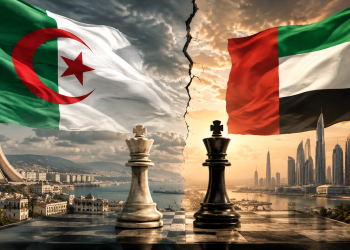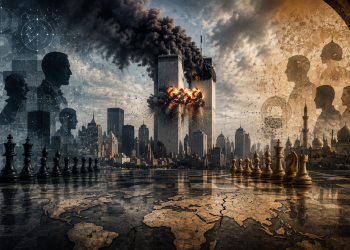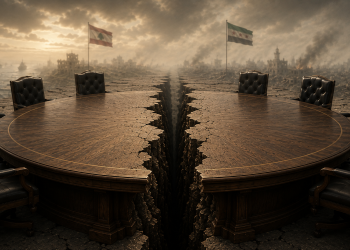
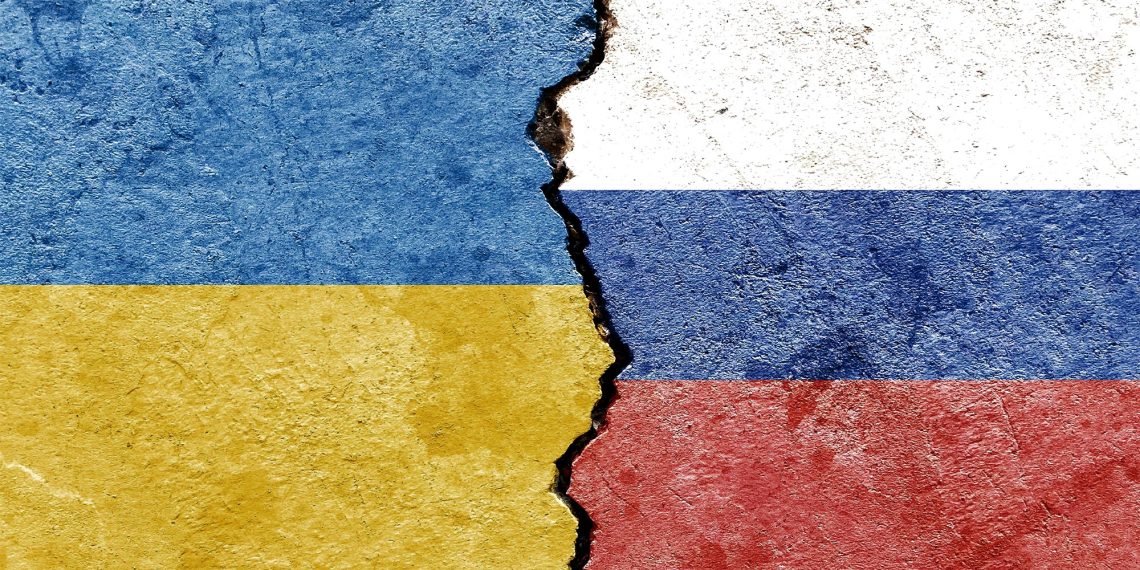
Given the current conundrum, it is possible to say that the international legal order is experiencing a kind of a period of interregnum, at least with reference to recent examples such as the Russia-Ukraine war. In Gramsci’s words, the international order is in a state of crisis, in which the old is dying but the new is not being born, and the Russian-Ukrainian conflict, for example, is showing major ‘morbid symptoms.’ In this article, my aim is not to address the symptoms themselves, but rather the possible causes of these symptoms, even if only in a rough sense. In other words, while it is possible to address the political and legal aspects of the Russia-Ukraine war in an individual and independent manner, identifying the underlying crisis that has brought about this war as a symptom may provide some clues, however vague, to the current state of affairs in both the discipline of International Relations (IR) and International Law (IL). Thus, for instance, while Russia’s aggressive actions in Ukraine can be speculatively linked to NATO enlargement, whether as a legitimizing or analytical claim, the uncertainty of the international legal and political order may provide a clear framework for better understanding similar and reproducible symptoms.
Russia, as a state that assesses power in terms of its primary function, in fact went to war with Ukraine, whether in its legal sense or in its common usage, but cited the exceptions often referred to in similar cases, in order to give the impression that it was not violating the norms of the international legal order deemed to be strong. In this regard, one of the main justifications cited by Russia to mask its military activism, which is essentially war, is that it is conducting a ‘special military operation’ on Ukrainian territory. This concept does not exist in international humanitarian law. From this point of view, it appears that the concept is deliberately used to exclude war, or ‘international armed conflict’ as referred to in common Article 2 of the 1949 Geneva Conventions. Russia, which used similar language and characterization in the annexation of Crimea, is particularly careful to use the term ‘special operation’ instead of ‘war’ in official documents and speeches, even instructing media outlets to do so. At the UN General Assembly, Russian Foreign Minister Lavrov justified the Russian intervention, which he described as a ‘special military operation,’ by claiming that Russia had no other option. While indirectly blaming Western states for not preventing the Ukrainian government from ‘fighting against its own people,’ Lavrov also cited the aim of eliminating threats to Russia’s security as another legitimizing factor. According to Lavrov, ‘any sovereign state with self-respect, aware of its responsibilities towards its own people’ would do the same as Russia in a similar situation.
Russia, which refrains from defining its intervention in Ukraine as a war, points to the establishment of peace in some parts of Ukraine as another justification to deny any responsibility that may arise within the framework of existing rules and norms of international law. Recognizing the independence decisions of the separatist Donetsk and Luhansk regions of Ukraine with identical texts, Russia refers to the will of the peoples of the region. With the recognition, Russia established diplomatic relations with the separatist regions and paved the way for friendship, cooperation and mutual assistance agreements. According to the text of the recognition, Russia will conduct ‘peace support operations’ in these regions until such agreements are concluded.
As a ‘symptom’ of the crumbling interstate order, in the Russia-Ukraine war, one of the justifications used by Russia for invasion was self-defense. On February 24, 2022, in a television speech, Putin explained the justification for the ‘special military operation’ that was to begin on the same day as ‘self-defense.’ In relying on this ludicrously implausible justification, Russia cited Article 51 of the UN Charter, which regulates self-defense. Although the ordinary meaning of the concept requires the existence of an armed attack in order for self-defense to justify the use of force, previous experience shows that such an action is not unusual. Russia reiterated its claim of self-defense in the later months of the war, emphasizing that it was the decision of a sovereign state and claiming that the decision was taken with the motive of protecting Russian citizens and the people of Donbass.
So what? Is rule-based international order disappearing?
Although the Russia-Ukraine war is an international political development that can be explained by realpolitik arguments, it is not a singular and isolated case and can be considered as a reflection of a pattern in international politics and law. The post-World War II arrangements that brought order to world politics, on the one hand, established a relatively centralized international security mechanism within the framework of the UNSC without completely disabling anarchy, the key analytical tool of IR, and on the other hand, the articulation of these mechanisms put into circulation a number of norms. In a way, this new rule-based order, which aims to eliminate the unilateral use of force altogether, has produced an outcome that is in line with the raison d’être of the discipline of IR (to establish lasting security, lasting prosperity and lasting peace, which means removing war from international politics).
However, based on the symptoms that can be observed not only in the Russian-Ukrainian war, but also in a general pattern and trend, it is possible to argue that this outcome is not as idealized, or at least it has been significantly deformed by abuses that cannot be considered as exceptions. To be sure, we cannot say here that the rule-based international legal order is dead. However, it is important to remember that this order is subject to constant revision, and that states that do not prefer to be bound by the rules, such as Russia and the United States, have resorted to ‘hegemonic violence’ by using the means provided by the order. Just as it was exaggerated to declare the triumph of the liberal democratic model, that international institutional cooperation had become the norm and that the liberal world order would continue to exist no matter what, it is equally baseless today to claim that the norms of international law, which are Western-centered in their origin, are invalid or inadequate. There is undoubtedly a problem, or a disease with symptoms, but there is not enough evidence or indications to say that this disease is fatal.
So, what can be said concretely about the current situation? First of all, the claim that the liberal character of the rules-based international order has no alternative has become at least questionable. The voices, objections and challenges rising outside the West make this debate more meaningful and concrete. Leaders, actors or institutions, including Putin, some of whom have distanced themselves from the West and some of whom are essentially non-Western, are saying that some very fundamental changes are taking place, while at the same time underlining their own positions and wishes, i.e. they are in fact voicing a demand for change.
In one sense, it is not so important whether this demand or this assessment of the situation is justified or not. What is analytically important is that it means that the post-World War II imagined international order is now beginning to diverge significantly from the imagined one. It is already one of the main claims of this paper that this divergence is observable even in the so-called vital areas on which this order was established. The erosion of norms such as the use of force, the prohibition of war and the prohibition of interference in internal affairs, which are intertwined with each other and without which it is impossible to define and understand one without the other, can once again be detected through Russia’s intervention in Ukraine. From this perspective, this intervention is not a special exception. Russia violated the norms and rules that laid the foundations of the UN era. But the point is that these norms and rules no longer exist as they were first envisioned. That is, we still have these norms, but they have changed in form and content.
This brings us to the relationship between the symptom represented by the Russia-Ukraine war and the unfounded but much favored claim that the IL is not a real law, or is, to put it mildly, useless, which those interested in IL within the discipline of IR have to deal with all the time. In order to speak of the validity of any legal norm, a legal norm must exist materially, it must be normative, that is, it must be charged with a norm, and there must be a legal order to support it. When we roughly apply this framework to international legal norms, we can easily say that these criteria are met, albeit to varying degrees. A legal norm, the existence of which is indisputable, a legal order that supports the norm, and a legal order that requires something to be done or not to be done confirm that international law still exists despite its symptoms.
More objective evidence confirming that international law is functional despite being manipulated is the efforts of states such as Russia and the United States, which erode, change and reinterpret international legal norms, to make their actions and dispositions appear to be in conformity with international law, despite their obvious motives to make international law conform to their own security agendas. The point to note here is that if there are no sanctions for non-compliance with international law and if force, especially military force, is the most important determinant, then Russia or the United States should have no reason to refer to international law. However, the US in the cases of Iraq and Afghanistan, and Russia in the cases of Georgia and Ukraine, for example, have presented to the world public opinion their own arguments in accordance with international law, even if they do not sound convincing to us.