While the Russia-Ukraine’s war continue in slow motion, Ukraine claimed that it has recaptured some settlements in the last two weeks, and Russia responded with missile attacks even on some settlements in Ukraine, including the capital Kyiv.
Just a week ago, thousands of people and a large agricultural land was damaged by the explosion of the Kahovka Dam, which was allegedly destroyed by the Russian side, and it was determined that the damage amounted to 1.2 billion Euros.
Nevertheless, the world public seemed to have become accustomed to the ups and downs of the ongoing war with Ukraine’s small gains and Russia’s constant emphasis on nuclear threats.
Last week, at the request of Belarusian leader Alexander Lukashenko, Russian leader Vladimir Putin announced that Russia had sent the first batch of tactical nuclear warheads to Belarus.
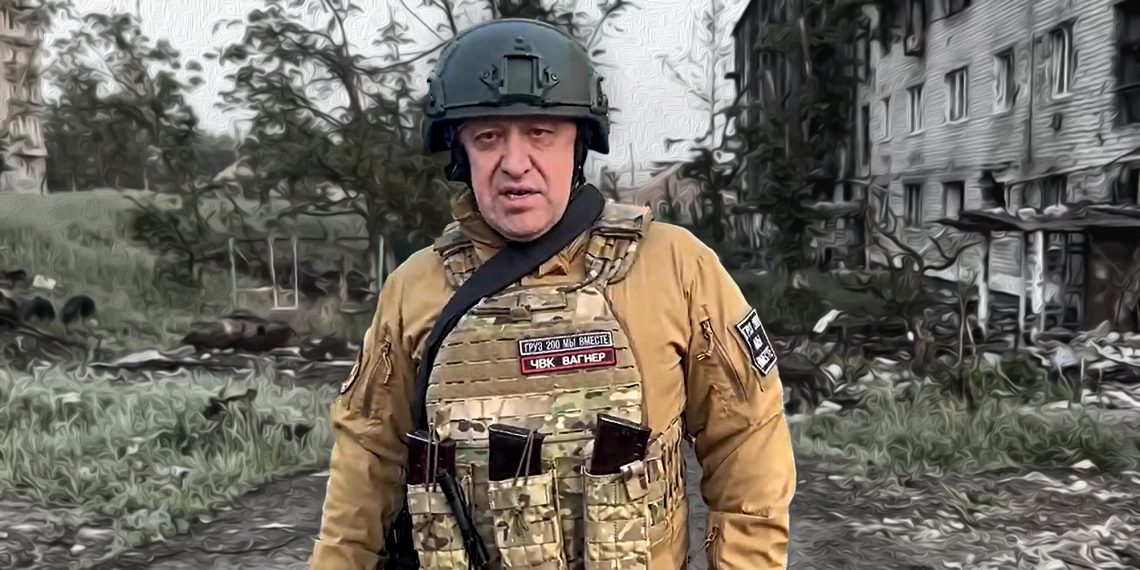
While the course of the war continued in this way, it took a different shape when the private military company Wagner, which had participated in the struggle alongside the Russian forces in Bakhmut, where heavy armed clashes have been taking place in Ukraine for the last four to five months, took control of Rostow on the Ukrainian border on the night of June,23-24, 2023 and launched an uprising.
The development which stunned the world, was also extinguished in a short time, causing a new astonishment. The causes and consequences of this “Wagner Earthquake”, the details of which will be better explained in the future are analysed.
Mercenaries, Private Military Companies, Private Security Companies and Private Intelligence Companies
The troops consisting of soldiers with previous combat experience that states use instead of conscripts, especially in high-risk areas or sometimes for tasks such as logistical support services, are also colloquially known as “mercenaries”. A mercenary is a person who fights for a profit or sells his/her fighting skills.
This system, which was used even in ancient Egypt and has a history of 3500 years, had declined as of the beginning of the 19th century, when states became “nation states” with the Treaty of Westphalia and then “compulsory military service” was introduced. Nevertheless, France’s use of mercenaries called “legionnaires” for a long time, especially in its colonies in Africa, remained in the memory.
After the Cold War, private military and even private intelligence companies started to be established in many Western countries, especially in the USA, for the defence of global interests abroad.
In this regard, the activities of the American MPRI company and private military companies, which played a role in the acquisition of the strategic Krajina region by the Serbs to Croatia after the Dayton Armistice in the Balkans after the Cold War, were heard.
After the US invasion on Iraq, the name of Blackwater, which provides paid services to the US with thousands of employees in the region, was heard more frequently by the Turkish and world public.
In addition to private military companies, which are relatively more disciplined and more attentive to the observance of human rights, especially in democratic countries, private armies have also been established in some developing countries, usually by “warlords” (such as drug lords in South America or Liberia and Afghanistan in Africa). Among this group, al-Qaeda and its derivatives have also set up private armies that emphasise “religious” rituals.
Private security companies, on the other hand are considered as a completely separate category and have emerged to undertake tasks such as personal protection or the protection of certain settlements and residences.
In accordance with the laws of some countries, private security companies can also participate in armed conflicts in addition to logistical support services. The Defence System Ltd. used by BP, one of the global oil companies, in Colombia is one of the examples of such organisations.
There are also “Private Intelligence Companies” as a sub-category of private security companies. Some companies belonging to this group provide intelligence services in addition to their security functions.
Such organisations are not involved in security and military services, such as Oxford Analytica and Economist Intelligence Unit.
These types of organisations are not involved in security and military service as in the examples of Oxford Analytica and the Economist Intelligence Unit, but are responsible for intelligence and general security services. The USA is one of the countries that use private intelligence companies the most.
The most important reasons for the emergence of this “private military/intelligence industry” summarised above are as follows:
The end of the Cold War and the changes it brought about in the security market
Changes in the nature of warfare
Acceleration of privatisation
States have resorted to the use of “professional” units in more risky service areas in order to avoid public pressure due to the casualties suffered during compulsory military service. This sector, which exploded on a global scale at the beginning of the XXI century, continues to develop gradually. Private military companies are gradually being perceived as “the distinctive representative of the evolving global security environment”.
Difference between Private Military Companies and Mercenaries
Unlike conscription, mercenaries are focussed solely on the wishes of their clients and are employed in contracted conflict/services. Although there are some logistical services, their service is usually based on the use of weapons. Since they provide temporary service, they lack commitment and discipline. Their strategic impact is also extremely low compared to regular armies.
Although the trade of such companies is prohibited under international law, mercenaries, who are involved in almost all types of conflicts, are defined in Article 47 of the UN Geneva Convention as “persons acting purely for personal gain and hired for use in armed conflict in a country or in an area outside the borders of that country”.
Today, while regular armies are generally characterised by deterrence, they seem to have been transformed into private military companies, most of which are actors in conflicts that take place in the form of “proxy wars”.
The most important characteristic of private military companies is that, unlike mercenaries, they have a modern (usually global) corporate form. Within this company format, they can provide military services in many different fields.
Due to their corporate characteristics, they can also develop financial ties with companies in their own or different sectors. For example, these companies are subsidiaries of many well-known large companies such as the US-based MPRI, Unity Resources Group and Vinnell Corporation.
As an example of the function of private military companies, the British company Sandline was contracted by the Papua New Guinea government in 1997 to help quell a rebellion on the island of Bougainville. In 1998, similar services were utilised in Sierra Leone.
Private military companies are profit-making organisations as a result of corporatisation. Although the majority of the personnel employed in these companies are also provided by mercenaries, they have the following characteristics different from mercenaries:
It is very different from mercenaries in terms of the type of service, relations with the client and their influence in conflicts”.
They have a legal structure, are contractually bound to their customers and compete in the global market with competitors in the same sector.
Although there are some loopholes, they are at least nominally tied to their home state by laws requiring registration and licences needed for foreign contracts.
They also differ from mercenaries in their services in various fields such as training, intelligence, counselling, logistical support, operational support and post-conflict solutions.
Today, many countries have private military companies, ranging from the USA, which has the largest number of private military companies, to the UK in second place, France, Russia, Poland and Israel. These companies can be used in “proxy wars” in the interests of their own countries, but they can also provide services to other states. Saudi Arabia is known to use several US companies.
Wagner Private Military Company in Russia’s Global Interests
Wagner’s existence was first recognised with its activities in the separatist region in eastern Ukraine after 2014. Although it is tried to be covered up, it is claimed that the Wagner group was established by the Russian Federation and all its logistical needs are met by the state. In other words, in a sense, it can be characterised as a state-sponsored and global “paramilitary cartel” of Russia.
Yevgeny Prigojin, the founding president of the Wagner Group, has no military background, equipment or experience.
Taking advantage of the opportunity created by the post-Cold War era in Russia, he established a catering company and gained the confidence to cater even for the Kremlin. Prigojin, who is alleged to have a close relationship with Russian President Putin, is seen as the face of Wagner in front of the stage, and it is considered that the Russian state is behind the scenes.
It is also claimed that Prigojin operates with 64 companies in 4 continents in addition to Wagner, which serves on behalf of the Russian army. Through these companies, a significant part of the revenues obtained from the economic resources in the countries where they are located are transferred to Russia, while some of them are spent on the salaries, weapons and equipment and other logistical needs of the paramilitary groups. In other words, Russia’s interests are at the forefront.
During the Russian-Ukrainian war, Wagner, which has been used predominantly in the conflict in eastern Ukraine, has recently also employed prisoners in Russian prisons. This is only possible with the authorisation of the state.
It was also reported in the press that the number of Wagner soldiers who clashed with Ukraine reached 50 thousand, 10 thousand of whom were professionals and that between 11 thousand and 20 thousand of them lost their lives during the clashes in Bakhmut.
Turkish and world public opinion recognised Wagner’s name mostly for his support to the separatist Haftar group in eastern Libya. Upon further investigation, it became clear that Wagner had been used in the Caucasus, Kazakhstan and even Syria.
In 2015, it was understood that the Wagner group was sent to “protect the country’s natural resources” in addition to the air and air defence units sent to Syria upon Syria’s request for military support from Russia.
Of course, it was also used from time to time against formations considered as “terrorist” groups in line with the policies of the Assad regime. In this context, it is also alleged that Russian paramilitary personnel were recruited through the Evro Polis company, which was engaged to protect Syria’s oil reserves.
When Wagner’s human rights violations in many countries in Africa came to light and drew the ire of the US and EU countries, Russian President Putin was forced to say that “Wagner is a private company with no ties to the state”.
In addition to the Wagner group, there are other private military companies in Russia, such as E.N.O.T. Corp, Patriot, Redut and Slavonic Corps.
Wagner Compulsion of Russia Stuck in War
In the first months of 2023, tensions arose between Wagner’s leader Prigojin and Russian Defence Minister Shoigu and Chief of the General Staff Gerasimov, who clashed with Ukrainian forces in Bakhmut, due to the lack of success and heavy losses suffered despite the protracted struggle. Prijogin, who insulted the generals heavily, did not listen to Putin’s order in mid-June.
Among Prigojin’s grounds for insult were that the military ammunition needed in Bakhmut was not sent, the fire support requested was disrupted and that President Putin and the Russian people were deceived by these two military authorities, contrary to the realities on the front line.
Although these threats were not considered acceptable for a country like Russia, which has a centuries-old tradition of state governance, they were tolerated due to the need in Bakhmut.
However, at the end of Wagner’s “suicide” operation, which started with the control of Rostow on the night of June 23-24, 2023, and then continued to within 200 km of the capital Moscow, serious measures were taken for the security of the city, while Putin’s cry of “We stabbed in the back!” was heard.
With 25,000 men, a rather small paramilitary force of 25,000, without even air support, and mostly lacking professionalism and discipline, it would be unwise to march on Moscow.
This development alone reveals the fact that Prigojin is suffering from power poisoning.
On the other hand, it is also claimed that the Ministry of Defence wants to renew the contract with Wagner, and that the plan to abolish the special structure of the Wagner group and affiliate it to the Russian Army with the new contract has disturbed the psychology of the Wagner leader.
Because Wagner was earning a certain amount of income due to its activities in various parts of the world.
The fact that this income will be cut off is reminiscent of the “boiler-raising” indiscipline of the Janissaries, who were the permanent vassal soldiers in the Ottoman Empire, and the main reason is money!
In response, Prigojin justified the uprising by saying that the Russian state forces had caused casualties by opening fire on the Wagner soldiers, “The evil done by the military leadership of our country must be stopped.
Those who killed our men today and caused the deaths of tens of thousands of Russian soldiers will be punished. I urge everyone not to resist this. We will recognise anyone we meet as a threat and destroy them immediately.
Do not try to block our way. After finishing what we have started, we will return to the front line and continue to protect our country. We will destroy those who killed our soldiers and to bring justice… We are not fighting children. The soldiers sent by the Ministry of Defence to prevent us should get out of our way.
We are not killing children. It’s Shoigu who kills children by throwing them into the front without training them.
We will destroy anyone who stands in our way. We will go to the end… The Chief of the General Staff has ordered the planes to take off and open fire on our convoy, which is travelling between civilian cars and lorries.
For him it doesn’t matter who he kills. They have been killing their own civilians instead of killing the enemy for more than 15 years!”
Whatever the reason, Russia’s unprepared entry into the war against Ukraine was similarly misguided when it tolerated the unacceptable indiscipline of the Wagner leadership in recent weeks.
It was only after a call for an all-Russian revolt that the decision was taken to intervene and arrest the Wagner leaders.
While these developments were taking place, it was understood that the US administration was closely monitoring the incident and organised frequent meetings at the highest level.
It was even reported in the press that US intelligence had learnt that Wagner was going to make this move two weeks ago, but could it be possible that Russian intelligence had not? Is there a problem in the intelligence organisation FSB or in Putin’s administration?
Before the 24 hours of the uprising were over and while it was being wondered whether there was any support from the West, Prigojin announced that they had withdrawn with the thought of “not spilling Russian blood!”
Although the problem seems to have been solved with Prigojin, who will seek asylum in this country under certain conditions through the mediation of Belarusian President Lukashenko, the liquidation of Wagner, who is a “state within a state” seems destined.
Conclusion
Can it be said that the following words of Ukrainian President Vlodymyr Zelenskyy on Russia’s crisis with Wagner are false?
“In one day, they lost several of their million-strong cities and showed all Russian bandits, mercenaries, oligarchs and everyone else how easy it is to capture Russian cities and possibly weapons and arsenals!”
It was understood that Russia, which started the war by attacking Ukraine, not only entered the war unprepared, but also had a weakness in terms of intelligence.
In the case of Wagner, there was a serious management weakness in terms of both intelligence and crisis management.
It is clear that all these developments show that the protracted war in Ukraine is unfavourable to Russia.
Being imprisoned for weeks against a handful of paramilitary groups shows that things are not going as well as they seem from the outside in a state like Russia, which has a vast experience in state management.