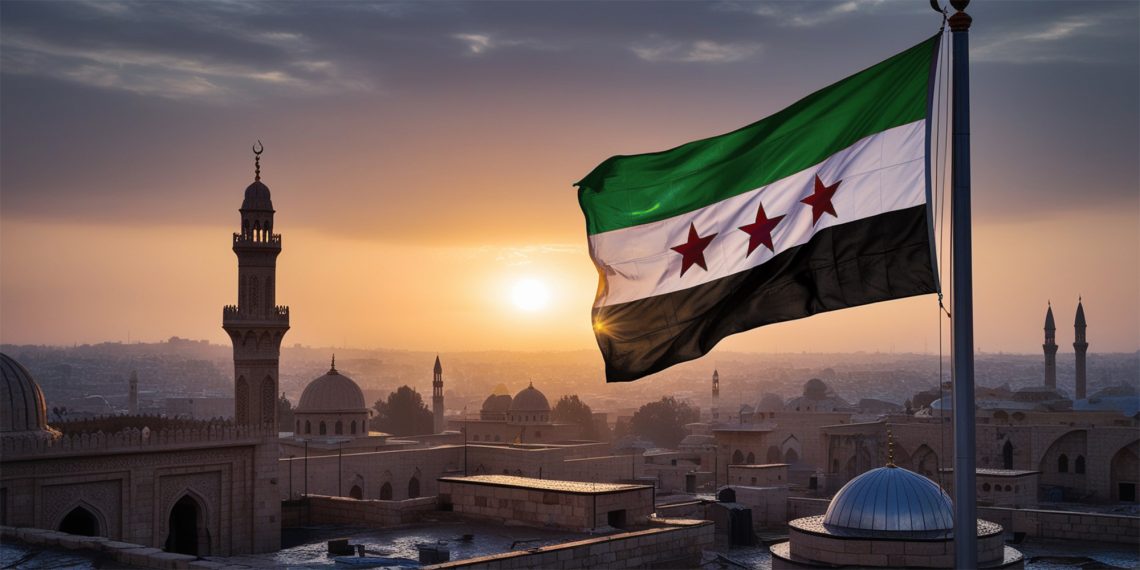
The fall of Al-Assad regime was likely due to international and regional imperatives and considerations, following the latest and the ongoing war and carnage in Lebanon and in Gaza Strip that for instance has caused serious to the one of the pivotal regional actor: Iran who has suffered great deal so that its main non-state group actor allay in the region Hizb Allah – hence the fall of Al-Assad’s regime in rapid and unpredictable events – in thirteen days, these two important allies with the Russians, who did not intervene with the anti-Syrian regime forces, the Syrian armed heterogeneous group factions.
In the aftermath of the fall of Al-Assad regime, the region is on the verge of serious developments, despite that the regime was on the radar since 2005 following the assassination of Lebanon Premier Rafik al-Hariri had direct consequence of that political drama that pushed the Syrian army to leave Lebanon, provoking a new political dynamic and role of Iran and its ally Hezbollah. Yet, the regime did survive and continued in its state of denial, until the Syrian people took the streets, chanting: dignity and freedom, they never wanted the fall of the regime like their fellow arabs protests in Tunisia, Libya, Egypt, and Yemen in 2011 because Syrians knew what was waiting for them.
Years of Forced Exile
Thus, it has been clear for years that the regime will over-react to the peaceful protests in Syria, causing hundred thousands of deaths, millions of interna displaced and refugees in the neighboring countries, such Türkiye, Lebanon, and Jordan, adding around million and half in European countries, where were not welcomed by any means; France has legalized 35.000 Syrian refugees, Germany was generous for economics demands in light of the 2015 Syrian migrants aflux in Europe, Germany did legalize 700.000 Syrians in nine-years process.
Türkiye has taken a large segment of Syrian people around 4 millions in twelves-years process, which left Ankara wondering how to deal with this socio economics burden that became a serious headache for the AKP-MHP coalition governments because of Syrian Anti-sentiment across the country. It was a catchy political selling point for the Turkish opposition to capitalize on in every election until last Spring Municipal election’s outcome that was largely in the opposition hands.
For two decades now, since the fall of Baghdad in 2003, the region has been in the non-Arab triangle: Tehran-Ankara-Tel-Aviv; whereas pivotal Arab states were either marginalized or complicit, are the richest bloc with energy, oil, gas, sovereign wealth, and income. Yet, they are still divided, in a new context of balance of power shift created a new geopolitical context that is
not in favor Arab countries in an integral equation, but Arab states in the region prefers bilateralism over integration: Riyad-Tehran rapprochement, Ankara-Doha axis, and Abu-Dhabi-Tel-Aviv strategic partnership. So these contradictory dynamics are driven by national and securities interests of each country.
Fast diplomacy
However, international powers like regional powers are concerned about the fall of Al-Assad’s regime, in public there is a sense that are agreed on the territorial integrity and national sovereignty of Syria, but the latest fast developments on the ground are showing the opposite, Israel has been bombing the entire country, imploding the military infra-structure of what it used to the Syrian Arab Army, taking advantage the fragile security and political circumstances, following the fall of Damascus – Netanyahu announced the collapse of the 1974 border agreement with Syria, ordering the army to seize the Golan Heights buffer zone. A UN-patrolled buffer zone, which lies between the occupied Golan Heights and the Quneitra province, was created to separate the Israeli and Syrian military forces.
What happened in Syria, cannot take place with the coordination of Russia, another Astana “Peace” Process actor with Iran and Türkiye. A process that never made any progress which was buried on December 7, 2024 in Doha, following the Doha meeting between the three Astana’s process grantors, joined by Qatar, Saudi Arabia, Iraq, Jordan, and Egypt, there was decided the fate of Al-Assad’s regime, offering safety guarantees for Al-Assad family to leave the country and settle in Russia (it turned-out to be true) and keeping Russian interest in the new Syria intact, most notable Russian bases are along the Mediterranean coast: a naval base in Tartus and an airfield at Hmeimim in Latakia province.
The Russians, nevertheless, did not want to get in the fight on behalf of the Al-Assad regime that Moscow found out it was on his last hours of life; the time was propice for Turks, Iranias, and Russians to look for a solution that might work for Syria and the region – a region that is facing a geopolitical and geostrategic shift following the Al-Aqsa Flood Operation on October 7, 2023, followed by an unjust war in Gaza Strip and Lebanon (despite a fragile ceasefire between Israel and Lebanon), but away from other international powers led by the U.S., who seek to help Israel to position itself in the new geo-strategic posture in the region post-Al-Assad regime.
Security vacuum
The ongoing political and security vacuum in New Syria has left the analysts to raise legitimate questions as a result of the thirteen-years of the conflict’s dynamics and determinants local, regional, and international ramifications – countries like Türkiye, Iran, Russia, and the U.S.,
there role will not exceed what is allowed by the new heterogenous military and political forces who are committed to implement stability and continuity of the Syrian institutions.
Therefore, the Syrian political opposition did excel to form a new transnational salvation government in a unique peaceful move with the former Premier of the Al-Assad regime who served for three days as a caretaker government chief to a better and a smooth transitional perdion. An insuring sign of maturity that helps to a best case scenario. That will be followed by the implementation of UNSC new Resolution because 2254 has become opaque like the Astana Process.
Moscow accuses Washington of wanting to divide Syria by creating a Kurdish state in the north east of Syria. A scenario that Ankara believes that such a territory autonomy threatens the Turkish state that Ankara vehemently refuses any territory autonomy. The nature of the newly formed salvation government led by Mohammed al-Bachir will decide whether a central state or a federal state will continue to be considered. A question was oftenly raised during the thirteen-years of the conflict that has not yet been determined between international actors. A stable state in Syria that reduces the waves of migration and absorbs the Syrian refugees that a large majority is willing to return back to rebuild New Syria.
In sum, the major threat to the ethnic and religious implosion of Syria today, is the Israeli incursion into Syria sovereign territory, exploiting the difficulties of the newly appointed transitional government. Chaos and provocation to the new authorities in Syria wanted by Israel requires closer military and strategic cooperation with Türkiye and Arab pivotal states in the region, while not antagonizing any force that could help to protect Syrian lands from further occupation. As there is no need to upset the Iranians, the Russians, the Chinese or anyone else, anyone who helps protect the sovereignty and territory integrity for potentially a credible partner and ally to rebuild New homogeneous Syria.