


Both “jurist” international lawyers and those who are theorists or adherents of IR theories and those who try to position international law within the discipline of IR actually acknowledge the political aspect of international law. While the relationship between politics and law, or the influence of the political on the legal, is accepted even in national law, which is assumed to be more hierarchical and rule-based, no one in their right mind would argue that international law, which is defined on the basis of its lack of a central authority, is independent of the political acts and behaviors of its main subjects, states. As such, there are studies emphasizing the role of politics, especially international politics, both in the literature on IR and in theoretical arguments on international law.
However, despite the acknowledgement of the political aspect of international law, there is a tendency, especially in didactic legal approaches, to explain and interpret the details of international law as if it were a law determined by a central authority. That is to say: as in the case of the Russian-Ukrainian conflict or the US invasion of Iraq, given above as examples of violations of the prohibition of the prohibition of the use of force, most international law treatises ask the first question that comes to mind, i.e. whether, for example, the Russian aggression against Ukraine or the US invasion of Iraq is a violation of international law, and seek an answer by referring to the relevant basic binding texts. Of course, there is nothing wrong with asking and answering this question. However, this method or approach both significantly misses the political conception of international law and ignores or forgets how international law is actually constructed.
Simply put, the main problem I would like to point out here is that it fails to recognize that international law is a political conception. In other words, there is a significant difference between recognizing that international law is related to international politics and observing that international law is a political concept. The importance of such a difference manifests itself in the correct understanding and positioning of international law. However, it should be noted that the fact that international law is a political conception and construction does not mean that international law is not law. Of course, everyone is free to interpret it in this way; however, if we talk about international law as a concept and a fact, we have to understand how it exists and how it is functional or not.
At this point, the question of whether politics creates law or law creates politics, and of course the answer to this question becomes meaningful. However, I think there is no definitive answer when it comes to international law. It is even possible to say that sometimes international politics determines the relevant international legal regime, and sometimes a certain rule of international law determines international political behavior, especially when it concerns morality and ethics. This interaction can be much more difficult to determine, especially in cases where sovereignty, which is a highly specific and both a legal and political concept emphasizing the exclusive authority of the state, is more prominent. However, in cases where the emphasis on sovereignty is less or gradually diminishing from the outset, as in the case of the prohibition of slavery or landmines, for example, we can more easily argue that the rule of law is first constructed and then it begins to shape international politics.
In short, depending on the situation, it is possible to see and read the relationship of international law to international politics in a broad sense (including non-state political actors) as the politics of international law or the law of international politics. The main point here is to identify the existence of a kind of international (political) legal ground. In other words, neither international law alone nor international relations (politics) alone can provide a correct understanding of international politics and the order shaped through it.
Looking at international law from an IR perspective
In one way or another, not only in Turkey but also in different parts of the world, textbooks, articles and similar publications on international law, especially textbooks, either directly or indirectly acknowledge and articulate the international law-politics-IR relationship, as mentioned above. Even if they do not give a separate title or discussion to this relationship, international law studies often give broad hints about this influence and relationship through the distinction between national law and international law. This comparison, which we do not often come across in any field of national law that is organized hierarchically, rightly identifies the different starting points in the process of constructing these two forms of law. To be more precise, roughly speaking, international law is anarchic in the absence of a central authority, while national law is built on the hierarchical relationship between the ruler and the ruled as a result of the exclusive attribution of sovereignty to the organism we call the state.
This difference brings with it a very clear conclusion that everyone can easily identify and agree upon. And this conclusion is that international law is fundamentally different from national law in ways that can be considered radical. However, what I see as a series of problems starts precisely from this point. First of all, I think it is a problem in itself that through this difference, a judgment such as international law is not actually law, which can be easily proved otherwise, but which nevertheless finds many supporters, has been produced. The fact that the curricula of many departments of IR in Turkey do not include courses on International Law is in a way a confirmation of this. I will not touch on this issue as it has been widely discussed by international lawyers, but I would like to emphasize that if there is such a concept as international law, we should at least question what it corresponds to.
Another indirect consequence of identifying and emphasizing differences in the comparison of international law and national law is that similarities are ignored. Although there is much truth in the differences, the existence of similarities is also important. First of all, the existence and identification of these similarities leads us to a conception of an international society, and from there to the search for order in this society. Once this is done, the political analysis of international law comes automatically. While I will not dwell on these similarities here, a thorough review will reveal that they can be identified, sometimes explicitly and sometimes by inference.
Another problem I would like to point out concerns the effectiveness of international law. Although the view that international law is a kind of unenforceable set of wishes with reference to its anarchic organization and hence its difference from national law is widely favored, it is not possible to talk about the inefficiency and ineffectiveness of international law simply because of its fiction, as has been shown in the relevant literature. As a matter of fact, there are situations and even certain areas where international law is indeed inefficient and ineffective. The use of force, for example, is one of them, even though it is heavily regulated. On the other hand, there are cases where international law is very efficient and effective and enjoys universal acceptance. The fact that subjects have largely complied with the rules against the use of prohibited weapons in armed conflicts is just one example. Moreover, the violation of a rule of law need not be attributed to its inefficiency and ineffectiveness. The killing of human beings is prohibited in all legal systems, yet we can observe frequent violations of the prohibition.
Moreover, the judgment that international law is different from national law in that it is anarchic is also open to debate given the mechanisms and institutions of international law today. In many areas where there is no possibility of direct threat to state security, regulatory bodies can take and implement decisions without any objection, and the UN Security Council and some organs of the EU at the regional level have powers that can be considered centralized. In other words, a closer look reveals some areas and regimes where a central regulatory role of international law is evident. In the case of the EU, perhaps we are faced with a completely different situation. It is so different that we can say that EU law has created its own unique legal field and political order because it is neither national nor international law as it is traditionally understood. The fact that the EU has regulated a separate relationship with international law in its own law, and that the EU also recognizes itself as a subject of international law, provides us with important reasons to revise what we know and repeat about international law. Although the issue of EU Law is a completely different debate, it certainly requires to be taken into account in terms of challenging the general judgment that international law is anarchic.
This brings us to the obvious fact that international law must be read from the perspective of international relations/politics. As I mentioned above, while this reality and clarity is acknowledged, we observe that when it comes to the ancient issues of international law, we do not go beyond a didactic and legislation-based approach. To some extent, we can attribute this to the fact that a legislation-based analysis is more comfortable. For example, it makes perfect sense to answer the question of what international law says about the use of force by looking at the UN Charter, the relevant legislation that emerged thereafter, and finally international customary law. In fact, such an answer would not be wrong. However, say, in order to understand the international legal framework of the use of force, and moreover to make sense of different practices that seem to us to be deviations from this framework, we have to look at the concepts and theoretical approaches of international relations.
Therefore, it should not be overlooked that the meanings that even ordinary concepts acquire over time in international politics inevitably affect the way international law is reproduced. The same can be said, for example, for the concept of security. For instance, human security represents a process of transformation from an emphasis on the state’s own national security to the protection of the security of individuals in the realm of international politics. This means that individuals become, to a limited extent, subjects of interstate relations and international law, especially when it comes to their survival as human groups. In addition, the concept of sovereignty has also been linked to the concept of human security as a result of a common understanding among states that in some extreme cases the principle of non-intervention and non-interference has proved insufficient to ensure the security of the masses. Thus, whereas in the past absolute sovereignty was considered sufficient for the protection of people, now the responsibility falls on the international community (and individual states), referring to the expansion of the sphere of public security.
This suggests that at least in the way international law is reconfigured, there is a very clear shift here. However, this does not mean that the international community is responsible and therefore authorized to act in every situation where the security of people is violated. Specific situations and circumstances have been agreed among states through custom and practice to determine when collective international action is required to address a situation where international legal or moral responsibility has not been fulfilled. The history of international politics shows that the international community has significantly evolved its attitude towards breaches of responsibility linked to the principle of sovereignty. The principle of the responsibility to protect (R2P) is the end result of this gradual progression and represents a new development in protecting people against regimes that are unable or unwilling to fulfill their responsibilities.
Concepts specific to the discipline of IR, some of which are commonplace and colloquial, but which acquire a concrete and specific meaning within the discipline, provide a stronger basis for identifying the changes and constants of international law than other tools. The same cannot be said for, say, sociology or history, which are more closely related disciplines. As I have argued above, although this is something of a declaration of the obvious, when it comes to understanding the nature and trajectory of international law, the IR nexus is often overlooked. Moreover, it is not only about the relationship between international law and politics. If this were the case, the importance and effectiveness of the political science repertoire in making sense of international law would also need to be determined. However, political science is not interested in international law, and the concepts and theories of political science are far from being able to define international law as a concept and mechanism. Although it has the ability to explain law at an abstract level, political science cannot exhibit the same success for international law. This shows us that international law is a sui generis field of law. Likewise, since IR has a sui generis conceptualization of politics, it seems more authentic to establish the link between IR and international law.
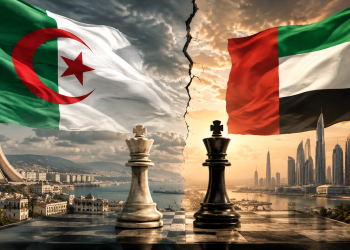
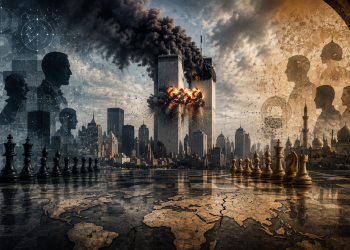
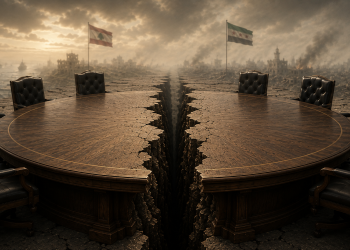



Die Rolle der EuGH und Intern. GH f. Strafsachen in DenHaag als Akteure in det Anwendung der internationalen Recht ist unbestritten. Doch sehen wir, dass bei Urteilsfindungen das Völkerrecht, bzw. der EMRK nicht immer zur Anwendung kommen. Obwohl selbst Putin für diverse Vergehen in der Ukraine bestraft wird und Aserbaidschan in Berg Karabach gerügt wurde, sind dieselben Akteure im Gazastreifen und Israel vollkommen aufgelöst und unsichtbar. Dies,
obwohl der Konflikt in Ostturkestan, Luhansk oder Berg Karabach für die Internationale Gemeinschaft kaum Relevanz hat. Der Konflikt um Palästina hat jedoch um so größeren Politischen Konfliktpotential, da zumal alle 3 Weltreligionsstätten in Palästina und vor allem in Jerusalem zusammentreffen.
So würde mich im Zusammenhang mit der Anwendung der Internationalen Recht und des Völkerrechts interessieren, warum die Akteure des Rechts hier keine gleichen Möglichkeiten finden, bzw. was von der Internationalen Gemeinschaft / UNO usw. unternommen werden muss, damit dieselbe Rechtsprechung überall auf der Welt zur gleichen Anteil an Anwendung findet?
Vielen Dank für Ihren Beitrag!
Lg