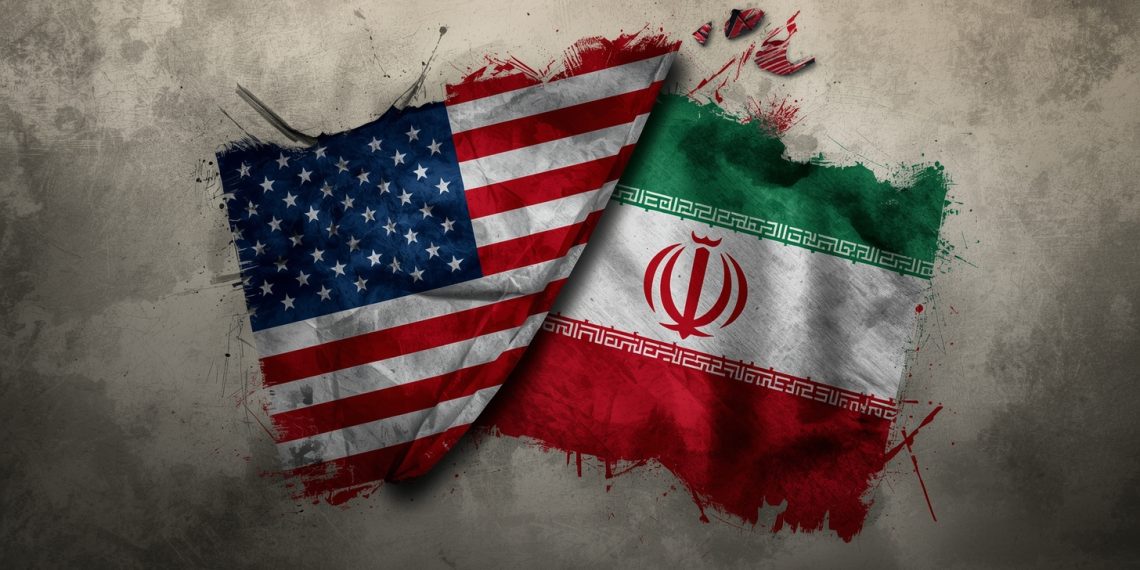
The United States Iranian conflict in Iraq represents one of the clearest models of indirect confrontation in the Middle East, where the arena of struggle has shifted from open military engagement to political institutions, parliament, and government, through local allies aligned with competing regional projects. In this context, the explicit American rejection of the candidacy of Nouri al Maliki, known for his loyalty to Iranian policies, stands as a direct political message aimed at reshaping the balance of influence within the Iraqi state.
Washington views Iraq as a central arena for containing Iranian expansion westward, particularly after Iran lost Syria as a key strategic ally and its regional position weakened significantly. From this perspective, blocking al Maliki return to political leadership is not merely a position against an individual, but rather part of a broader American strategy to prevent the restoration of a governance model that previously enabled Iranian aligned armed factions to penetrate state institutions.
On the other hand, Iran considers Iraq to be the last remaining pillar of its Arab influence following the erosion of its role in Syria and the decline of its direct leverage over political decision making in Lebanon. Accordingly, Tehran seeks to preserve its presence by activating its political tools within the Iraqi parliament and government, supporting figures and alliances that ensure Baghdad remains linked to the Iranian axis, even if this linkage is informal or indirect.
This indirect confrontation is expected to generate wide ranging regional repercussions. For Jordan, any reinforcement of American influence in Iraq serves Jordanian stability by reducing the risk of Iranian aligned militias expanding along its eastern borders and limiting threats related to arms and narcotics smuggling. It also provides Amman with greater political and economic flexibility in its relations with Baghdad within an environment less constrained by Iranian pressure.
As for Syria, which Iran has effectively lost as a reliable strategic ally, further decline in Iranian influence in Iraq will deepen Tehran regional isolation and weaken its ability to use Iraqi territory as a logistical corridor toward the Syrian coast and Lebanon. Any closer Iraqi American alignment would also restrict Iranian efforts to reassert influence inside Syria through the Iraqi depth.
In Lebanon, these developments directly affect the position of Hezbollah, which relies indirectly on Iranian support channeled through Iraq and Syria. As pressure increases on these routes, Hezbollah faces growing political and economic constraints that may gradually reduce its ability to impose traditional power equations within the Lebanese state, opening space for a slow but noticeable internal rebalancing.
Turkey approaches this evolving landscape with cautious pragmatism. Ankara views the reduction of Iranian influence in Iraq as an opportunity to strengthen its political, economic, and security presence, particularly in northern Iraq, while simultaneously maintaining coordination channels with Washington and Baghdad to safeguard its national security interests and manage the Kurdish file. The retreat of Iranian influence grants Turkey broader room for maneuver without necessitating direct confrontation with Tehran.
In conclusion, the American rejection of Nouri al Maliki candidacy should not be viewed as an isolated event, but rather as an indicator of a new phase in the United States Iranian confrontation, one that focuses on restructuring centers of influence within states rather than dismantling them. Iraq now stands at a critical crossroads between the project of a balanced national state and a transnational regional influence project. The outcome of this struggle will have direct implications for the security and stability of Jordan, Syria, Lebanon, and Turkey, and will significantly shape the future of the regional order in the Middle East in the coming period.