The upcoming internal elections of Jordan’s Ummah Party, formerly the Islamic Action Front, represent a milestone that goes beyond the selection of a new secretary-general, Shura Council, and executive office. The elections come at a moment of substantive reconfiguration in the relationship among three components that have been intertwined for decades: the party, the Muslim Brotherhood, and the Jordanian state. The central question, therefore, is not merely who will assume the party’s leadership, but what kind of party will emerge from the elections and to what extent it will represent continuity with, or a departure from, the Brotherhood’s former organizational structure.
To address these questions and arrive at a clearly defined assessment, I will conduct a comparative content analysis of two important articles on the subject. The first, by political writer Bassam Badarin, is titled “Upcoming Elections Within Jordan’s ‘Ummah’ Party: A Mix of Hawks and Doves” and was published in Al-Quds Al-Arabi. The second, by engineer Marwan Al-Faouri, Secretary-General of the Wasatiyya Forum, was published on his Facebook account under the title “The Next Secretary-General of the Ummah Party: A Message from a Friend at a Critical Moment.” By linking the two articles to the legal measures taken by the state since the banning of the Muslim Brotherhood and the renaming of the Islamic Action Front, I believe it cannot be established that Al-Faouri’s article constitutes a government or security message in the direct sense. Indeed, the author explicitly denies this twice. Nevertheless, the substance of the article overlaps strikingly with the direction in which the state appears to want the Islamic movement to proceed: ending the old organizational structure, integrating its cadres into the legally recognized party, distancing the historic leadership from the management of the new party, producing a more consensual and less confrontational leadership, and consolidating a national Jordanian party that is organizationally independent of the former Brotherhood.
Here, a distinction must be made between a message conveyed on behalf of the state and a message that reflects an interpretation of what the state wants. The available evidence does not allow the former to be asserted with certainty, but it provides a strong basis for discussing the latter.
A Change That Goes Beyond the Party’s Name
The change in name from the Islamic Action Front to the Ummah Party on April 18, 2026, was not an internal cosmetic initiative. It came in response to legal requirements from the Independent Election Commission, which requested amendments to the party’s bylaws to bring them into compliance with the Political Parties Law, including the issue of a name carrying religious connotations. The Commission subsequently approved the new name and the amended bylaws, and the decision was then published in the Official Gazette.
More importantly, this transformation came after the Muslim Brotherhood was banned in Jordan in April 2025. The state thus began, in practical terms, to distinguish between two entities: the banned Brotherhood as an organization whose legal status had ended, and the party as a licensed political institution through which its members could engage in political activity. Subsequent reports have pointed to a tendency by the authorities to confine organized Islamist political activity to the legally recognized party and prevent the Brotherhood’s activities from being reproduced outside that framework. The party leadership, however, has stressed that the change of name does not mean abandoning its intellectual frame of reference or its established political principles. This is important because it reveals the gap between legal adaptation and intellectual and organizational transformation. The current elections will therefore constitute the first genuine test of whether the name change was merely a legal response or the beginning of a deeper transformation in the nature of the party.
The Elections Are More a Battle Over the Party’s Identity Than Its Secretary-General
Writer Bassam Badarin points out that the elections are taking place in an environment different from the Islamic movement’s traditional organizational elections. Voting is tied to legally registered membership, and the electoral process proceeds through the branches and then the Shura Council, culminating in the general conference and the selection of the leadership. This limits the ability of traditional influence networks to determine the outcome through the old organizational arrangements. The significance of this lies in the fact that the three historically recognized currents — the hawks, doves, and centrists — may find themselves operating under relatively different electoral dynamics. The elections should therefore not be viewed simply as a contest among individuals.
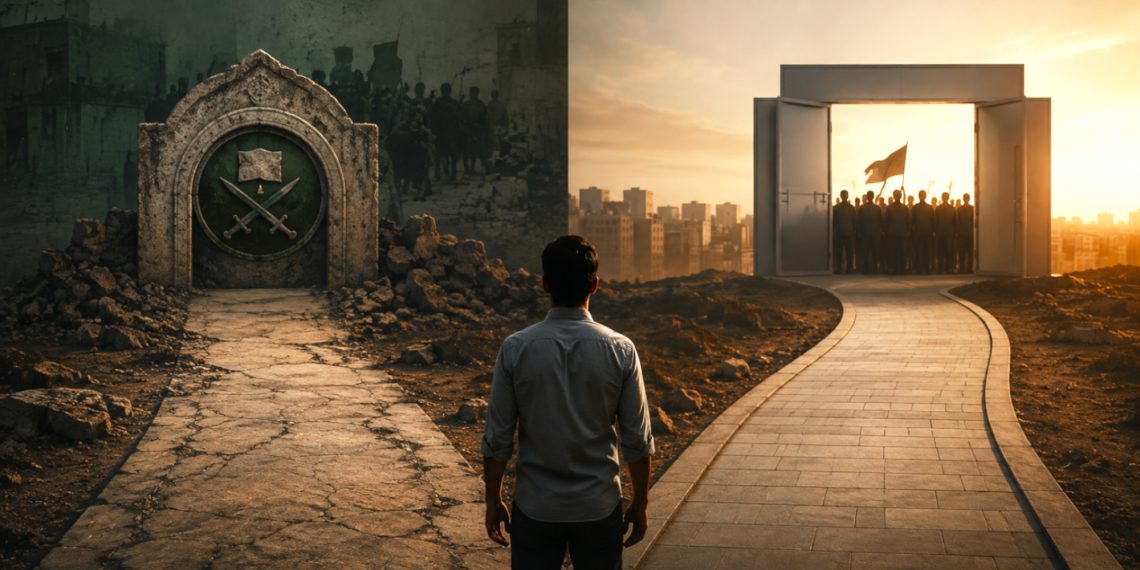
There are, in fact, three implicit projects competing within the party. The first is organizational continuity, meaning the preservation, as far as possible, of the political and organizational culture of the former Islamic movement, even if its legal form has changed. The second is a complete transformation into a national political party with an Islamic frame of reference, but one that is institutionally and organizationally independent of the Brotherhood model. The third is an intermediate formula that preserves the ideological reference, social base, and historical legacy while rebuilding the party institution in accordance with the law and the requirements of the new political environment. In my assessment, the third formula is the most viable in Jordan’s current political environment.
Why Is Marwan Al-Faouri’s Article an Important Political Document?
What is striking about Al-Faouri’s article is not only what it says, but also the timing of its publication, the audience it addresses, and the precision of the issues it places before the party. It does not stop at a general call for moderation. Rather, it offers something resembling a comprehensive roadmap for organizational transition. It calls for the numbers in the Shura Council not to be turned into “barricades,” and for the election of a secretary-general for the entire party rather than “half the party plus one.” It warns that the greatest danger at this stage is internal, calls for a new political discourse, and advocates a shift from a culture centered on individuals to one centered on institutions.
It then moves to the most sensitive issue: integrating the Brotherhood into the party. In this regard, Al-Faouri states clearly that the former Brotherhood’s cadres should be integrated into the party’s legal institutions, but “without reproducing the old structures within it, either directly or indirectly.” He proposes a highly significant formula: benefiting from the legacy without being bound by it, and respecting history without reproducing it organizationally. This is not merely a procedural matter. It is a prescription for redefining Jordan’s Islamic movement.
The Most Sensitive Message Is Directed at the Historic Leadership
The article becomes even more significant when it directly addresses the General Supervisor and the Brotherhood’s leadership. Al-Faouri calls on them to “leave the arena of mobilization,” refrain from seeking positions for the former leadership within the party, and move toward a paternal and advisory role, even withdrawing into the political and organizational background. He then explicitly links this to the relationship with the state, warning that reproducing the old faces, or keeping them at the forefront, could increase tension and suspicion, whereas the party needs to build a new space of trust and present itself as a national Jordanian party operating within the law and the Constitution.
This paragraph in particular makes the question legitimate: Is Al-Faouri merely expressing his personal view, or is he accurately describing what the state would like to see?
Is the Article a Message from the Government or the Security Agencies?
Here, precision is essential. There is nothing in the material before us that allows us to say that the government or any official body tasked Al-Faouri with conveying a message. Indeed, Al-Faouri — who has extensive experience within the Islamist movement — anticipates this interpretation himself, stating that he does not speak on behalf of any party and is not conveying a message from anyone. At the end of the article, he again stresses that he does not speak “on behalf of the state, nor on behalf of any political or security body.” It would therefore be methodologically unsound to characterize the article as a government message as a matter of fact. There is, however, another level of analysis: the article can be regarded as a political message that strongly converges with the official direction, whether coordinated or not.
In practical terms, Al-Faouri calls for five things: ending the influence of the Brotherhood’s old structure, integrating its cadres into the legally recognized party, distancing the historic leadership from executive positions, electing a consensual leadership capable of managing a calm and independent relationship with the state, and transforming the party into a national Jordanian party unburdened by the additional weight of its external relationships. He specifically emphasizes the need for a secretary-general who understands the sensitivity of the relationship with the state and is capable of engaging in dialogue with it without compromising the party’s independence. These elements largely correspond with the legal and political environment the state has constructed since the Brotherhood was banned. This allows for a more precise conclusion: based on the available evidence, Al-Faouri’s article is not an official message from the state, but it can be read as an expression of a political vision of what the state may consider an acceptable and safe way forward for the future of the Islamic movement. The distinction between the two formulations is fundamental.
What Does the State Most Likely Want?
Taken together, the indicators do not suggest that the objective is to end Islamist political participation altogether. If that were the goal, the Ummah Party would not have remained legally active and would not be holding internal elections within the institutional framework of the Political Parties Law. The more likely interpretation is that the state wants to separate legal Islamist party politics from the banned Muslim Brotherhood organization. The desired equation would therefore be as follows: Islamists operating within a licensed political party are acceptable; rebuilding a Brotherhood organization parallel to the party is not; parliamentary and political participation remain available; but the duality of party and Brotherhood should come to an end. This corresponds strikingly with Badarin’s account that the objective of decision-making centers is to transfer the Brotherhood’s members and cadres into the Ummah Party as part of what he calls a “legal reconciliation”.
Here, the readings offered by Badarin and Al-Faouri converge from two different angles. Badarin describes the direction of the state, while Al-Faouri proposes how the party should adapt to it. This convergence is analytically more important than assuming the existence of a secret message or direct assignment.
The Characteristics of a Secretary-General Suited to This Stage
Taken together, these factors suggest that the real contest will not be between a “hawk” and a “dove” in the traditional sense. The candidate most capable of leading the party through this stage will most likely be someone who possesses four forms of legitimacy simultaneously: legitimacy within the Islamist base so that the new leadership does not appear to have been imposed from outside the party; institutional legitimacy enabling the leader to manage the Shura Council and the various currents; the ability to communicate with the state without becoming subordinate to it; and the ability to redefine the party in national terms while preserving its ideological reference and its constituency’s support for the Palestinian cause.
This closely resembles the characteristics outlined by Al-Faouri, who calls for a consensual figure capable of bringing the various currents together, understanding the sensitivity of the relationship with the state, and opening the way for young people, women, and qualified professionals. The problem for the party, however, will lie in internal legitimacy. If the new secretary-general appears to be the state’s candidate or the product of external pressure aimed at excluding the traditional leadership, the result could be counterproductive: segments of the party’s base could unite against the new leader, while the more hardline current could regain momentum by presenting itself as the guardian of the movement’s independence. Therefore, if the state genuinely seeks transformation, it is in its own interest that the election of the new leadership not appear to be the result of official intervention.
The Future of the Hawks
I do not expect the conservative current, or the so-called “hawks,” to disappear from the party. They may lose some of their capacity for organizational control, but they possess an ideological, historical, and social base. Palestinian and regional developments may also provide their discourse with powerful tools for mobilization. The problem they face is that the legal environment has changed. Maintaining the old model of relations between the party and the Brotherhood has become more difficult, while any attempt to re-establish a parallel structure could be interpreted as reproducing a banned organization.
This current will therefore have to choose between adapting within the party or risking political and legal marginalization. This may explain Badarin’s observation that the new electoral system could make maneuvering more difficult for the hawkish wing, amid divisions among the various currents and indications that centrists are advancing into important positions.
Possible Scenarios
In my assessment, the future of the Ummah Party is moving between three main scenarios.
The first scenario is a managed transformation, which is the most likely. A centrist or consensual leadership is elected, gradually integrates the Brotherhood’s cadres, prevents the reconstruction of its former structures, and preserves the Islamic frame of reference within a legal Jordanian party structure. The party would then shift from being the political arm of a broader social and religious movement to becoming a political party in its own right.
The second scenario is the reproduction of the Brotherhood within the party. Forces associated with the old organizational culture prevail and attempt to transfer centers of influence and their networks into the party’s institutions. This scenario would increase tensions with the state and could lead to greater legal and administrative scrutiny, and perhaps internal crises.
The third scenario is internal division. The elections produce a narrow majority that operates according to a winner-versus-loser logic, creating a dominant leadership bloc opposite a current that feels excluded. This is precisely the scenario Al-Faouri warns against when he calls for a formula of “no victor and no vanquished.”
The first scenario is the most rational for all parties, but it is not guaranteed. Here lies the major paradox facing both the state and the party. The state most likely wants a national Islamist party operating within the law, not a parallel Brotherhood organization. Yet the success of this project requires the party to retain a sufficient degree of independence and credibility among its constituency. If the state applies excessive pressure to determine the identity of the leadership or the individuals deemed acceptable, it may weaken the moderate leadership it seeks to strengthen.
Conversely, if the party leadership treats legal adaptation as merely a change of names while the old structure continues under a new cover, it will reproduce the same crisis. Stability therefore requires what might be described as “mutual independence”: the party must definitively accept that the state is the sole legal authority governing political activity, while the state must accept that the existence of a strong and organized Islamist opposition operating within the law is part of political pluralism and does not, in itself, constitute a threat.
The Ummah Party’s upcoming elections on August 29, if they proceed according to the timetable cited in the material, are not ordinary periodic elections. They constitute, in effect, the political founding conference of the second phase in the party’s history.
The first phase, beginning in 1992, was based on an equation in which a strong organization had a political party as its arm. The second phase now taking shape is moving toward the reverse equation: a legal political party capable of absorbing individuals and cadres from the Brotherhood school, but without an organizational body existing above or alongside it.
Accordingly, the most important indicator to monitor is not the identity of the secretary-general alone, but the composition of the Shura Council, the executive office, the generational distribution, the fate of the historic leadership, and the mechanisms for integrating the former Brotherhood’s cadres.
As for Marwan Al-Faouri’s article, I do not believe the available evidence allows it to be described as an official message from the government or the security agencies. His explicit denial should be respected. He personally confirmed this to me in a telephone conversation, consistent with his reputation for regularly offering advice to the various currents within the Islamist movement and for not adopting a sharply antagonistic position toward the Muslim Brotherhood.
At the same time, however, the article is not far removed from the direction indicated by official policy, and it may serve as a guide for both sides — the government and the party. It presents an almost comprehensive roadmap for an Islamist party with which the state can coexist: a legal party, Jordanian in identity, independent of the banned organization, led by a new leadership, capable of dialogue with the state, and unwilling to reproduce the duality of party and Brotherhood.
Perhaps the most important statement in the entire article is Al-Faouri’s call for society and the state to view the party as “a responsible national partner, not a source of concern or threat,” while it retains its positions on Palestine, Jerusalem, and the broader causes of the Muslim world.
The article’s objective political message therefore largely corresponds with the outcome the state appears to be seeking: not the elimination of the Ummah Party, but the redefinition of the Islamists’ place within Jordan’s political system, from a movement with an organizational Brotherhood extension into a national political party operating exclusively within the state and its laws.
If this transformation succeeds, the Ummah Party will not necessarily emerge weaker. Over the medium term, it may become more institutionally independent and better able to attract Jordanians beyond the Brotherhood’s traditional constituency. But if the elections become an attempt to reproduce the former organization within the party, or an actual or perceived government effort to exclude a particular current, the name change will remain merely cosmetic and the old crisis will migrate into the new institution under a new name.
Organizational Separation Does Not Mean Intellectual Separation
Nevertheless, the prospect of a complete separation between the Ummah Party and the Muslim Brotherhood’s organizational and intellectual legacy appears unlikely in the foreseeable future. Historically, the relationship between the two was never merely an administrative relationship between an organization and a party. Rather, it was shaped over decades by overlapping membership and leadership, political and social formation, ideological reference, and organizational culture.
Consequently, ending the Brotherhood’s legal status or preventing the reproduction of its organizational structures does not automatically end its intellectual and religious influence within the party’s social base. The real challenge facing the Ummah Party will instead be how to accommodate this legacy under the umbrella of legal party activity without rebuilding a parallel organization or internal structures that replicate the former Brotherhood model. This is broadly consistent with Al-Faouri’s proposal to integrate the Brotherhood’s cadres and accumulated experience into the party while emphasizing that the party should be “an incubating environment for the Islamic project, not another version of the Brotherhood,” benefiting from the legacy without becoming captive to it or reproducing it organizationally.
In this context, the more realistic transformation may not be an intellectual or religious separation so much as a reordering of priorities and functions. Politics, parliamentary activity, reform, and participation in public affairs would become the Ummah Party’s primary functions, while its Islamic frame of reference and religious values would become components of its intellectual and cultural identity rather than an independent organizational structure controlling party decision-making. One of the most important outcomes of this new phase could therefore be the prioritization of the political over the religious and organizational, the institutional over the movement-based, and the national program over the requirements of the traditional organization. If this transformation takes place gradually and from within the party itself, it may enable Islamists to preserve their identity and intellectual frame of reference while simultaneously adapting to the new legal and political environment and expanding the party’s base beyond the traditional Brotherhood constituency.
Accordingly, the test facing the Ummah Party is not whether it will abandon its Islamic frame of reference or the Muslim Brotherhood’s intellectual and religious legacy, but whether it can separate ideological reference from organization: retaining the former as a component of the party’s identity while ending the latter as a structure parallel to legal party activity. If this equation succeeds, we may witness a gradual transition from the model of “an organization that owns a party” to that of “a political party with an Islamic frame of reference.” Ultimately, this would mean prioritizing the party’s political, national, and institutional functions over its traditional religious and organizational functions.
This is where the real test on August 29 lies: not merely in who becomes Secretary-General of the Ummah Party, but in whether the elections produce an Islamic Action Front under a new name, or genuinely establish the Ummah Party as a new political and organizational phase in the history of Jordan’s Islamic movement.