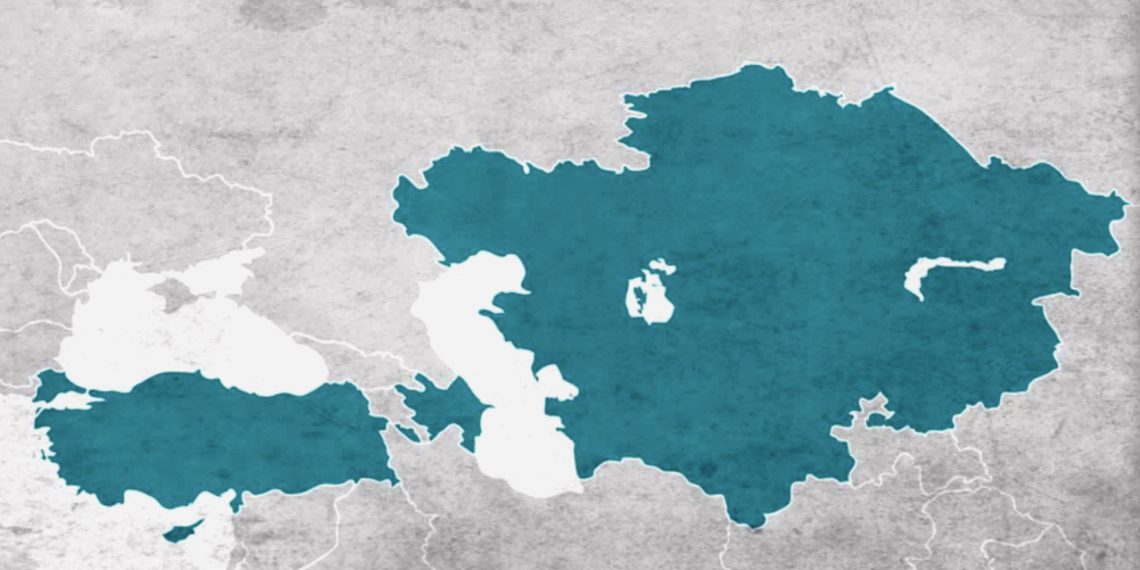
The latest developments in Karabakh, Zengezur passage, Iran and Russia, we do not seem to see that history and geography in Turkestan put in front of us opportunities that are free of cost, effortless or paid for in past centuries.
When we look at Turkestan, which we are obliged to civilise with the wisdom of the ceremony through history and the 21st century, when we look at it in the footsteps of our own wisdom, that is, our wisdom, can we turn it into an opportunity that history presents us a new Turkish world with six flags, that is states and that these states are lined up side by side on the map?
The logic of order formed with the wisdom of Kut is called custom, we think that the definition would be an awakening definition in the 21st century, beyond drawing the boundaries of our own self in terms of meaning, goal, affiliation and responsibility.
Kut is the wisdom resulting from the relationship between the mind, which is the thinking concept of the brain and the heart and the knowledge established in the heart.
This sometimes opens the door of matter and creates technology through it, which we are stuck with this wisdom in modern times, sometimes and essentially reaches wisdom by progressing in the depths of meaning. In short, kut is a process and continuity that is wisdom.
Yusuf Atam enlightens the issue by making the following explanation within the framework mentioned for kut in Kutadgu Bilig, that is, in the book of self-knowledge of the self: He chose, created and enlightened the heart; He kept my heart in faith and on the right path I was in darkness, He enlightened my night; I was in oppression, He made the sun rise for me I was running astray, He guided me; if He had not protected me, I would have burnt in the fire.
He chose me, separated me, raised me up; He took me away from those who had lost their way. He adorned my heart with light; He adorned my tongue with the word of martyrdom. He gave me heart, eyes, mind, intelligence and knowledge; He opened my tongue and gave me the power of expression.
Kut can also be considered as the equivalent of the energy/consciousness/state that constitutes logos spermaticus in ancient philosophy or Ibn Khaldun asabiyyah. Kut, God, emerges in the state of the subject who comes into contact with the Creator, in other words, who comes into contact with the essence of the self, who ignites his own torch from the fire.
Therefore, as a source of national and international wisdom, whatever has emerged in history with a critical logic, that is, with the method of examining it to its origins, these are turned upside down and trying to reach the essence of wisdom in the thought hidden behind the form/form seems to be a priority state of consciousness on this path.
Our self-identity or civilisationalist nationalism thinks and acts with this consciousness about wisdom in its own knowledge base. God initiates the first movement with what He gives to man through the act of creation; man responds with praise. Why? He feels gratitude and praise towards the one who gave him wisdom and enlightenment. Why? Because wisdom is, in a sense, a state of ultimate liberation and perfection as part of the fire from which it takes its essence. Enlightenment of the heart is an important principle of the subject in relation to the self. Darkness and disorientation are general characteristics of modern man. The quest to get out of the psychological pits associated with this continues on different fronts.
The person who is chosen and enlightened by giving heart, mind, intelligence and knowledge is blessed. In this sense, the knowledge of being blessed is related to lighting one’s own torch from the essence of fire.
Now, instead of a hierarchical relationship with our sources of culture and more importantly wisdom, wouldn’t moving from the stage of enthusiastic slogans to the level of knowing, understanding and evaluating the framework that the formation of kut and the ceremony has created for us pave the way to benefit from it again and in new ways?
While Kut is awakened in the heart in this way and our torch is lit in this way, man as a thinking being, understands, makes sense of and explains existence with reason. He does this by using various means such as philosophy, religion, science and art.
This awakening of the human being with this kut and knowledge-intellect duo on the path to wisdom creates custom with inward and outward deepening over time.
Thinking the shape as custom leads to the situation of not being able to see the apple itself in its core and thinking that consuming its fruit is adherence to custom.
This has been the state of Turks for a long time. Without the seed falling on the soil, without the water and the sun touching it, the core cannot be renewed from the essence inside and new apples cannot exist. Instead of dealing with the seeds, we are concerned with eating fruit. Shapes are blessed; kut is forgotten.
Kut is the kernel. Tradition is both the cause and the result of how, why and why of this kernel. While tradition is a world of symbols, rituals and metaphors, kut is the essence behind and within them.
Kut is perfection, wisdom, maturation. The realisation of this seems to be possible by contacting the right source and knowing oneself in the right place. Doesn’t the self-knowing know the Lord or the essence that Socrates took from Delphi point to a process in this sense?
We think that it is important for a civilisation-centred mind to look at these concepts and their sources with the awareness that concepts such as tradition and kut are cult concepts of our culture and that they draw a self-knowledge and self-framework rather than feeding romantic and popular feelings, in order to turn towards the future by creating new forms from ageless essences by adding content to the existing framework within the framework of society-state-city for a civilisation-centred mind.
Referring to the blessed sage of the ceremony, Yusuf atam, now listen, what does a person whose heart is awake say; look, his word, like a flower, is covered in thousands of colours, with the expression “his word, like a flower, is covered in thousands of colours”, shall we start to look at the name Kutadgu Bilig with a new and awakened consciousness with a new mind through our self, civilisationalist nationalism or Turkestanism, in the authority of pointing to the thousands of colours of wisdom through the person who has found his self, who knows himself, whose heart is awakened?
If we say that if Turkish means ceremonial, if the tradition means wisdom, if Turkish means a wise person who has a tradition, who seeks blessing and wants a blessed order in his order, won’t the names Turkish, Turkish and Turkestan begin to express their place in the self in a different way with a civilisationalist reading of history? In this context, Yunus Emre’s poem “Gönül Çalab’ın tahtı gönüle Çalap bahdı Two worlds bed-bahti who destroys the heart If you think you are what you think you are, think the same to the other person.
This is the meaning of the four books, if there is one The ones who have come and gone have passed and the ones who stayed have passed away Whoever has drunk from the wine of love hears the meaning…
The Turks were a nation of tradition; when the meaning of having law and order which is present in the meaning of the word, is combined with the meaning of wisdom, the word reveals its own civilisation ground as a possibility, perception and will beyond ideological stereotypes.
This is why justice became the religion of the state in the Turks. In the sense of this concept, it points to an essence that shows a state of being that requires wisdom beyond the existing law and order ceremony. In other words, when we say essence, we are talking about the substance that does not need anything else for its existence except itself. It is so because it is so.
The name Turk has thus taken its place in history as the basis of a nation that established civilisation in the context of a society-state-city. Since the Turks as a society raised their children with an upbringing and understanding that included the aforementioned tradition, and the elders were bound by this tradition, the civilisational nationalist ground manifested itself with this name in various geographies in history within its own framework.
The terms Turkistan and Turkey also emerged within this framework beyond all ideological considerations. In the 21st century, if we imagine and envisage a “century” for the Turks, we should remind the Turks that their name, which is shown as stuck in racial engagement, contains the concept of civilisation by turning the ontological source of tradition into a knowledge framework and producing morality and aesthetics, from National Education to the works of the Turkish Historical Society and historical theses, from various NGOs to literary works.
This reminder will not be to force life by putting an ideological cone on life but on the contrary, it will be to make a nation realise the situation in its essence, essence and history again. Every pathological framework that forces life and tries to make it its own will only make the nation and life miserable.
Isn’t the ideal of explaining to humanity what comes from our essence of humanity through the national one a loss that we have forgotten for a long time? To show the nation the next century with a civilisationalist asabiyyah and to fill it with real works, starting with feeding the hungry and clothing the naked, seems to be the most reasonable way and the most realistic state shown by history.
The Turkish tradition, which considers it a national obligation to love human beings and humanity has beautifully explained its own goodness by combining it with the principles of labour and benefit in Kutadgu Bilig.
This content of the Turkish name has enabled Turks to live in two main geographies that we can classify based on their name in history. We would like to develop and propose this historical perspective and understanding of continuity, which Mr Atsız had previously classified as East and West as Turkistan Era and Turkey Era.
To say that Turkish history has developed on these two main axes does not seem to be a wrong choice when we consider the main points where Turkish history moves and manifests on the globe.
When we look at history in the way of understanding our civilisation-centred self, our history took place in the centre of Turkestan before Islam and in the Islamic era for a period of time and then continued its historical course there, while the main geography of the state-centred and civilisation production area shifted to the Eastern Mediterranean side of the Near East and this flow continued in the process we call the Turkish era.
Today, we have independent states and flags flying in these two geographies. Of course, these two geographical frameworks are not separate, different and irrelevant areas as if cut with a knife. The concept of Turkey is not separate from Turkestan and the concept of Turkestan is not separate from Turkey.
From the Sakas until the Seljuks’ rule in Iran, the post-Turkistan period can be considered as the era of Turkey. Right here, it becomes necessary to look at the manifestations of the concept of Turkey in history.
We see that the concept of Turkey first appeared in Chinese and Byzantine sources. The geography north of the Black Sea and after the 6th century, Turkey was used to express the geography called Central Asia today.
It is stated that Chinese sources used this term with words such as Tie-le, Tu-jue in the 2nd century AD to describe the rightful south of the Altai Mountains. Again, it is seen that the Khazar Khaganate is called Tourkia (Region of Turks) in Byzantine sources.
Islamic geographers, who conveyed information about this region had expressed the regions where Turks lived in Central Asia as Bilād al-Turk (Turkish countries) or Arzu al-Turk (Turkish country) since the 9th century.
Again, since the 13th century, Islamic geographers had used the name “Turkistan” for the Turkish countries extending from the Caspian Sea to China.
As can be seen, the concept of Turkey is a transitive concept with Turkistan. However, as can be seen, the region from Central Asia to the north of the Black Sea seems to have taken this name on the occasion of the Turkish name and presence.
In fact, Turkistan, which is formed with a Persian suffix, and Turkey, which is formed with an Arabic compound, show the same meaning and situation. In this respect, the distinction is meaningful only in terms of showing the transition at the east-west point.
Iranian tribes used to call the regions where Turks lived Turkistan meaning Turkey. Whether it is Tourkia, Turkistan or Turkey, they all point to the same historical manifestation. However, the fact that the Turks called Anatolia from the north of the Black Sea to Anatolia and Egypt in the Eastern Mediterranean, which also included Syria as Turkey is clear and free from all explanations.
That is why we chose to call our eastern history Turkestan and our western history Turkey. We would like to point out the fact that these places were Turkey before the obsolete name used today as the Middle East. The second geography where the name Turkey emerged from this sentence is Anatolia, the Biladu’r-Rum-Roman Country.
From the 12th century onwards, this place started to be called Turkhia in the sources with the Turkish conquest and presence. Turks made the country of Rum Turkhia and this is also stated by external sources.
The famous traveller Marco Polo described Central and Eastern Anatolia as Turcomanie or Turquemenie /Turkomans (Turkmen country) and Central Asia as Great Turkhia.
What is seen here is not just an ethnic mass but a huge civilisation. It should also be mentioned here that in the thirteenth century, Europe continued the old usage and called the region from the Altai to the Danube as Magna Turchia (Great Turkey).
It was at this time that, perhaps for the first time, the name Turk became the official name of a state on the Egypt-Syria line. In an age without modern nomenclature, we see that the concept of al-Dawla al-Turkiyya was used as an Arabic compound, meaning the Turkish State and the name Turkey was used as an omen for the Mamluks who founded the state.
In short, as can be seen, geography has left its mark on history as the name of the geography with its meaning contained in its tradition wherever Turks set foot, established states and cities. The notion of belonging which I conceptualise as Turkestanness, looks at history, humanity, life and civilisation from a place that covers this framework.
As can be seen, the name Turkestan and/or Turkey is not a product of a forced and ideological imposition but as we have pointed out, almost all of the sources other than Turks have been put forward in the sense of expressing the places where they live.
Even Ibn Battuta, when he came here in the 14th century pointed out the situation here by saying Biladu’t-Türk. The name Turk, Turkestan and Turkey are not straitjackets put on our perception with ideological obsession, paranoia or schizophrenia.
These are the top names of a great civilisation structure in which a civilisationalist nation includes different societies in the geographies where it lives and integrates them under the Turkish roof.
Is it not spitting in the wind, to say the least to overshadow this great situation with ethnic complexes or modernist babbling, humanist-looking anonymity and subtleties hidden under the guise of insidious religion?
Rethinking ourselves in the 21st century through the Turkish concept and civilisation consciousness seems to be important in terms of ambition, affiliation and responsibility.
It should not be forgotten that whatever the possibilities and dynamics in the content of societies are up to date, the culture and civilisation to be formed from that structure will be in line with it. This sun that will be born in Turan undoubtedly expects consensus from us.
Turanism was a cause of unity, independence and civilisation in the great homeland of Turkistan, which was under occupation. Anatolianism, on the other hand, was a cause for unity, independence and civilisation in Turkey, which was left in historical conditions.
These movements emerged in certain periods and were essentially movements of nationalists who strived for the survival of Turkish civilisation i.e. society/nation, state and city/state and whose concern was the country and the nation.
Although they had some objectionable encounters against each other under the conditions of their own times, I do not know what benefit it is for Turks to make two men like Nihal Atsız and Nurettin Topçu fight in the 21st century.
Mr. Atsız responds to Mr. Topçu in the article “Wrongs of a Philosophy Teacher”, which is known to connoisseurs, but this man with intellectual honour also says the following, which for some reason is not mentioned: “Nurettin Topçu, whose knowledge and intelligence we have always admired has a disease of “fear of greatness” which leads him to some injustices and makes him say unseemly things against Turanists, who are idealists in their own right.
Understanding the ideal of seeing Turkey as bigger, that is Turanism as the antithesis of nationalism cannot be interpreted in any other way. Even Köroğlu, the epic hero of Anatolia, said: “The width of Anatolia is good, but the length is short!”? Isn’t this an expression of the desire for growth in the nation’s creation?” Someone as outspoken as Mr Atsız probably did not bribe Mr Topçu.
It is necessary to say that the essence of the matter is the aforementioned problem and that patriots seeking their own future walk with different preferences when they are looking for a path or trying to open a path, but they are concerned with the same thing, namely the glorification of the Turkish nation.
As can be seen in the current state of the world, in the post-Soviet period, in the current state of the Turkic world, it is not possible to walk to the future by opening positions within ourselves.
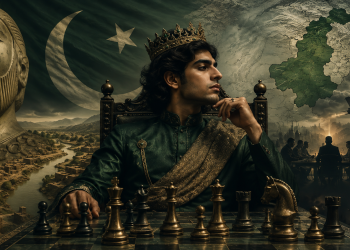
We are at a turning point in history. The flags of 6 states are flying independently in Turkestan. If we look at the geographical positioning, when the roughness between Turkey and Azerbaijan is removed, the Turkish World is geographically and politically positioned side by side.
Did we look at the map, realise this and think about it? My late teacher Prof. Dr. Şerif Baştav used to tell us in his lectures with tears in his eyes, saying that they called us Pan-Turkists and Turanists.
The Turkism-Turanism case is known to everyone. Those days have passed. We hope that the genetically corrupt ideology, which sees the concept of Turk as an ideological deviation and nationalism as race-love without looking at the Turks will not find an opportunity in our country again. Beyond these, today we are in a place and time beyond the conditions in which the idea of Turanism or Anatolianism emerged.
We have independent states in Turkestan. This is not romanticism, but an opportunity brought to us by history. If geography is destiny, history says that I have arranged you side by side like beads of rosary beads on geography. From Cyprus to Turkey to East Turkistan, you are shoulder to shoulder.
Are we aware of this? So what do the 6 flags flying here tell us? We want to say that while some people say that Turkish unity will surely be established, one day Russia, China, America, Israel, etc. will be like this, it will be destroyed; it will be like this, it will be disintegrated, etc., history has already established that unity in geography.
Do we realise it? Politically, it put 6 states side by side. And it did it without shedding blood and spending money. However, we still could not become bees carrying honey to the honeycomb. We are grateful for individual efforts.
We have the Organisation of Turkic States, may it exist. However, as long as unity is not in mind, heart and work, we can only go so far with wishes.
Acting emotionally here with the assumption that everyone is living with the idea and ideal of a Turkic world and that our nation is motivated by this ideal with a remarkable ideal and imaginary clarity which is waiting for each other in different geographies, may lead to a lot of disappointment. It is necessary to be realistic and to walk after ourselves.
Yes, these 6 states have many common elements such as their roots, history, language and religion. However, is there a framework of vision to create a general civilisation here?
More importantly, this geography is the centre of history and the world; with its political, social and economic resources, it is a hidden treasure that has the potential to influence the globe but these are covered by the spirit of time like mines lying under the ground.
Some power centres can still play with the nerve endings here! Human beings are not yet in a state of civilisational tension.
Despair and weariness continue to tire life. Our ideas do not seem to be united. Although the consciousness of being a Turk has started to bring us closer as a romantic and cultural bond from the past, it has not yet brought us to an independent movement structure.
From Turkestan to Turkey or vice versa, a Turkish world with contiguous borders has been established.
History was born and is being born in the Turkish bastions despite all the powers, states, hidden powers, etc. with huge wealth.
For example, with a simple passport agreement, it is already possible to travel around the Turkic world with an identity card when transport from Turkey to Azerbaijan starts. Do you realise this? This is not romanticism, open the map and look at the position and situation of the Turkic world and its states.
However, as long as we cannot make that unity in our own hearts, minds and ideas, this opportunity that history has put in front of us will be wasted.
Under 21st century conditions, 6 flags are flying in the Turan country. One of them is in our Anatolia, namely Turkey and the others are in a wide geography towards Turkestan. The heart and cultural borders of our nation are much further than this.
Today, it is time to say new words and more importantly, it is time to come out of our cave and act with goodwill for Turks and more importantly for all humanity in accordance with our vision of the world order and to grow the common good with the awakening of civilisational nationalism. Turk is honourable. Honour is blessed.
Kut is wisdom and tengriken, that is, an ideal painted in the colour and meaning of God. Today, Turan-Anadolu is united and the sun in the future reminds what Kashgarli Mahmud said in the past: I have seen that Allah makes the sun of the state rise on the Turkish bastions and turns all the heavens to their sovereignty.
He gave them the name of Turk and made them sovereign and brought them to the head of humanity and supported them on the right path, made them the dominant power of the period and gave the administration of people into their hands. Today, geography and history have given us a hand.
In the journey of this future in our geography, starting from our legends/saga and continuing until today, Turkestanism was and is expressed as a proposal and idea explaining the possibility of looking at ourselves in the direction of society-state-city unity within civilisational nationalism with the theory of arrow-bow civilisation and civilisational nationalism as a will and realisation of turning towards the future with a civilisational movement with the harvest coming from the horizon of Nihal Atsız and Nurettin Topçu, with the wish for an order between the blue sky and the greaseless earth.
Doesn’t running to disunity while looking for the possibility of unification leave us ignorant and poorer than ourselves? Turkistanism is not Turkistanism! Just as loving Jerusalem is not Jerusalemism… Those who live as they believe can add value to life with what they live.