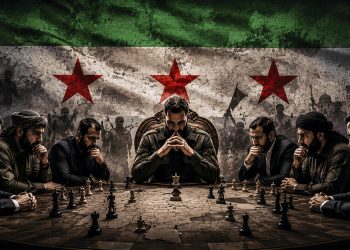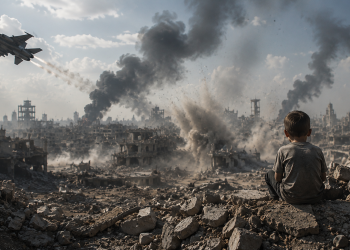
In 2022, in addition to the Russia-Ukraine war, US-Russia and US-China relations were increasingly strained. We entered 2023 rejoicing that “We finally got rid of 2022!”. But in 2023, which made us say “What comes is what goes!” there was also an Israel-Hamas conflict in October. In this section, the issues that left a trace in 2023 and global development projection for 2024 are discussed.
Significant Developments of 2023 on a Global Scale
In 2023, the global developments that stand out are as follows:
Russia-Ukraine War
The intensified fighting in Bakhmut gradually turned into a war of attrition. On March 14 a US MQ-9 Reaper drone, which had taken off from Romania was shot down by two Russian Su-27 fighter jets off the coast of the Crimean Peninsula.
This was the first confrontation between the two global powers since the beginning of the war. While Ukrainian pressure continued in Bakhmut, Prigozhin, the leader of the Russian mercenaries Wagner, first continued his statements targeting Defence Minister Shoigu and Chief of the General Staff Gerasimov and then launched a 24-hour mutiny. In June, Russia transferred nuclear warheads to Belarus on the grounds that it was threatened by Poland.
The Black Sea “Grain Corridor” treaty expired on July17, 2023 after several extensions. While Ukraine has been able to harm Russia with unmanned naval and aerial attacks, especially in the Crimea region, Russia has responded by targeting Ukraine’s energy and port infrastructures with long-range missiles.
Towards the end of September, Poland one of Ukraine’s staunchest allies, announced that it would not provide arms aid. While the US and EU countries’ support for Ukraine lost its warmth with the Israel-Hamas conflict, efforts were made to accelerate Ukraine’s EU candidacy process.
Israel-HAMAS Conflict
While waiting to see when and how the Russia-Ukraine war could be ended on October 7, HAMAS launched an unexpected attack on Israel from the Gaza Strip. Following this attack in which many people were killed, wounded and hostages taken, the Israeli administration declared that it would destroy HAMAS and that it would even announce a new arrangement in the Middle East.
After a while, under the pretext of destroying HAMAS, the hospitals, schools, universities, places of worship and infrastructure facilities in the northern Gaza Strip were destroyed. In the UN Security Council, resolutions on a permanent ceasefire and condemnation of Israel were blocked by the veto of the USA and the UK.
In the October 7 attacks, 1,200 Israelis were killed, 5,132 wounded and 239 Israelis were taken hostage by HAMAS. By December 31, 2023, the Israeli armed forces had suffered 506 casualties, 172 of them during the ground invasion of the Gaza Strip. During the clashes between the Israeli army and Hezbollah, 9 Israeli soldiers and 5 civilians were killed.
On the same date, the Palestinian casualties in the Gaza Strip which Israel turned into hell, were as follows:
Nearly 22,000 Palestinians, including 9,100 children and 6,500 women lost their lives. There are nearly 60 thousand wounded and nearly 7 thousand missing.
Of the 150 health institutions targeted, 30 hospitals and 53 health centres were out of service. 326 health personnel lost their lives, while 104 ambulances were hit.
50,000 pregnant women are unable to meet their basic needs and 900,000 children face “cold, thirst, malnutrition, epidemic skin diseases, psychological disorders and traumas”.
Nearly 2 million people suffer from shortages of drinking water, sanitation, food and medicine.
In the occupied West Bank and Jerusalem, 319 Palestinians were killed by Israeli forces and illegal Jewish settlers. Palestinian material losses, including infrastructure, have yet to be valued, especially in the Gaza Strip, where no stone has been left unturned.
During the Israel-Hezbollah conflict, 28 Lebanese civilians and 134 Hezbollah members were killed.
The ceasefire, which was announced for 4 days on November 24 with the mediation of Qatar and Egypt under the name of “Humanitarian Break” was later extended for 3 more days. Meanwhile, while some of the aid supplies were delivered to the region through the Rafah Gate, 81 Israeli and 240 Palestinian hostages were released.
In the UN Security Council, the US and the UK vetoed resolutions passed in the UN General Assembly calling for Israel to halt the operation or for a permanent ceasefire. The position of countries such as Germany, Austria and the Czech Republic on human rights began to be discussed. Today, HAMAS does not accept any formula other than a permanent ceasefire.
Having shot three Israeli hostages in the space of three months and killed several Israeli hostages during the attacks, Israel is still far short of its political goals. It has not been able to drive the Palestinians out of Gaza or destroy HAMAS.
On the other hand, the rising anti-Israel sentiment all over the world has begun to worry not only Israel but also the governments of the countries that support Israel which has become a target.
Significant Outbursts Against Israel: While anti-Israeli demonstrations continued to increase in many countries following Israel’s inhumane attacks, the first significant reaction came from the Shiite Houthis in Yemen.
A multi-national force was formed under the leadership of the USA upon the missile and UCAV attacks on the ships travelling in the Gulf of Aden and the Red Sea from Jewish-owned ships in support of HAMAS.
The Houthis, whose missiles fired from Yemen against Israel were intercepted by the US ships in the Red Sea, started to attack the merchant ships sailing in the Red Sea with UAVs or boats in recent weeks.
On the first day of the year, many shipping companies, including the Danish company MAERSK, started to use the 6,000 mile long South African route instead of the Red Sea-Suez Canal route. This development which has pushed up oil prices, is likely to further increase discontent in the EU countries against Israel’s attacks on Gaza.
Malaysia banned Israeli-flagged ships from entering its ports. On December 29, the Republic of South Africa filed a lawsuit at the ICJ seeking an injunction against Israel for “violating the 1948 UN Convention on the Prevention and Punishment of Genocide” in Gaza. Already on December 26, the UN Special Rapporteur on Palestine, Albanese, noted that Israel’s so-called “voluntary displacement” plan to forcibly displace civilians in Gaza would be investigated and prosecuted under the jurisdiction of the International Criminal Court.
Within the EU, Spain is publicly against Israel while in other Western countries, Israel’s massacres have started to be the target of targeted words more frequently. The USA, whose presidential candidates will be selected, seems bewildered. As a result, while the Palestinians are miserable, Israel is destined to lose all its strongholds of support.
US – China Conflict
The first move of the US-Iran global chess game continued earlier this year when China brought Iran and the Gulf States together. China, which contributed to the normalisation of relations, left behind an important threshold within the scope of the “Belt and Road Project”. On the other hand the US, in an agreement with the Philippines, decided to strengthen 4 more military bases in addition to the existing 5 bases and reinforced the project to contain China.
Although the occasional China-Taiwan tension in the region turned into a small-scale US-China tension with the activities of the US navy in the region, US Secretary of State Blinken visited Beijing. However, US President Biden’s characterisation of Chinese leader Xi Jinping as a dictator during the visit was more than an ordinary gaffe. Later, US Treasury Secretary Yellen also visited Beijing and stated that it would be in the interest of both countries to improve relations.
China continued the “Chip Wars” on a global scale by limiting the export of materials such as gallium and germanium used in semiconductor chip production. In September 2023, during the G20 Summit in New Delhi, the “India-Middle East-Europe Economic Corridor” agreement was signed, this time at the suggestion of the USA. Considering the “Northern Corridor” that Russia wants to create between the Baltic Sea-Moscow-Caucasus-Iran-Indian Ocean, the “War of Trade Corridors” also came to the agenda.
Other Individual Developments
A coup attempt in Kazakhstan in early 2023 was crushed with the help of CSTO troops. A smaller coup attempt in Kyrgyzstan in June was also quickly put down.
In Africa, while the conflict that started in Sudan in April dragged towards a civil war, coups took place in Niger in July and in Gabon in September.
In September 2023, Azerbaijan completely captured Nagorno-Karabakh with a 24-hour “anti-terror” operation. As around 100 thousand Armenians left the region, the chances of the Zangezur Corridor, which will provide uninterrupted transport between Turkey-Azerbaijan and the Turkic world, increased despite the Iranian obstacle.
After months of tensions between Kosovo and Serbia, NATO decided in late September to deploy 600 British troops in northern Kosovo.
In November 2023, the EU Commission decided to open accession negotiations for Ukraine and Moldova and to grant candidate status to Georgia.
In the same month, the Freedom Party led by anti-Islamic far-rightist Geert Wilders won the Dutch general elections by a landslide. During the year, Sweden, Denmark and the Netherlands witnessed the burning of Korans and Korans. Finland became a member of NATO.
Conclusion and Projection for 2024
2024 entered the year 2024 with tensions on a global scale. Considering 2023, which was quite intense in terms of crises and tensions, it was obligatory to “eat the yoghurt by blowing the yoghurt” for this year. Because unfortunately the world continues to get tense.
While the Russia-Ukraine and Israel-Hamas conflicts continue, there are presidential elections in the USA in November 2024. Although there are still hesitations about Biden, the President of the current administration to be the candidate of the Democrats, it is also true that no candidate has yet emerged who can get ahead of Biden.
On the other hand, although Trump, the President of the previous term has been tried to be prevented by various courts, a strong candidate candidate who can oppose him among the Republicans has not yet emerged.
Taking into account both candidates, if Trump is elected, there may be more hope for a lasting peace in the Russia-Ukraine war. It is highly probable that the three-month-old Israel-Hamas conflict will end this year. According to some opinions, Prime Minister Netanyahu will lose power in the Israeli cabinet this year and early general elections will be held.
Then it will not be possible for Netanyahu to become prime minister. It may be possible but it is not only Netanyahu who is in question here. The real problem is the Israeli Question. The same problem existed before Netanyahu. The promises that the future presidential candidates will put in their election programmes on both issues are eagerly awaited.
General elections in Ukraine will be held for the 5th time this year. As the reluctance of the US and the EU to support Ukraine in the Russia-Ukraine war is growing, if there are general elections, it is highly likely that President Zelensky will be replaced by another candidate for a permanent ceasefire.
In our increasingly tense world, especially in Europe, xenophobia and especially Islamophobia are on the rise. The most prominent examples of this are the fact that the xenophobic Wilders’ political group in the Netherlands ranked first in the recent elections, the AfD in Germany has gradually increased its votes and Madame Le Pen’s grassroots-hostile Republicans in France have reached a voting rate that will enable them to be elected in the next presidential elections.
In the Far East, it is seen that China does not make concessions on the South China Sea and the maritime jurisdiction areas between China and Japan. In the meantime, there is a paradox that the US, which says “There is no need for two separate China!” to Taivan’s demand for independence, opposes China’s efforts to integrate Taivan.
Although the US and Chinese statesmen have come together in various ways during 2023 and have used expressions of avoiding conflict, it is a fact that the relations between them have become increasingly strained.
Five new countries have joined the BRICKS countries, led by China and Russia against the insistence of the USA to maintain its hegemonic global power with the support of the EU and G7 countries. BRICKS has become a challenge to the G7, in a way with the new members, including S. Arabia, Egypt and the UAE which have close relations with the US, as well as an anti-US country such as Iran.
Russia, which has escaped the attention of the world public opinion due to the Israel-Hamas conflicts, will be able to relax in the conflicts with Ukraine, which have now turned into a war of attrition and start to intervene more in global games alone or together with China.
In 2023, it is seen as inevitable that there will be an explosion in 2024 in the use of artificial intelligence for which many countries have introduced legal regulations.
Whoever can produce higher quality (nano micron level) chips and reproduce them will be more successful in areas such as artificial intelligence and related defence industry, health, transportation, intelligence and space studies.
As a result, it is not possible to be optimistic about 2024. This is because the two likely candidates for the US presidential elections have become the tools of global corporations and lobbying organisations. If a candidate with common sense emerges out of these two possible candidates and can win the elections with a staff of common sense like him, then it may be possible to be more optimistic for global stability.