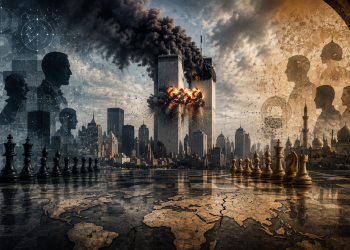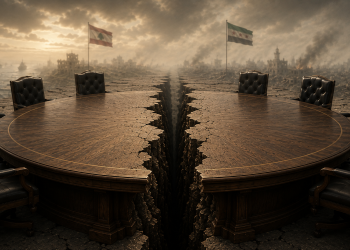
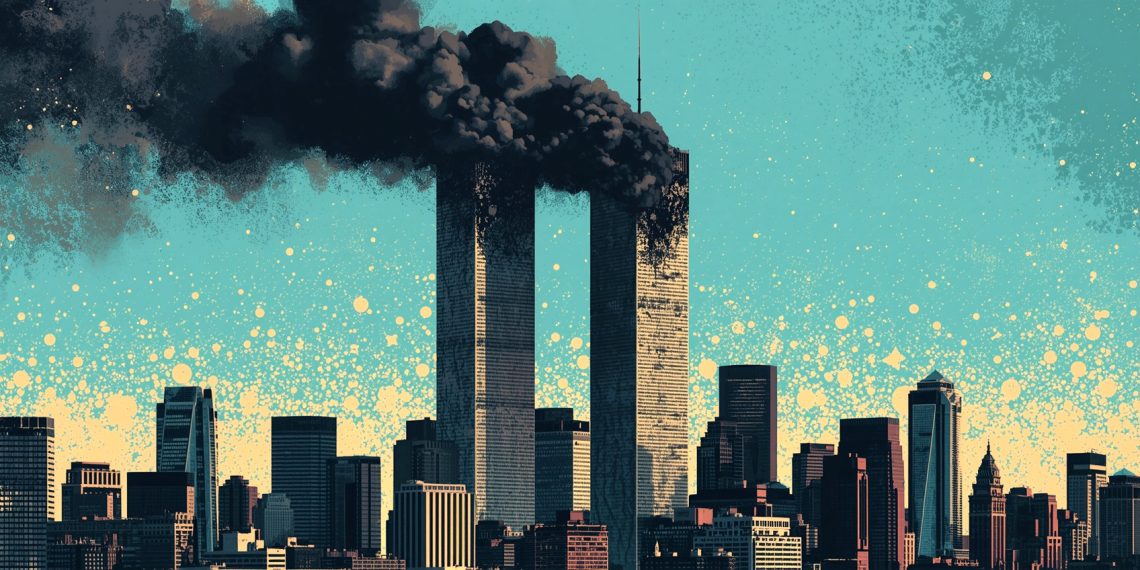
Twenty-four years after the September 11, 2001 attacks carried out by al-Qaeda against the United States, the world continues to grapple with the profound consequences of that event, which reshaped global security and political dynamics. Today, in light of Israel’s recent offensive on the Gaza Strip and Washington’s full support for Tel Aviv, fundamental questions resurface: Are we witnessing a reconfiguration of the ideological confrontation Osama bin Laden once described? Is the region—and perhaps the world—heading toward a broader clash of narratives framed as a “new Crusade”? This report seeks to address such questions by analyzing current realities and offering a strategic assessment that balances security, political, and ideological dimensions.
Al-Qaeda’s Framing of 9/11
For al-Qaeda, the 9/11 attacks were framed as retaliation against the U.S. military presence in the Muslim world, Washington’s unwavering backing of Israel and allied regimes, and the suffering of the Palestinian people. Osama bin Laden articulated a stark binary worldview: a realm of “true believers without hypocrisy” versus a realm of “disbelievers without faith.” He warned that America would never enjoy security as long as Palestinians remained deprived of their rights.
This ideology translated into a mobilizing narrative that attracted thousands of fighters worldwide, while also fueling the organization’s military and security operations. Starting with the September 11 attacks, al-Qaeda launched a series of operations across multiple countries, followed by deadly strikes in European, Arab, and Muslim cities.
Gaza Offensive and the Revival of Old Narratives
The recent Israeli offensive on the Gaza Strip has been marked by an unprecedented toll on civilian lives and by international human rights assessments that reached the level of accusing Israel of committing acts of genocide. At the same time, the United States demonstrated unconditional alignment with Israel—politically and militarily—reinforcing the perception of total bias. Extremist groups have capitalized on this image to revive the narrative of “Islamic victimhood,” bringing back to the forefront the slogans once raised by Osama bin Laden against the United States and Israel, including his declaration of the formation of the “World Islamic Front for Jihad Against the Crusaders, Jews, and Americans.” This underscored, early on, the perceived inseparability of U.S.–Israeli ties and positioned this region as the epicenter of global conflict.
In parallel, massive protests erupted across the world—from Western universities to Arab capitals—highlighting shifts in public opinion despite the steadfastness of Washington’s official position.
Bin Laden had long framed the Palestinian question as the core and driving cause of the East–West conflict, arguing that the continued failure to resolve it fairly—ensuring Palestinian rights—would perpetually destabilize global security. He asserted that America’s alignment with Israel and its unlimited support for Tel Aviv reproduce the narrative of a “Crusader–Zionist alliance”.
The images of destruction and the mounting civilian casualties in Gaza, caused by Israel’s relentless bombardment, have revived comparisons with Afghanistan and Iraq during the era of U.S. occupation. They reaffirm the enduring power of visuals and symbols in shaping anti-American and anti-Israeli propaganda.
The Strategic Impact of the War on “Terror”
From a realistic perspective, the strategic consequences of the so-called “War on Terror”—which targeted most Islamic movements in their various forms and stages, whether reformist or jihadist—did succeed in weakening al-Qaeda’s central command. Yet it failed to eradicate the underlying idea itself, which has since given rise to numerous groups and factions across the globe. Foremost among these are the so-called Islamic State, al-Shabaab in Somalia, Jama’at Nasr al-Islam wal-Muslimin in the Sahel, as well as other Islamist movements with local or national roots such as the Taliban, Hamas, and Hay’at Tahrir al-Sham.
In parallel with this military campaign, the United States and its allies waged an information war aimed at dismantling the ideological and organizational infrastructure of Islamic movements. To a large extent, this strategy succeeded in demonizing such groups, hunting down their leaders and members through arrests, targeted assassinations, and relentless legal, military, and security campaigns. These measures extended not only to jihadist groups advocating armed struggle, but also to Islamist political movements across the Arab and Muslim worlds that embraced peaceful political participation and reform. The battle has continued, especially as these movements have increasingly migrated from the physical sphere to the digital realm, leveraging rapidly evolving online tools. Despite new cybercrime laws, intensified surveillance, and counter-hacking measures, their digital presence remains strong and influential.
Undoubtedly, Washington’s unconditional support for Israel carries severe consequences in the short, medium, and long term. The United States’ image as the unchallenged leader of a unipolar world order is eroding at an accelerated pace, threatening the very structure of the current international system. This erosion is compounded by the rise of new global economic and political alliances that undermine U.S. positions and narratives.
Such unlimited backing of Israel effectively grants groups labeled as “extremist”—for their refusal to align with American policies and dictates—a form of legitimacy. It also provides, unintentionally, free propaganda to the rhetoric that divides the world along the ideological lines promoted by these movements. This dynamic signals the potential escalation of transnational violence, whether through lone-wolf operations or more coordinated large-scale attacks targeting American interests and those of its allies worldwide.
Shifting Global Narratives and the Resurgence of 9/11 Rhetoric
The shifting tone across international platforms—whether at the United Nations or in global media outlets—against U.S. policies and Israeli practices, and against their ongoing violations of human rights and human dignity, is in many ways a natural consequence of the arrogance, hubris, and lack of moral accountability demonstrated by a superpower that claims leadership of the international order. This trajectory threatens the collapse of international humanitarian and rights-based institutions, stripping them of credibility in the face of injustice, corruption, and politically biased decisions.
Some observers have begun to view the ideological binary once promoted by extremist rhetoric as increasingly justified, citing the outcomes of U.S. policies toward Arab and Muslim countries as evidence of what they see as a “new Crusade.” In this framing, religious discourse is deployed within a Protestant–Talmudic vision to legitimize political and military agendas.
The Palestinian question has once again taken center stage, becoming the benchmark for assessing international positions. This dynamic has emboldened much of the Global South to raise its voice in criticizing U.S. policies and decisions.
Israel’s violations, coupled with its overreach within the structures of the international system, have undermined the credibility of that very system, exposing what many describe as the “Zionist/Jewish mindset” within human society. This has, in turn, dismantled the long-standing narrative of Jewish victimhood, replacing it with an image of extreme selfishness and hostility toward the “other”—regardless of ethnicity, color, or faith. Such behavior, critics argue, reinforces the perception of corruption and exploitation as inseparable traits, and it may ultimately leave Israel isolated. The belief is that one day—albeit too late—this conduct will force a reckoning, as sympathy and mercy will no longer be extended, just as they themselves extended none to others. No amount of military power will suffice to subdue peoples’ will or impose lasting dominance.
More than two decades after the September 11 attacks, we find ourselves confronting a reality that echoes Osama bin Laden’s rhetoric, but in a far more complex context. The Israeli assault on Gaza, combined with Washington’s unwavering support, has reopened the door to the recycling of the “Crusader war” narrative that jihadist groups have long thrived upon. Yet the world today is not the same: jihadist movements are fragmented, global alliances are more intricate, and the digital sphere has introduced new tools of conflict and propaganda.
The pressing question remains: can the international community break this vicious cycle of victimhood and extremism, or are we heading toward an unprecedented escalation—one that could revive darker and more catastrophic images than those of 9/11, with jihadist groups reemerging in reconfigured and potentially more adaptive forms?