The ongoing crisis in Sudan is linked to the lack of readiness of the Sudanese elite for a political transition. Since the fall of Omar al-Bashir in April 2019, divisions within the “Declaration of the Forces for Freedom and Change” coalition have increased, in a manner that brought to mind the approaching civil war and its transfer from the margins to the centre of the state and the increasing possibilities of its regional influence.
In this article, we try to shed light on the paths of division, their local and regional repercussions, especially with regard to the failure or progress of the political process. The important issue is related to the factors that shaped the ongoing war between the armed forces on the one hand and the Rapid Support Forces on the other, as the outbreak of war poses a challenge to restoring the peaceful path.
Transitional documents and agreements seek to secure the process of political transition to build a strong state. The integration of the Rapid Support Forces appeared to be a point of contention between the parties to the agreement. While the Military Council insists on its presence in the agreement and is supported by the Democratic Bloc, other parties, the Central Council refer to the army’s need for a purification campaign and subject it to a program to remove the empowerment of the presence of Islamists among its ranks. As seen by the popular movement, Yasser Arman, the nucleus of the national army.
The significance of the framework agreement path lies in the fact that sponsoring it under an international umbrella means dividing the regional pattern and creating a pattern of conflict or competition between regional parties. Its issuance under the auspices of the Quartet (Saudi Arabia, the Emirates, Britain and America) and the tripartite group (the United Nations, the African Union and IGAD) represents a kind of exclusion of the Arab League, Egypt and the marginalization of their roles in the political process.
In this context, it is possible to understand the insistence of the United Nations and the international envoy that the agreement is the only option, a kind of political coercion, bias in favour of one of the Sudanese parties represented by the Freedom and Change Central Council, and ignoring the demands of the other political components. In view of the amendments to the Juba Agreement last February, a different group of sponsors participated in addition to the IGAD and the Emirates of the Arab Emirates.
The Arab League guarantees the minimum presence of the Arab countries as observers of what is happening in Sudan, which represents an important window for Egypt and the presence of Chad enhances its role in following up on the affairs of the Western states in the Darfur region, especially with the spread of tribes across the borders and the increasing possibility of their involvement in the ongoing war. Disruption of schedules pervades Sudan’s transitional experiences. In the interim, the parties to the Juba Agreement paid attention to the importance of setting a timetable for all issues and problems in order to confirm the commitment of the armed movements and international guarantors.
The agreement was issued in its final form, including a time matrix, which included mutual commitments and the necessary financing for the integration of the militants and the rehabilitation of the areas affected by the war, in addition to the return of the displaced and transitional justice. At present, these tasks seem difficult to implement, not only because of the outbreak of war, but also because of the apparent lack of fulfilment of the necessary funding for the transitional programs by international actors. These structural defects have appeared over the past years, as only the armed movements have confidence in the feasibility of subjugating under the authority of the state and giving up their weapons without guarantees of power distribution and participation in governance. Therefore, the evaluation of the implementation of the Juba Peace Agreement seemed to be an attempt to avoid a recurrence of failure and not to bring about fundamental changes in the relationship between the parties to the agreement.
For his part, the rapporteur of the Mediation Committee, Dhieu Matouk, said that “at the conclusion of the deliberations of the technical committees of the government and the parties to the peace process, which lasted for 5 days, the workshop followed the methodology of presenting all the protocols of the agreement and stood on the challenges and obstacles that accompanied the implementation by developing a vision for updating the timetable.” As a step to address and validate the legal, political shortcomings.
In any case, a clear disagreement appeared among the Sudanese parties participating in the framework agreement and the Juba Peace Agreement. From a fundamental point of view, the Sovereignty Council / Supreme Council of the Armed Forces participated in the two agreements with a slight difference, as Muhammad Hamdan Dagalo (the Rapid Support Forces) participated in signing the framework agreement only and that was alongside the “Freedom and Change” alliance with the Central Council, which is a group of left-wing parties and the National Umma Party, While the Freedom and Change Alliance – the Democratic Bloc and the Unionist Party participated in amending the Juba Agreement, in addition to the Revolutionary Front Alliance and some armed movements in Darfur.
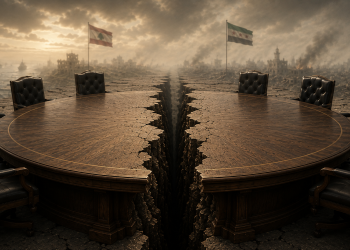
The division of the Sudanese forces on both sides of the two agreements constitutes the ground for the dispute over the priority of transitional documents and proposals. While the Rapid Support Forces and the left parties considered the legitimacy of the framework, the other parties adhered to the Juba Agreement as a final reference. This conflict was fuelled by the bewilderment of the United Nations and some affiliates of the Popular Movement (Yasser Arman) in exchange for the army’s request to review the two agreements and unify the armed forces.
This duality anchored the ongoing war. There was a dispute over the years of merging rapid support between integrating it immediately or postponing it for ten years, as it is an apparent disagreement that does not reflect the reality of the crisis and its dimensions, especially with regard to the problems of distributing wealth and agreeing on the system of government gangs.
These possibilities are reinforced with talks about the entry of regional and international parties, which would help spread the armed conflict on a scale outside the main cities and make it among the future alternatives. In this context, the initial features are evident in the presence of two packages of regional positions.
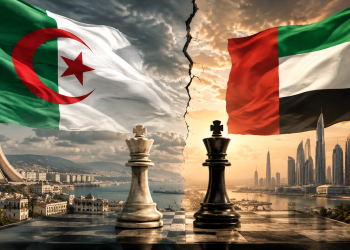
The first package appeared in the preferences for the state to remain as it is, in the sense of realizing the dangers of continuing the conflict on state institutions, and this approach on the part of Egypt and Saudi Arabia converges with the legitimacy of the position of the armed forces as a representative of the state and that it is facing a military rebellion. Sudan is in a state of chaos, similar to Yemen and Libya, it is usually a fertile environment for international intervention and the escalation of violent groups and terrorism.
The second package was an attempt to build a middle position based on recognizing the existence of a crisis between two parties, the army and the Rapid Support Forces, therefore considers that accepting this reality represents a basis for stopping the war and reviewing all previous agreements.
This approach enjoys the support of the United Arab Emirates and has received consensus from the United Nations and the African Union, as they share that holding negotiations can lead to stopping the war and resuming the peace process. In any case, the current approaches seem preliminary and unable to provide a holistic vision that intersects with the interests of all parties. During six truce initiatives, the cease-fire did not hold, not only because of technical defects and the different style of war between the two parties, but also because neither side (civilian and military) achieved its minimal goals of controlling power or approaching imposing a reality that helps in negotiating for an improvement of the conditions.