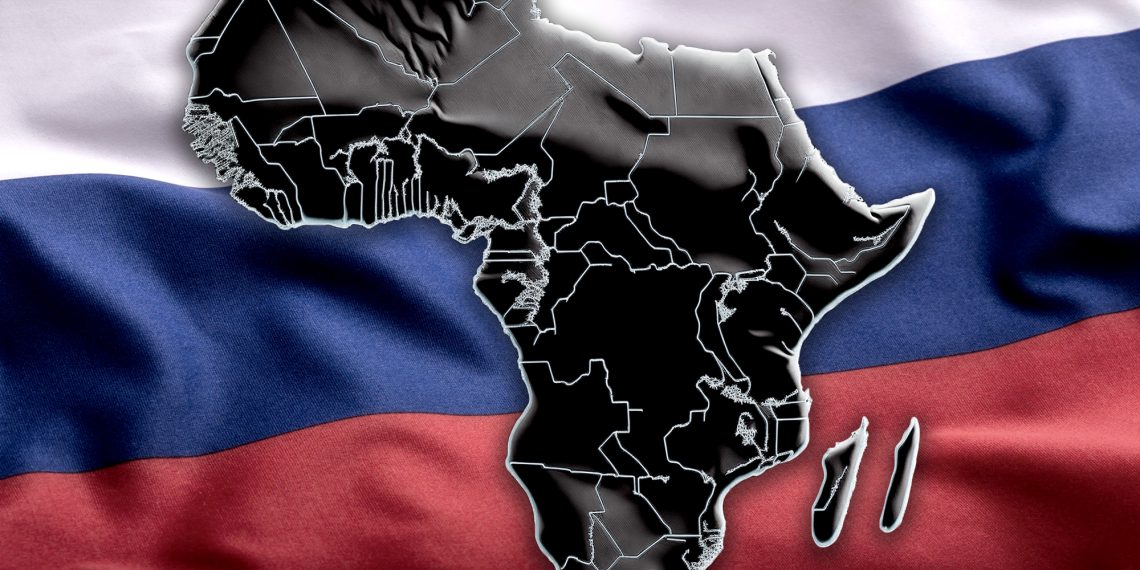
1. Reasons for the summit:
- There have been major international changes in the past year and a half since the start of the Russian military operation in Ukraine, which resulted in a wide range of sanctions imposed on Russia by the United States and Western countries amounting to more than 10 punishments for a person or institution.
- Russian foreign policy has become oriented toward cooperation with the countries of Asia, Africa and South America to compensate the Western province, especially the European ones. Russia is just one of several key actors that are now intensifying their efforts to attract political and economic influence in Africa – along with China, India, Turkey, the Gulf States, South Korea, of course, Western countries and Japan.
- Under the same slogan as the first summit in 2019 “for peace, security and development”, the second Russian-African summit was held a month before the “BRICS” summit hosted by South Africa, which confirmed that President Putin will not attend that summit in the presence of an arrest warrant issued against him by the International Criminal Court.
- South Africa would be theoretically bound to implement it as a signatory to the ICC’s Rome Statute, but Russia would be represented at the BRICS summit by Foreign Minister Sergei Lavrov, as happened at the G20 summit in Indonesia.
2. Weather before the summit:
- Russian officials say African countries have come under great pressure, such as being denied World Bank aid, not to participate in the summit. However, representatives from 49 out of 54 countries attended, including 16 African heads of state and 5 prime ministers, led by the Presidents of Egypt, South Africa and Senegal, the Prime Minister of Ethiopia and the Chairperson of the African Union.
- Preparations for the summit have been marked by several diplomatic tours by Russian Foreign Minister Sergei Lavrov, as Russia worked to restore the historical ties that were in the Soviet era, but were cut off during the 1990s to the point that dozens of Russian embassies were closed in Africa.
- Today, Russia promised to open more embassies, strengthen cooperation and provide aid to African countries, especially thousands of tons of grain, free assistance to 6 African countries friendly to Russia, such as Eritrea, Burkina Faso, Mali, Guinea, Egypt and others.
- Lavrov noted that the West is pressuring African countries to change their political positions toward Russia without paying it. Russia deals with Africa on the basis of partnership and independence of position.
- The summit was preceded by the Russian-African Economic and Humanitarian Forum, in which African leaders and President Putin participated.
- Russian President Vladimir Putin also wrote before the second summit an article for African media under the title “Russia and Africa” and presented his views on the grain deal and the reasons for Russia’s refusal to extend it, especially since Western countries did not commit to implementing part of the deal related to the export of Russian grain and fertilizers.
- He pointed out that Europe had the largest amount of grain, and very few reached poor countries. I assure you that our country is able to replace Ukrainian grain, either on a commercial basis or on a free basis.
- Sergei Palmasov, an expert at the Russian Council on International Affairs, said Russia was trying to use the summit to promote its vision of Western neo-colonialism in Africa, building on the Soviet legacy of cooperation and assistance to African countries.
3. The first Russia-Africa Summit 2019 in Sochi:
- The first Russia-Africa Summit was held in 2019 in Sochi and was attended by 43 African leaders.
- As a result of the first 2019 summit, the report of the “Valdai” International Forum for Dialogue on the occasion of the second summit in 2023, entitled “Russia and Africa: A review of relations”, confirmed that in the four years since the first Russia-Africa summit in 2019, the Russian business sector and government bodies have not been able to achieve broad cooperation with African countries.
- Africans were waiting for Russian investment in all sectors of the economy, but 2019 “the majority of Russian companies have not yet learned the basics of working with Africa: Where are the entrances, who are the potential partners and what African countries need.
- The Russian and African sides have also been unable to activate political coordination and cooperation.
- By comparison, the second US-Africa Summit, held in December 2022 at the invitation of US President Joe Biden, was attended by 49 African leaders and announced US$55 billion in investments in Africa.
- Russia does not have the luxury to invest in Africa, except to provide free shipments of grain to friendly countries in Africa, especially those that have experienced military coups with the help of Wagner and which vote for Russia at the United Nations.
4. Official information on Russian-African relations:
- Trade between Russia and Africa reached $18 billion
- Oil and gas exports from Russia to Africa increased 2.6 times
- Russia will redirect some 18-20 million tons of petroleum products to Africa in 2023
- There are 60 Russian citizens in Africa, of whom 35 are in Egypt.
- Fertilizers and minerals are expected to account for more than 50% of Russian exports to Africa in 2024.
- Russia exported 10 million tons of grain to Africa in the first six months of this year
- Nearly 35 students from Africa study at Russian universities (of whom 10 study medicine).
- The total debt of African countries written off by Russia stands at $23 billion, and Moscow allocates another $90 million for this purpose.
- Russia has military-technical cooperation agreements with 40 African countries and is the first country to export arms to Africa.
- Russia’s share of world GDP is less than 2 percent and Africa’s share is 3 percent, although Russia and Africa together hold 45 percent of the world’s natural wealth.
5. Wagner is Moscow’s military and security arm in Africa
- Wagner has a presence in more than 120 countries around the world has the security and military activities, including supporting coups in Africa and protecting dictatorial regimes while making big money by extracting precious metals such as diamonds and gold, as it does in Sudan and Central Africa.
- Wagner also protects the interests of the Russian state and Russian oligarchs close to the Kremlin in Syria and several other countries.
- Moscow did not recognize the existence of a private security company named Wagner, until the latest rebellion on June 24, Putin acknowledged that the Russian state had provided $2 billion in support for Wagner, whose fighters must choose between joining the Russian army, leaving for Belarus or going home.
- On Wagner’s activity in Africa, Lavrov said he would remain the same as before and that new leaders of Wagner’s branches would be appointed.
- Belarusian President Alexander Lukashenko said in his meeting with President Putin in St. Petersburg days ago that Wagner fighters were asking him to be allowed to go to Warsaw (the capital of Poland) as a tourist.
- The statement has a largely symbolic meaning: A veiled threat to Poland, a staunch anti-Russian and staunch supporter of Ukraine, a message to the West that Wagner could be tasked with military action in Europe.
- Wagner Group chairman Yevgeny Prigozhin recently promised his men, after fleeing Russia to Belarus following his recent rebellion, a broader focus on African operations.
- Despite his apparent disagreement with Putin, this will certainly help expand the Kremlin’s ability to influence African events, particularly in the extremely fragile Sahel region – where Niger’s President Mohamed Bazoum was ousted a few days ago in a military coup, preceded by coups in Mali, Burkina Faso and Guinea. All of this is part of the geopolitical conflict between Russia and the West in Africa.
- Tamara Andreeva, an analyst at the Africa Institute of the Russian Academy of Sciences, said the coup in Niger could change the relationship between Niamey and Paris, similar to what happened in Mali and Burkina Faso and lead to a rapprochement with Russia.
6. Deepening Christian activism in Africa:
- It is very interesting that Patriarch Kirill of Russia was present at the plenary session where President Putin spoke. Patriarch Kirill spoke about relations between Russia and Africa in the religious sphere, where Christianity is widespread in many African countries and that there is competition between the Russian Church and the Ukrainian Orthodox Church, which is supported by the Coptic Church in Egypt.
- Here we witness an ancient tradition in the Russian state of using the Church for political purposes and for the interests of the ruling power in Russia since the Tsarist era.
7. African Peace Initiative in Ukraine:
- The peace initiative in Ukraine was presented by a group of African countries led by the Republic of South Africa and with the participation of Egypt. A delegation from the African Group visited Russia in June 2023 and met with Putin on the sidelines of the International Economic Forum in St. Petersburg.
- Putin stressed that Russia respects and carefully studies African peace initiatives on Ukraine and does not refuse to discuss the crisis.
- But Andrei Baklanov, vice president of the Association of Russian diplomats and professor of the Moscow higher School of Economics, said the summit was working on ways to advance bilateral relations without intermediaries, questioning the ability of African countries to contribute effectively to ending the Russian-Ukrainian conflict.
8. The most important statements of President Putin at the Russia-Africa Summit 2023:
- Russia-Africa relations are based on strong bonds of friendship, mutual assistance and positive experience.
- Russian and African positions on international issues are very close
- Russia and the African countries stand together to form a just, multipolar world order based on the principles of sovereign equality of States, non-interference in their internal affairs and respect for the right of peoples to self-determination
- Russia’s interest in Africa is steadily increasing and Moscow is ready to restore and open new institutions on the continent
- Russia is increasing supplies of agricultural products to African countries despite restrictions on Russian exports.
- The situation in many parts of Africa is unstable due to the legacy of the colonial era
- Putin hopes that the African Union will become a full member of the G20 in September 2023
- In the next three to four months, Russia is ready to provide 25-50 tons of grain to Burkina Faso, Zimbabwe, Mali, Somalia, the Central African Republic and Eritrea free of charge (Wagner Group has a strong presence and activity in those countries that support Russian positions at the United Nations).
- One-third of the trade between Russia and Africa belongs to Egypt.
- It is important to expand direct flights with African countries
- It is worth exploring the possibility of opening schools in Africa to study subjects in Russian
- Russia will provide 10 mobile laboratories and train hundreds of specialists as part of a joint infection control program with Africa.
- About 30 energy projects have been prepared with Russia’s participation in 16 African countries
- Russia will continue to train military, police and security officers from African countries in specialized educational institutions in Russia.
9. The most important statements of African leaders:
President of the African Union President of the Union of the Comoros, Ghazali Assoumani:
- He stressed that Africa should be represented at the UN Security Council, and expressed hope that Russia would support this initiative.
- The international system must be reformed today, especially the United Nations system.” Africa should be represented in the United Nations Security Council and Moscow should support this trend
- Russia is a strategic partner for Africa and contributes significantly to the alleviation of food insecurity on the continent, demands that Africa facilitate the transport of Russian and Ukrainian grain and the suspension of the grain deal may have some impact on our cooperation.
- On behalf of the African Union, Othmani called for peaceful coexistence between the brotherly peoples of Russia and Ukraine.
- Othmani strongly condemned the rebellion in Niger and demanded the immediate release of the elected president.
- The President of South Africa spoke to President Putin (at the meeting with the heads of state of the Ukraine Peace Initiative Group): We did not come here to get free shipments of grain, but we want to return the grain deal that re-exports to Africa.
The Egyptian president called for consensus on the grain deal and for a quick solution to the food problems, stressing that African countries seek peace and security and seek sustainable development that serves the interests of their people, and should remain free from polarization efforts in existing conflicts.
President of the Libyan Presidential Council Mohamed Al-exile: The Libyan Presidential Council calls for support in the withdrawal of all foreign forces from the territory of the country and Libya is open to restoring Russia’s previous role in cooperation with Libya in the economic and military fields.
Mali has strengthened its armed forces and security with the help of Russia
10. Second Russian-African Summit 2023:
- A final communiqué of the Summit, a general policy document, a joint action plan for the period 2023-2026, a document dealing with the fight against terrorism, a document on the non-deployment of weapons in outer space and a document on international information security were signed.
- Russian President Vladimir Putin held meetings with most of the African presidents attending the summit. He also held a meeting with the African Group of the Ukraine Peace Initiative. Two days after the summit on July 30, President Putin, four African leaders and representatives of 5 other countries attended the military parade of the Russian Navy on the occasion of Navy Day.
- Russia’s July 17 decision to halt the grain deal may have played a negative role, despite Russia’s emphasis on exporting grain and fertilizers to Africa and accusing Ukraine of using the grain corridor for “terrorist” purposes. At the same time, Ukraine is seeking to export its grain without the participation of Russia.
- The Turkish president is trying to persuade the two countries to return to dialog and extend the grain deal.
- One of the priorities of African countries in their relations with Russia is to maintain the export of Ukrainian and Russian grain to Africa. This was reflected in the peace initiative in Ukraine, put forward by a group of African countries, including Egypt and South Africa, because of the impact of food security on political stability, including the words of African leaders.
- Russia is working to restore cooperative relations in all fields with the African countries, starting from the historical legacy of the Soviet Union with the African countries in supporting them for independence and liberation from European colonialism, knowing that the Soviet Union was a state with a communist ideology and wanted to spread it throughout the world.
- The current Russian state pursues a pragmatic and geopolitical policy that primarily serves the interests of the ruling class.
- Some experts argue that Russia has succeeded in recent years in gaining friendships in Africa, but these relations are rather tentative and not strategic because of Russia’s limited economic and investment potential in Africa, as well as because of the great pressure on regimes in Africa by the United States and the West, and because of China’s vast influence in Africa.
- One of the most important areas of cooperation between Russia and Africa remains the export of Russian arms and the expansion of military cooperation.
- It is remarkable that BRICS Bank President Dilma Rousseff (formerly the president of Brazil) has been invited to the summit and to talk about cooperation between BRICS and Africa and President Putin seems to want to take advantage of BRICS’ role in deepening cooperation with Africa – the theme of the summit.