
The latest normalization process between Saudi Arabia and Iran orchestrated by China, is a ray of hope, rose up in the tumultuous MENA region. The astonishing deal between Riyadh and Tehran did raise questions, about the timing, the policy shift of both capitals, and how would impact countries who are allies with one, and foes with the other? In this case, Morocco, a Maghreb monarchy country who historically has closed ties with Saudi-Arabia. Once the GCC members wanted Morocco to join the regional economic and military cooperation bloc, in 2014, Morocco did join the Saudi military operation Decisive Storm in Yemen, later Morocco withdrew its royal forces from the coalition.
Small and prudence steps policy
The Saudi-Arabia-Iran prudent rapprochement is captivating by far how would appease the rivalry and the suspicion of the two nations’ relations, it would eventually benefit the region’s peace and security dynamics on one hand, and end endless proxy wars that are eating up MENA region’s political stability and economic prosperity. Thus this diplomatic relief between Riyadh and Tehran would provoke a geopolitical and economics fall-over that already is on the horizon.
Latest developments on world stage events are making China, India, Brazil, and Russia to unfold the storyline of a new world order, demystifying the theory of the Westphalian System, despite the latter’s military operation impasse in Ukraine, and the recent military drills around Taiwan, called a “Stern Warning” of the former — a rising superpower heavyweight axis: Beijing-Moscow with India, it has strengthened its world affairs ambitions in the southern hemisphere via the BRICS organization, which Saudi Arabia and Iran are willing eagerly to join.
Following these rapid regional and global event developments that are shaping international politics and to some extent regional and sub-regional geopolitics, ultimately, containing U.S hegemony in the region. In this complex context, how would Morocco handle the Saudi-Arabia normalization? In light of Rabat-Tehran “almost non-existent” relations since the fall of the Shah regime and the arrival of the Mullahs in power in 1979, their relations are anything, but cordial.
Trust on the line
Chronologically, in 1981, Tehran did cut-off its diplomatic relations with Rabat as a result of King Hassen II’s decision to grant exile to the ousted Shah, Mohammed Reza Pahlavi. On March 6, 2009, King Mohammed VI decided to break diplomatic relations with Iran because of Tehran’s interference in Bahrain’s internal affairs and Iran’s Shia “proselytizing” in Sunni Morocco land. In February 2014, the two countries declared that they were restoring their diplomatic relations. And yet, on May 2, 2018, Rabat again cut-off its diplomatic relations with Tehran, this time, Iran was allegedly supporting financially and logistically the Polisario Front through Hezb-Allah. According to Moroccan Foreign Affairs Ministry.
In this cat and mouse diplomatic game between the two countries, it did create an unclear long-term vision in the two countries’ foreign policy decision makers based reciprocally on the principal of non trust. Morocco who is a strategic ally to Saudi Arabia in the Maghreb region thought its tough approach policy toward Iran would cement the two countries’ ties and economic cooperation, notably, in tourism sector.
Politics and geopolitics are like a real life, full of irony — and in international relations realism parameters, there are neither allies nor foes, only interest. So, the Saudis did get that though, under the leadership of Prince Mohammed Ben Salman, Prime minister and the de facto ruler of the kingdom.
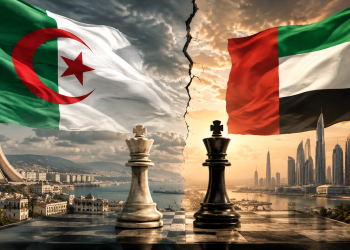
Whereas, the Moroccan King and his close advisers seem less concerned about the complexity of MENA’s region harsh politics and geopolitics landscape, and the dynamic of the arch role of Iran in the Maghreb region, moving its pawns quietly, sustaining its relations with Algeria, and weaving good relations with Mauritania, Libya and Tunisia, leaving Morocco remote.
Better to prevent argument
A narrative that Morocco has been using to stop Iran’s role in the Maghreb region and the African Sahel alike, lately, Iran did show its strategic interest in the African Sahel and West Africa. From this angle, Rabat believes that the Saudi-Iranian rapprochement won’t have any direct impact on its strategic relations with Riyadh geographically, and even politically. Publicly, Rabat is saying, not directly concerned about the two counties’ normalization because the Saudis’ like the Iranians’ national interest and security concerns are in Iraq, Syria, Lebanon, and Yemen, more or less in Palestine — but for both MENA regional powers, Morocco is a serious asset or a wild card of influence in the global nations’ superpower struggle and influence, in other words a geo-strategic posture.
Rabat believes in Saudi-Iranian détente may would help Morocco to position itself as a solid strategic ally to Saudi Arabia, hence Iran would decrease its rhetorical hostility vis-à-vis Morocco. Afterwards, Rabat needs to consider the Mullahs’ Neo-realism foreign policy paradigm in the region, taking into consideration the rise of Türkiye as a credible stabilizing force in the region — Iran looks at Türkiye nowadays as a rival force in MENA region and Central Asia. Iran, nonetheless, main goal is to pull back Saudi-Arabia from America’s arms, and stop the normalization process deal of Arab states with Israel.
Rabat on the contrary, looks at the Saudi-Iranian normalization process that would help, and make progress in the U.S. ex-President’s Donald Trump Middle East Peace Initiative: the Deal of the Century, bringing as many as they are, Arab states to normalize with Israel in the name Abraham Accords that Rabat did normalize in Dec 2020 with Israel, which enraged Tehran, and in the best case scenario Riyadh would follow and normalize with Israel.
The current region’s geopolitics dynamics are not predicting any appeasement in the Israeli–Palestinian conflict, furthermore, the social chaos and the political crisis in Israel, the latest outbreak of the two generals’ war in Sudan, the triumphal return of Syria of Bachar al-Assad to the Arab League, his return to regional politics affairs is an asset for Iran, which Rabat has been showing its refusal of Syria reintegration of the Arab League seat, this is a diplomatic challenge for Rabat in its alignment stand with Saudi Arabia.
The Saudi-Iranian normalization process is the premise of the entire MENA region’s policy and security change dynamics that is pushing new rising states on the international and regional stage, setting up their determinants and foreign policy objectives, like Türkiye and Algeria; a pattern that would help to empower the Saudi-Iran deal in the long run. As far as Iran’s position in the region goes, it is a chance to polish its catastrophic image among large Arab and Muslim populations since the Syrian uprising in 2011, which Iran didn’t hide its position and policy toward the 2011 Arab uprisings in the region.
While Iran was trying to gain minds and hearts of the Arab and Muslim streets through the Palestinian cause.
In sum, Iran’s role is still solid in the region, after four decades of direct and indirect involvements in the main Arab states’ politics, social, cultural and geopolitics, it’s up to Morocco to reset its Iran policy like the Saudis who found a way forward of diplomatic opportunism and a dose of realism because in politics so that in geopolitics, states cannot rely on only constants because of the periphery’s economics, politics, and national security changes.