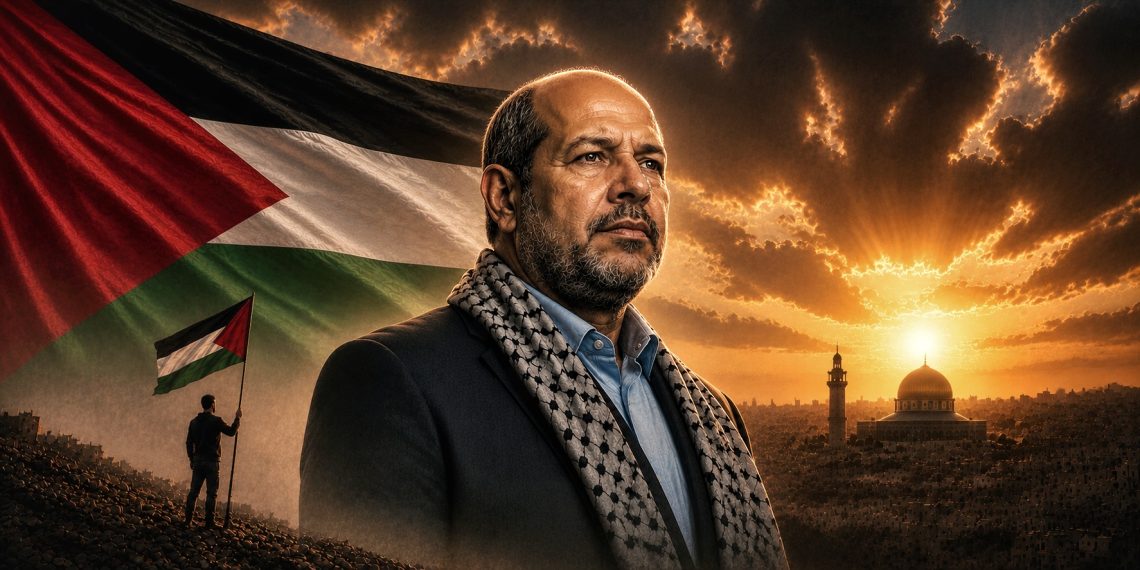
On July 20, 2026, the Islamic Resistance Movement, Hamas, announced the election of Khalil al-Hayya as head of its political bureau, succeeding
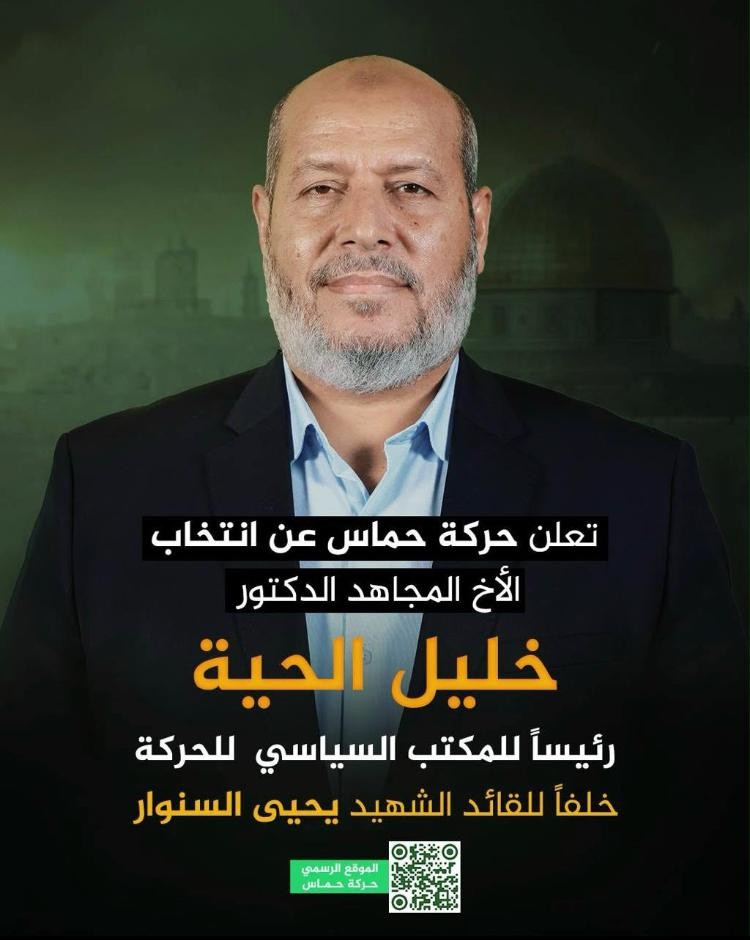
Yahya Sinwar, who was killed in a clash with Israeli forces in Rafah in October 2024. With al-Hayya’s election, the movement concluded a transitional phase that lasted nearly two years, during which it managed its affairs through a temporary leadership council formed after Sinwar’s death. This period was one of the most complex in the movement’s history since its founding in 1987. Al-Hayya’s selection followed a lengthy internal election process that began in early 2026. This process was impacted by Israeli military operations, regional instability, and the difficulty of communicating with the movement’s representatives in the Gaza Strip, the West Bank, Israeli prisons, and abroad. A general Shura Council of approximately 69 members, equally divided among three geographical areas (regions): the Gaza Strip, the West Bank, and the diaspora, with each region having an equal share of 23 members, was tasked with choosing the new leader. Media sources reported that al-Hayya won the runoff election. (35) votes compared to (34) votes for Khaled Meshaathe head of the movement abroad and former head of its political bureau.
The close result reveals the extent of the competition between two main trends within the movement, not as separate or conflicting wings, but as two networks of influence with different priorities and political experiences. The first trend is linked to the leadership in the Gaza Strip and the movement’s military wing, and gives high priority to the continuation of armed resistance, rebuilding military capabilities, and maintaining ties with Iran, Hezbollah, and the rest of what is known as the axis of resistance. The second trend, represented by Khaled Meshaal and a number of leaders abroad and in the
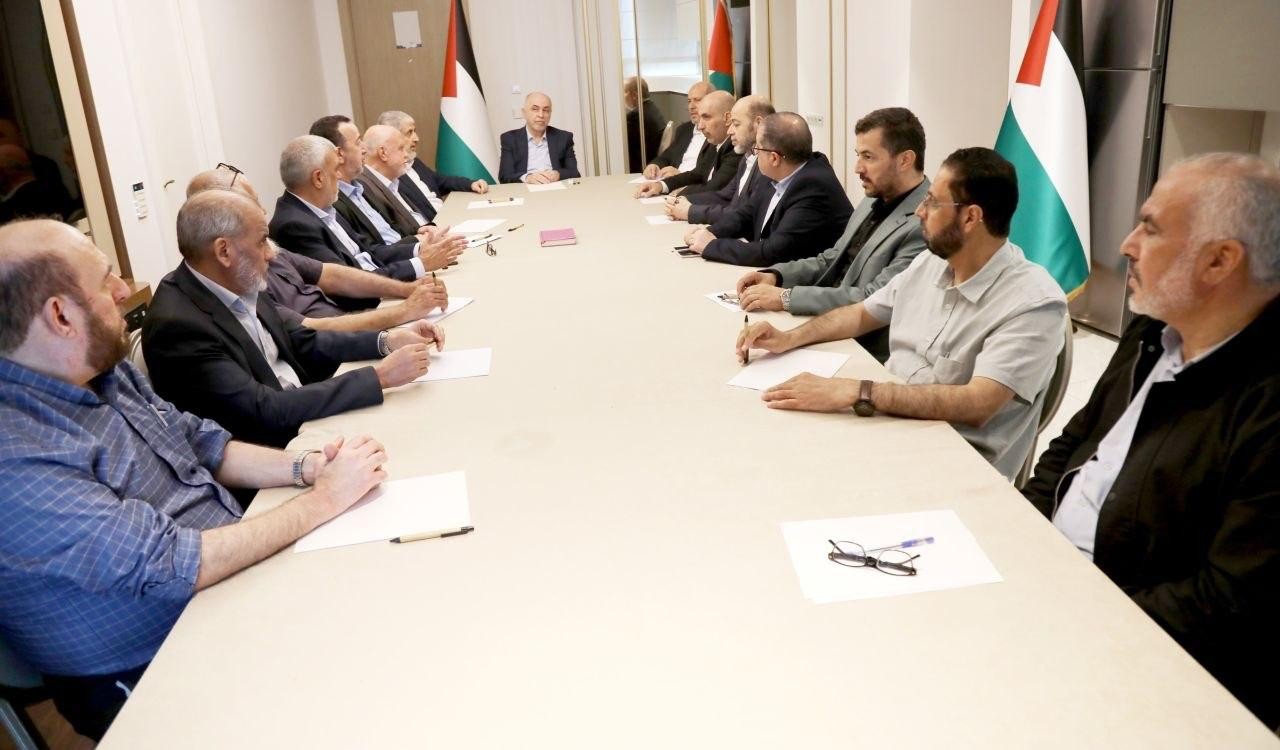
West Bank, tends to give more space to political and diplomatic work, expand the movement’s relations with Arab and Islamic countries, and balance resistance with interim political settlements.
However, the competition between Haniyeh and Meshaal should not be reduced to a simplistic dichotomy of “hardliners” versus “moderates.” Both men belong to the movement’s historical leadership and adhere to its core principles, including the refusal to recognize Israel and the commitment to the right of resistance. The main differences lie in their priorities, the nature of their regional alliances, their conflict management strategies, and the degree of flexibility they are willing to show in negotiations. International sources have described Haniyeh as more hardline than Meshaal, while his extensive experience in indirect negotiations suggests he combines firmness on strategic issues with a degree of tactical pragmatism.
From Haniyeh to Sinwar, then al-Hayya
Ismail Haniyeh assumed leadership of Hamas’s political bureau in 2017 and remained in office until his assassination in Tehran, Iran, on July 31, 2014.
Days later, the movement chose Yahya Sinwar as his successor, a decision that carried clear political and symbolic significance at the time, representing a shift in the leadership’s center of gravity to the Gaza Strip at the height of the war. However, Sinwar was killed in October of the same year, leading to the transfer of leadership to a temporary five-member council comprising Khalil al-Hayya, Khaled Meshaal, Mohammed Darwish, Zaher Jabarin, and another leader. This council collectively managed political, organizational, and negotiating affairs.
The election of al-Hayya represents a continuation of this trajectory, which has re-established the centrality of Gaza’s leadership within the movement’s structure, even though most of these leaders are outside the Strip due to the war and security persecution. The decision also reflects the movement’s desire to select a figure who combines organizational legitimacy derived from the Gaza Strip with close ties to the military wing and experience in managing political communications and regional negotiations. This does not mean that the Izz ad-Din al-Qassam Brigades directly choose the movement’s leader. The official selection is subject to the Shura Council and the movement’s complex organizational mechanisms. However, the increased military strength since October 7, 2023, and the significant losses suffered by the political and military leadership, have made the acceptance and trust of the military wing influential factors in the leadership balance and the chances of candidates assuming top positions.
Khalil al-Hayya’s Political and Organizational Career
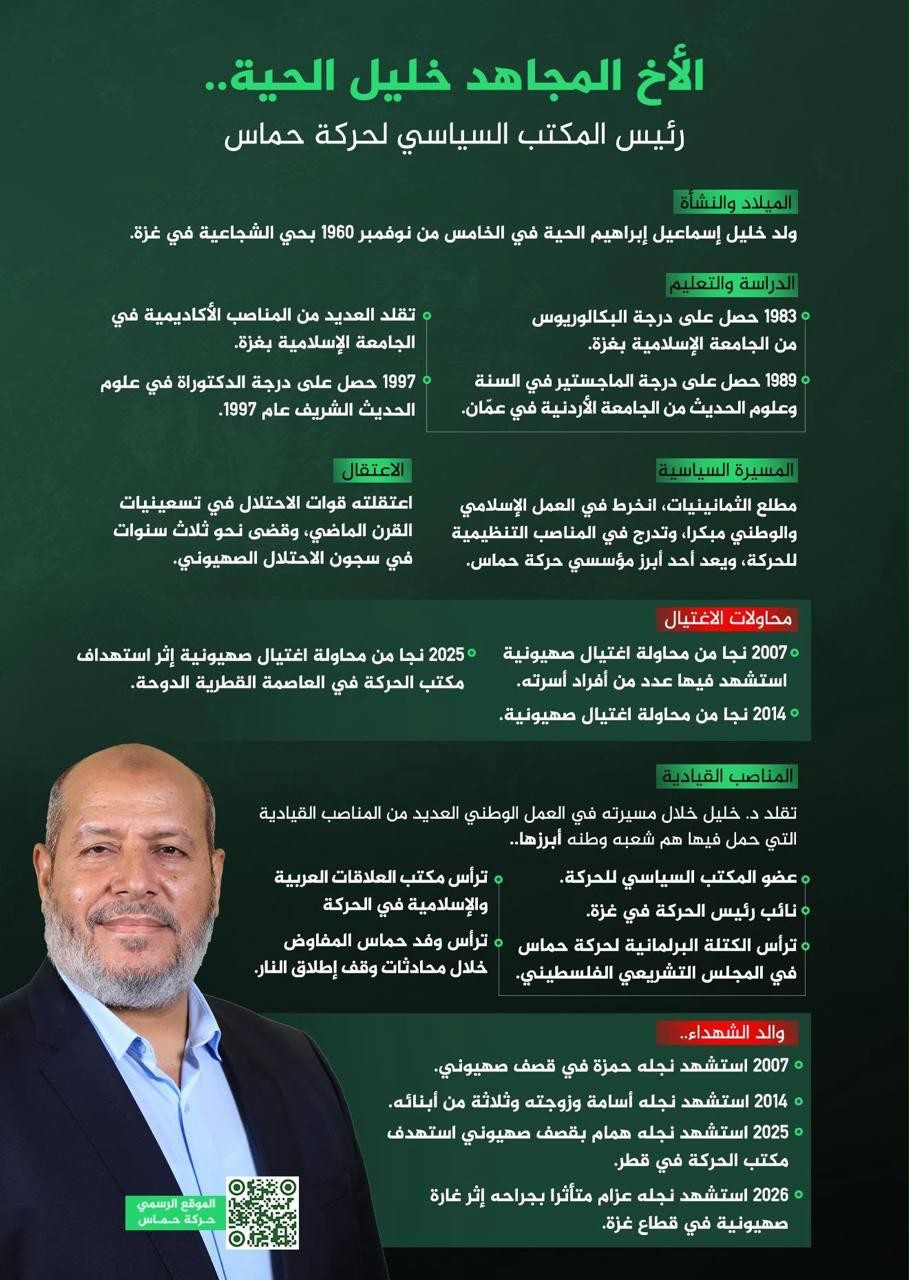
Khalil Ismail al-Hayya was born in the Gaza Strip in 1960. He joined the Muslim Brotherhood in the early 1980s before becoming a member of Hamas since its founding in late 1987. He holds a doctorate in Hadith studies and has combined religious, organizational, and political activism throughout his career.
Al-Hayya rose to prominence after Hamas’s victory in the 2006 Palestinian legislative elections, serving as head of the movement’s “Change and Reform” bloc in the Palestinian Legislative Council. He rose through the ranks of the movement’s organizational structure, eventually becoming deputy head of Hamas in the Gaza Strip, then head of the movement there, and a member of its political bureau, before leading its delegation in the indirect negotiations for a ceasefire and prisoner exchange.
His leadership of the negotiating delegation granted him a prominent political and regional presence, as he participated in lengthy rounds of talks mediated by Egypt, Qatar, the United States, and other mediators. He became, particularly after the assassinations of Haniyeh and Sinwar, the movement’s most prominent political and diplomatic figure, maintaining strong ties with the leadership in the Gaza Strip and close relations with Iran and its allies in the region.
Al- Hayya paid a heavy personal price during the confrontations with Israel; several of his sons and family members were killed in successive Israeli airstrikes. On September 9, 2015, Israel targeted a meeting of Hamas leaders in Doha as they discussed a US-proposed ceasefire. Haniyeh and other senior leaders survived, while his son Hammam, his office director, three of the movement’s bodyguards, and a Qatari security officer were killed.
The Significance of al- Hayya Election
The election of Haniyeh carries several political and organizational implications. First, it demonstrates that Hamas, despite assassinations and extensive military and security losses, remains capable of activating its internal institutions and conducting a leadership selection process involving its various organizational branches. However, the narrow margin of victory by a single vote simultaneously reveals a delicate balance of power and indicates that the new leadership is tasked with managing complex internal compromises, particularly between the Gaza leadership and the leadership abroad.
The second implication is the continued priority given to the Gaza Strip within the decision-making process, despite the widespread destruction inflicted upon the Strip and attempts to exclude the movement from its future administration. Haniyeh, although residing in Doha for years, is politically and organizationally affiliated with the Gaza leadership. He served as deputy to Sinwar and head of the movement in the Strip and enjoys close ties with the leaders of the Izz ad-Din al-Qassam Brigades. Therefore, his election can be seen as a message confirming that the war’s outcome did not lead to a complete transfer of power to the leadership abroad. The third implication relates to the future of weapons and negotiations. The election of Khalil al-Hayya comes at a time when Hamas is facing American, Israeli, and regional pressure to accept disarmament and relinquish security control in Gaza. It is likely that the new leadership will maintain its refusal to disarm without a comprehensive political settlement and guarantees related to ending the occupation and establishing a Palestinian state. Analysts have considered al-Hayya’s selection an expression of the movement’s desire to preserve the option of resistance and rebuild its capabilities, while continuing to engage in indirect negotiations when necessary.
The fourth implication concerns the movement’s regional relations. Al-Hayya is among the leaders who maintain good relations with Iran, Hezbollah, and Ansar Allah, but he also possesses practical experience in dealing with Qatar, Egypt, Turkey, and US mediators. Therefore, he may seek to maintain the movement’s traditional alliances without losing the Arab mediation channels necessary for managing the issues of a ceasefire, reconstruction, prisoners, and the future of the Gaza Strip.
Khaled Meshaal’s Position and Movement Unity
Following the announcement of the results, Khaled Meshaal congratulated his rival, Khalil al-Hayya, and affirmed his full respect for the outcome of the
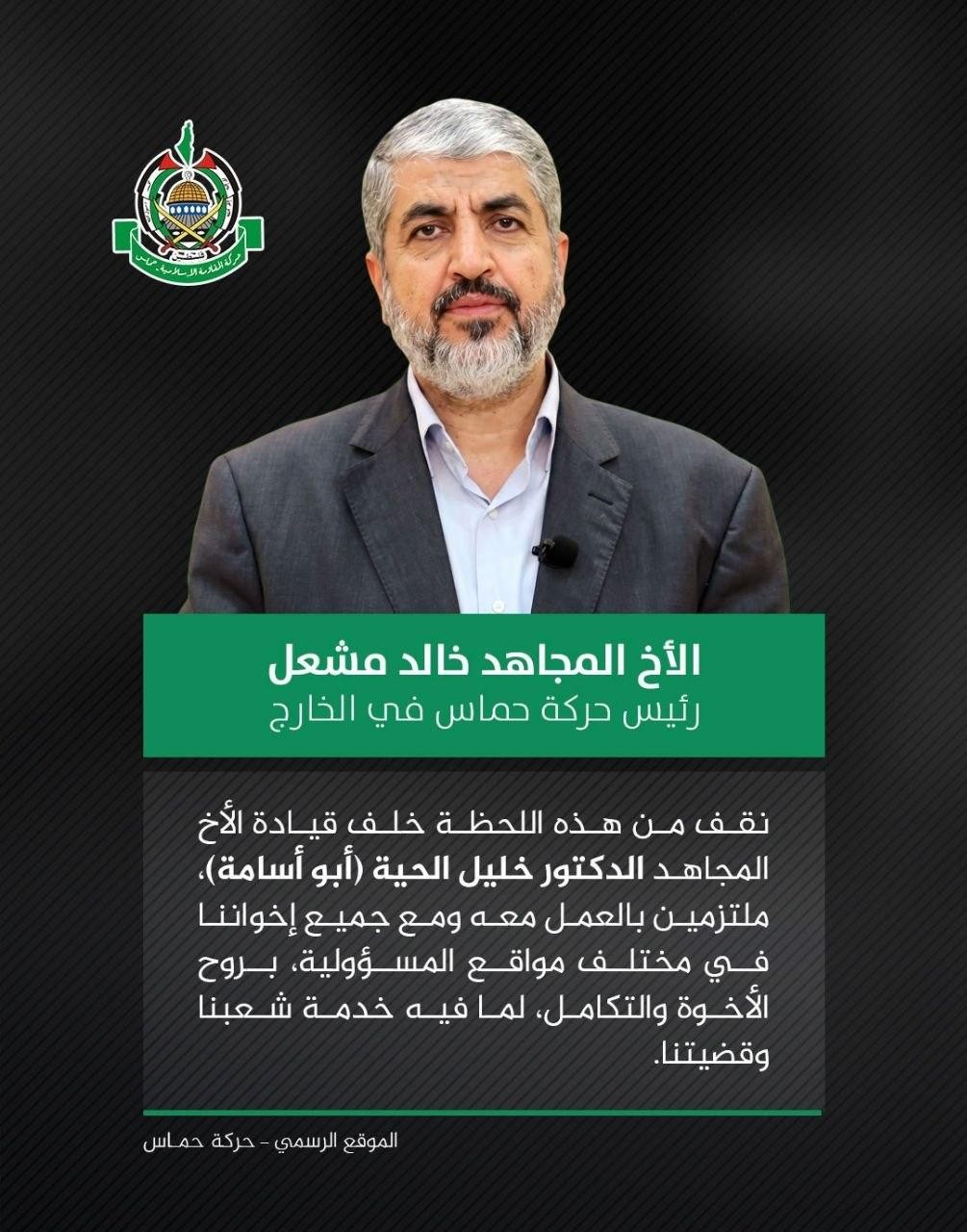
Mashaal’s message is particularly significant due to the close results, as it prevented the electoral competition from escalating into an open split and demonstrated the continued organizational discipline within the movement. However, congratulations alone are insufficient to rule out internal differences; differing assessments and priorities are natural in a broad, multifaceted movement. More accurately, the public indicators do not reveal an organizational schism, and the losing side accepted the outcome within the movement’s institutional framework. The distribution of powers and positions between the two factions will remain a crucial test of the new leadership’s cohesion.
The movement also received congratulations from Palestinian factions, Islamic organizations and parties, and allied forces in the region, reflecting the network of political and ideological relationships that Hamas has maintained despite the war. However, the true measure of the movement’s success will not be the size of external support, but rather its ability to rebuild the damaged organizational and military structure, manage the relationship between the inside and the outside, deal with the humanitarian repercussions of the war, and determine the movement’s position in any future Palestinian or regional arrangements.
The Challenges Facing the New Leadership
Khalil al-Hayya assumes leadership of Hamas at an exceptionally difficult moment. The movement has lost a significant number of its political and military leaders, the Gaza Strip has suffered widespread human and infrastructural destruction, and it faces international pressure to disarm and be excluded from governing the Strip. Furthermore, the new leadership must address growing Palestinian criticism regarding the cost and consequences of the war and rebuild trust with the local community that bore the brunt of the confrontation.
Al-Hayya will also face the dilemma of leading an armed resistance movement while simultaneously leading a political actor seeking Palestinian, Arab, and international legitimacy. Excessive hardening of positions could further isolate the movement and hinder reconstruction efforts, while ill-considered concessions could lead to internal tensions and a loss of confidence among the military wing and the rank and file.
The third challenge lies in restructuring the movement’s relationship with Palestinian institutions and other factions, particularly Fatah and the Palestinian Authority. Hamas will likely need to present a clearer vision regarding the civil administration of the Gaza Strip, Palestinian elections, the restructuring of the Palestine Liberation Organization, and the role of the resistance’s weapons in any future political settlement.
Clearly; The election of Khalil al-Hayya is not merely a change at the top of Hamas’s organizational hierarchy; it reflects an internal repositioning following an unprecedented series of assassinations and losses. His victory confirms the continued significant influence of the Gaza Strip leadership and the military wing in shaping the movement’s direction. However, it also reveals, by a single vote, that the leadership abroad and the more politically pragmatic faction still possess an influential presence that cannot be ignored.
It is likely that al-Hayya’s leadership will pursue a policy that combines adherence to the movement’s armed struggle with a rejection of surrender terms, continued indirect negotiations, and the preservation of relations with Iran and the resistance axis, alongside maintaining open channels of communication with Egypt, Qatar, Turkey, and international mediators. His success, however, will hinge on his ability to translate the narrow organizational legitimacy granted to him by a single vote into broad leadership consensus, and on providing realistic answers regarding the future of Gaza, the movement, and the Palestinian national project after a war that profoundly altered the balance of power and the regional environment surrounding the Palestinian cause.