This analysis examines the scale of military operations and the number of victims of attacks carried out by the Islamic State “IS” in several countries. The analysis is based on compiling statistical information published in the weekly newspaper Al-Naba during October. Occasionally, some of the data published by the “IS” over a period of more than a month is also analyzed, as it reveals the extent of the security and military activity carried out by the “IS” in the cities and provinces of those countries. Often, we cannot verify the accuracy of what the “IS” publishes in its military statements.
However, it can be said that the statistics regarding the number of operations and the extent of material and human losses are largely accurate. Sometimes, the “IS” exaggerates the figures for material losses, which is common practice among armed groups. Therefore, these figures can be used to infer the “IS”’s effectiveness and the extent of its global spread from the indicators we have compiled.
Our sample consisted of five issues of the weekly newspaper Al-Naba’ during October 2025, starting with issue number (515) and ending with issue number (519).
The following table and graph illustrate statistics including the number of attacks and their victims in the countries and cities that witnessed military and security activity by the “IS”:
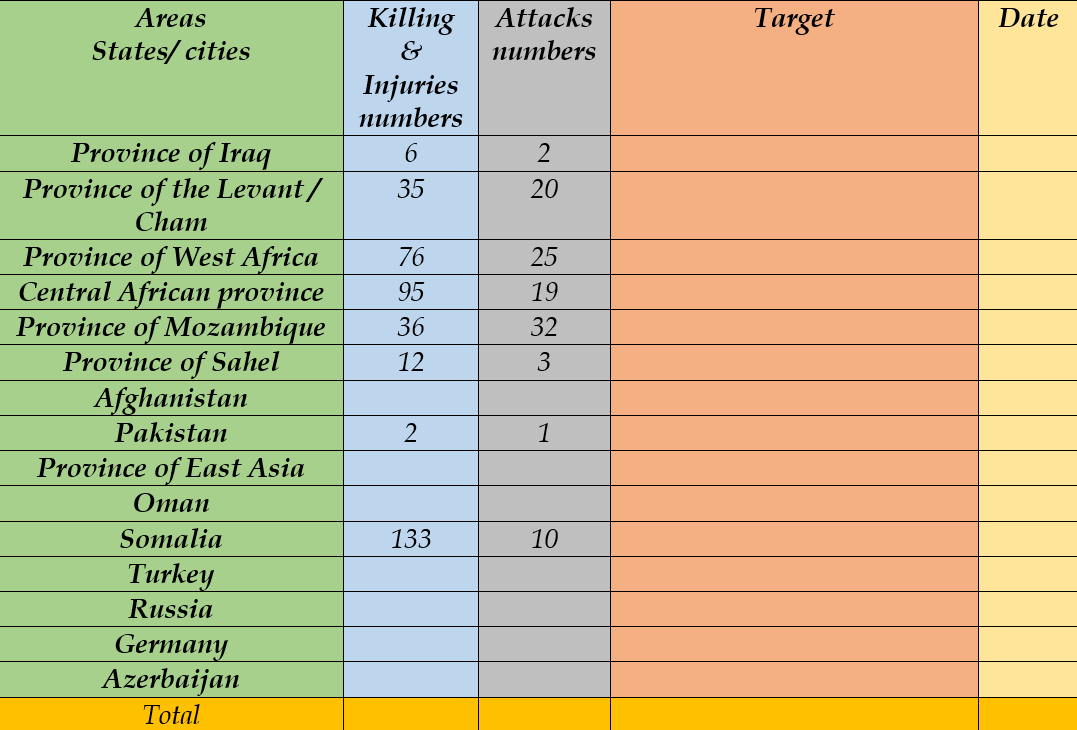
Statistical Analysis of Attacks and Casualties by Region
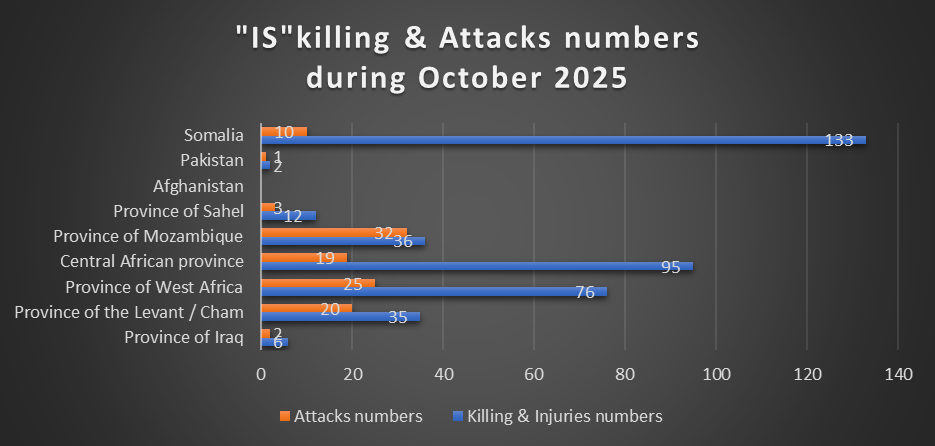
This report presents data on attacks, deaths, and injuries across several regions and countries. The figures represent a geographical range extending from the Middle East to Africa, Central Asia, and the Indian subcontinent. Based on the provided table, the data will be analyzed, different regions will be compared in terms of the number of attacks and casualties, and key observations will be drawn.
The countries where the “IS” has previously carried out military and security attacks have not witnessed any operations since the beginning of the year. These countries include Turkey, Russia, Oman, East Asia, European countries, the United States, Azerbaijan, Iran, and Afghanistan.
In Iraq, an ambush attack using explosives targeted a counter-terrorism force west of Anbar, near the town of Sahul Rawah, killing two members of the government forces.
The “IS” also carried out an IED attack targeting a tribal mobilization patrol during a security campaign in the desert near Haditha, also west of Anbar, wounding three people and damaging their vehicle.
“IS” militants killed 11 SDF fighters, wounded five others, disabled one vehicle, and damaged another in attacks in Deir ez-Zor. The most notable of these attacks included an ambush on a patrol and a swift raid on one of their headquarters. All of these actions served to underscore the continuation of the campaign to avenge the detainees of the al-Ahwal camp.
In detail, “IS” militants ambushed a patrol of the Syrian Democratic Forces (SDF) as it was patrolling its positions near the town of al-Bahra in the Hajin area. Upon the patrol’s arrival at the ambush site, it was targeted with heavy and sudden fire, resulting in the death of four people. In a related incident, an SDF headquarters in the village of al-Bariha, in the al-Basira area, was attacked. The group also carried out two attacks in the town of Muhaymidah. In the first, an IED was detonated against an SDF vehicle in Muhaymidah, damaging it and wounding one fighter. In the second, an IED was detonated against an SDF vehicle in the village of al-Jardhi, damaging it. Although the Sanadid Forces, composed of young men from the Shammar tribe, are among the largest allies of the SDF and have participated in a military and security alliance with them to fight “IS”, military disagreements over interests and gains surface from time to time, as witnessed in the rural areas. In Qamishli, specifically in the village of Karahouk, clashes erupted between members of the Syrian Democratic Forces (SDF) and the Sanadid Forces following an attempt to arrest Mahmoud al-Halil, a Sanadid commander from the Shammar tribe, and his brother. Al-Halil was killed during the fighting, and the SDF accused him of drug trafficking.
The situation calmed down after Sheikh Yawar al-Hamidi intervened with his forces to secure the release of the al-Halil family. The clashes ceased after the International Coalition requested the intervention of Sheikh Maneh al-Hamidi Daham al-Jarba, the head of the Shammar tribe in Syria, and Sheikh Bandar Daham al-Hadi al-Jarba, the Sanadid Forces commander, to de-escalate the situation.
Regarding the news circulating in some media outlets about an attack by the Islamic State on a Syrian army convoy in the al-Bukamal area on the Syrian-Iraqi border, this report is inaccurate. The clashes actually occurred during a security campaign launched by the new Syrian government against drug traffickers.
Special forces from the Ministry of Defense and the General Security Forces conducted a security operation in the village of al-Hari in the al-Bukamal area near the Syrian-Iraqi border, targeting hideouts of arms dealers and drug traffickers. The campaign resulted in successful raids, as part of ongoing efforts to enhance security and combat crime in the border region.
The attack resulted in injuries to three people and damage to their vehicle. In Syria, the “IS” continues to target the SDF forces through operations directed at the SDF forces in Deir ez-Zor and its countryside, and the continuation of the military campaign “in revenge for the Al-Ahwal camp” targeting these forces, where (35) people were killed in attacks during the month of October as a result of (20) attacks, and most of the attacks were concentrated in Deir ez-Zor, Al-Hasakah and Al-Raqqa, and often target the presence of these forces in the border areas, and the main roads used to transport logistical support to the SDF forces and their allies from the tribes.
In West Africa, the “IS” carried out several attacks in the Borno, Yobe, and Ngamaddu regions of Nigeria, targeting government forces, allied militias, and individuals accused of collaborating with Nigerian military intelligence. These attacks, numbering approximately 25, resulted in 76 casualties (killed and wounded) and the destruction or disabling of several vehicles and motorcycles.
Furthermore, the “IS” launched a fierce attack on a Nigerian army camp in the town of Dikwa, Borno State, using various weapons and a car bomb. The attack resulted in the storming of the camp, killing three soldiers and wounding at least seven others, who then fled. Seven vehicles and parts of the camp were burned, and nine motorcycles and two rifles were seized. The “IS” claims to have killed approximately 30 people in a series of attacks across the Borno region.
The group carried out an attack targeting a government official in Niger on the road between the Ayoro region and the city of Tillabéri, targeting his vehicle with machine guns. The official and his companion were killed.
A Nigerien army checkpoint in the town of Min Soroua in the Diffa region was also attacked with machine guns. The checkpoint and a four-wheel-drive vehicle were set ablaze, and a heavy machine gun, four rifles, four pistols, and other equipment were seized.
In Central Africa, the “IS” carried out several attacks targeting Ugandan and Congolese forces, totaling 19 attacks, resulting in the death and injury of approximately 95 people. The “IS” attacked a civilian truck, killing 13 people after setting the truck ablaze, in two separate attacks: the first in the Luberwa region and the second in an armed ambush in the Beni region in the east of the country.
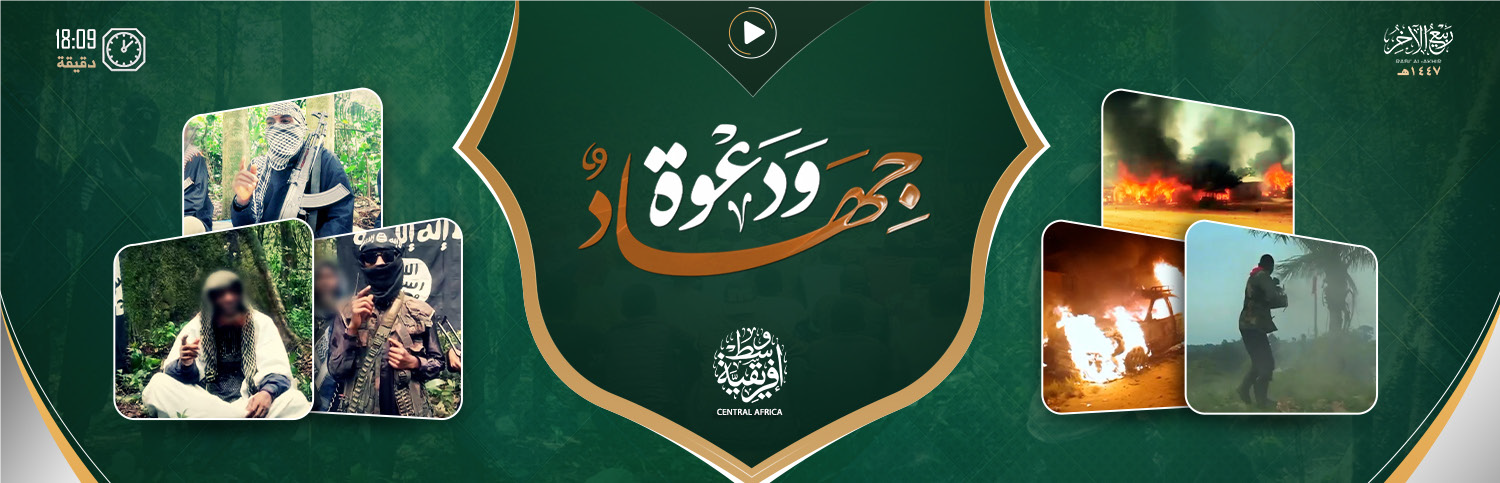
The media office of what is known as the “Central Africa Province” released a video titled “Jihad and Da’wah,” which presented a historical overview of colonial campaigns in Central Africa and attempts to undermine their religious identity, sometimes through military warfare and other times through soft power tactics. It also addressed the circumstances surrounding the emergence of jihad in Central Africa, its allegiance to the Islamic State, and its jihad against Christians using both the sword and the guiding book, combining jihad and da’wah. The video contained messages inciting Muslims to migrate and engage in jihad, and it also documented some of the “IS”’s attacks.
The “IS” carried out several attacks in northern Mozambique, targeting members of the Mozambican police and army, as well as pro-government militias. The most prominent of these was the attack on the town of Mocímboa da Praia in the Cabo Delgado region of northern Mozambique. During October, the “IS” conducted approximately 32 operations, resulting in the death and injury of around 36 people.
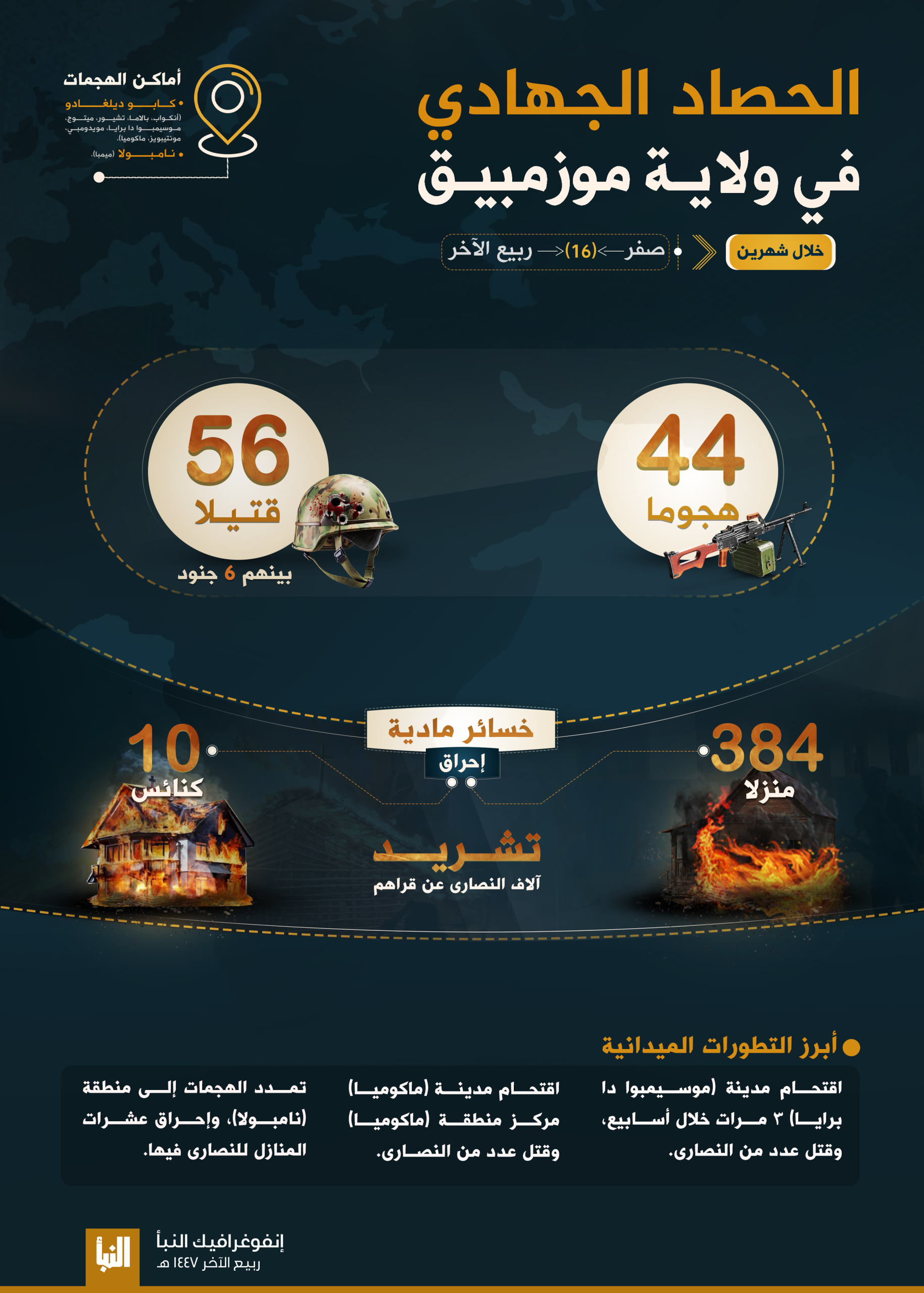
In the same context, the “IS” published a poster in issue 516 of its weekly newspaper, Al-Naba, detailing its operations in Mozambique over a two-month period. The poster stated that the “IS” carried out 44 attacks, resulting in the deaths of 56 soldiers and civilians.
The locations where the attacks took place included Cabo Delgado, Ancoap, Palama, Tishor, Metoga, Mocímboa da Praia, Muidumbe, Montepuez, Macomia, and Namubola (Mimba).
A total of 384 homes were destroyed, a large number of civilians were displaced, and 10 churches were burned. The attacks included: storming the town of Mossimpoa da Praia three times in a matter of weeks, storming the town of Macomia, the district center, extending the attacks to the Nampula district, burning dozens of houses and killing a number of soldiers and civilians.
In the Sahel region, the “IS” carried out several attacks in Niger, Burkina Faso, and Mali, totaling three attacks, resulting in the deaths of 12 people. Its members attacked a temporary army outpost in Niger, in the Dosso region of southwestern Niger, killing seven people and burning two vehicles.
A government official and his bodyguard were also assassinated on the road between the Ayoro region and the city of Tillabéri.
No attacks were reported in Afghanistan during October.
In Pakistan, the “IS” carried out an attack targeting two Pakistani policemen riding a motorcycle near the city of Gharibabad in the Nushki district. They were killed with pistol fire, and their weapons were seized.
In Somalia, the “IS” carried out several attacks targeting government forces in Puntland, in the northeastern region of Bari. These attacks, totaling ten, resulted in approximately 133 casualties, a decrease compared to the previous month. The militants clashed with UNTIL forces using machine guns as they attempted to advance near the Shenkala well in the Balade Valley, resulting in two deaths and three injuries.
The militants also clashed with the same forces near the village of Jeriasmo in the Jeel Valley, using machine guns, killing three people and injuring at least two others.
The same areas witnessed clashes and attacks, including one involving a bombing and counterattack, in the Bari region of northeastern Somalia, where two leaders were killed—one a military commander and the other a clan leader.
The militants also carried out an attack near the village of Diri Mado, using an improvised explosive device (IED) targeting a four-wheel-drive military vehicle. According to the militants, all 13 occupants were killed as the vehicle traveled from the village of Shibab towards the village of Tarmasali.
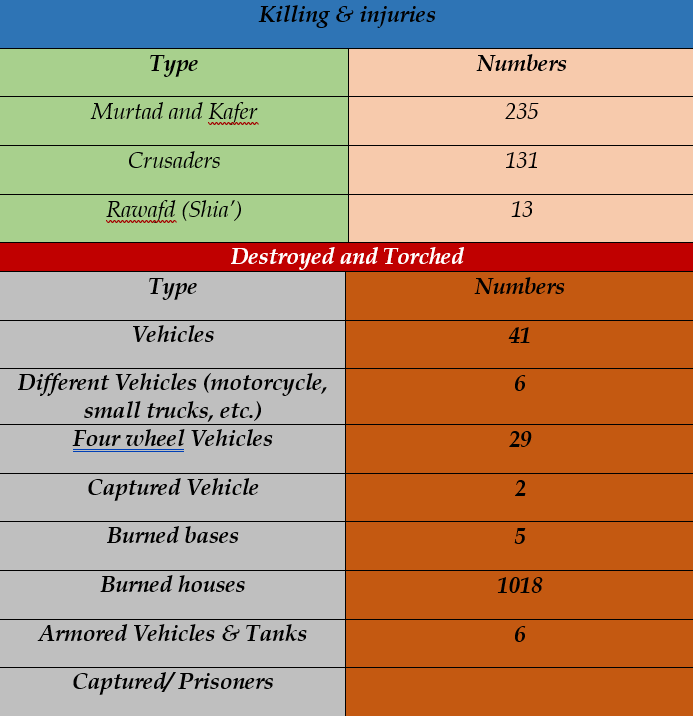
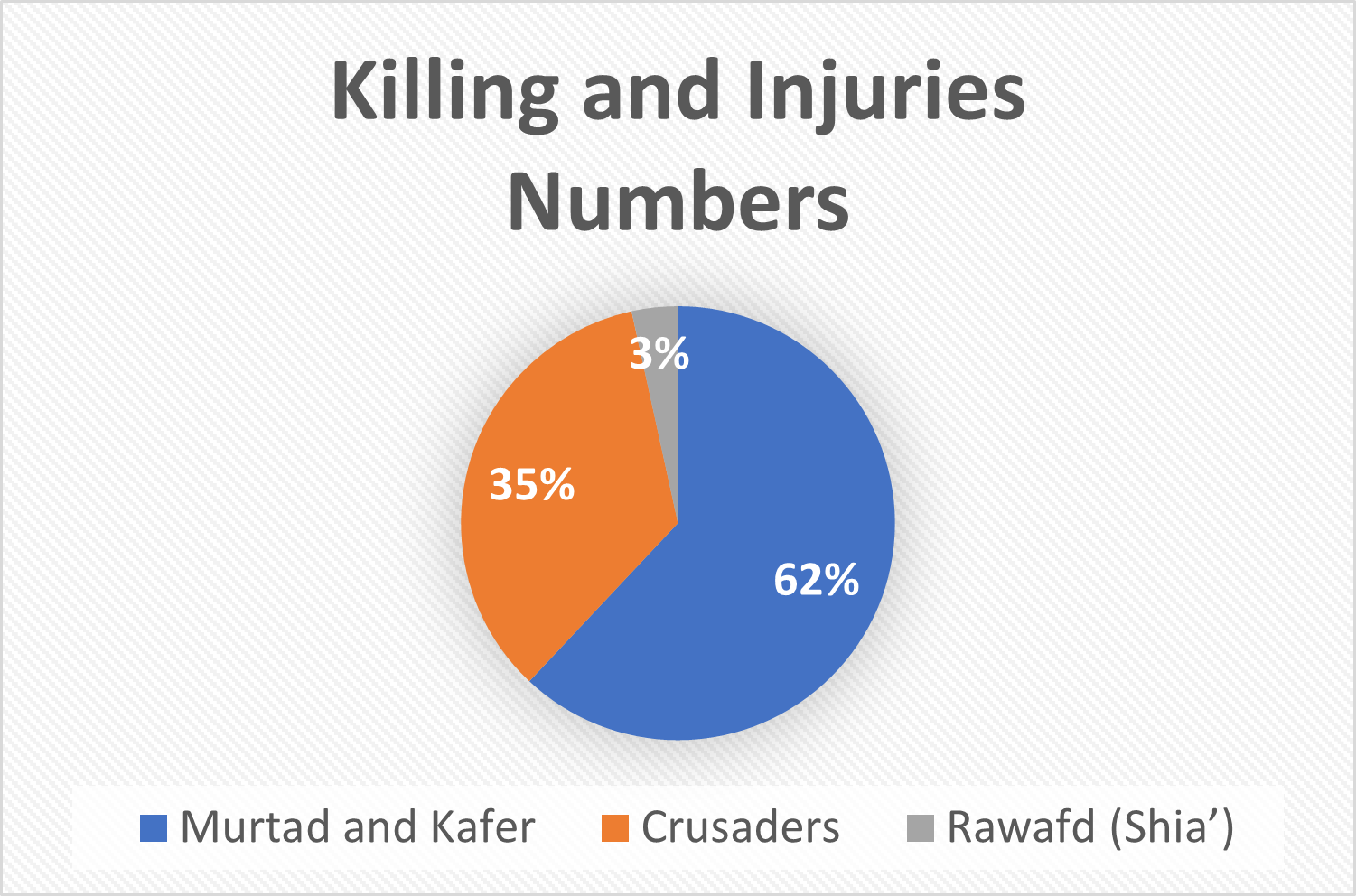
A statistical report on the extent of human and material losses resulting from the operations of the “Islamic State” “IS” in the world: The “IS” killed (235) people whom it describes as apostates and infidels, (131) Crusaders, meaning non-Muslims, and (13) people from the Shiites in Iraq.
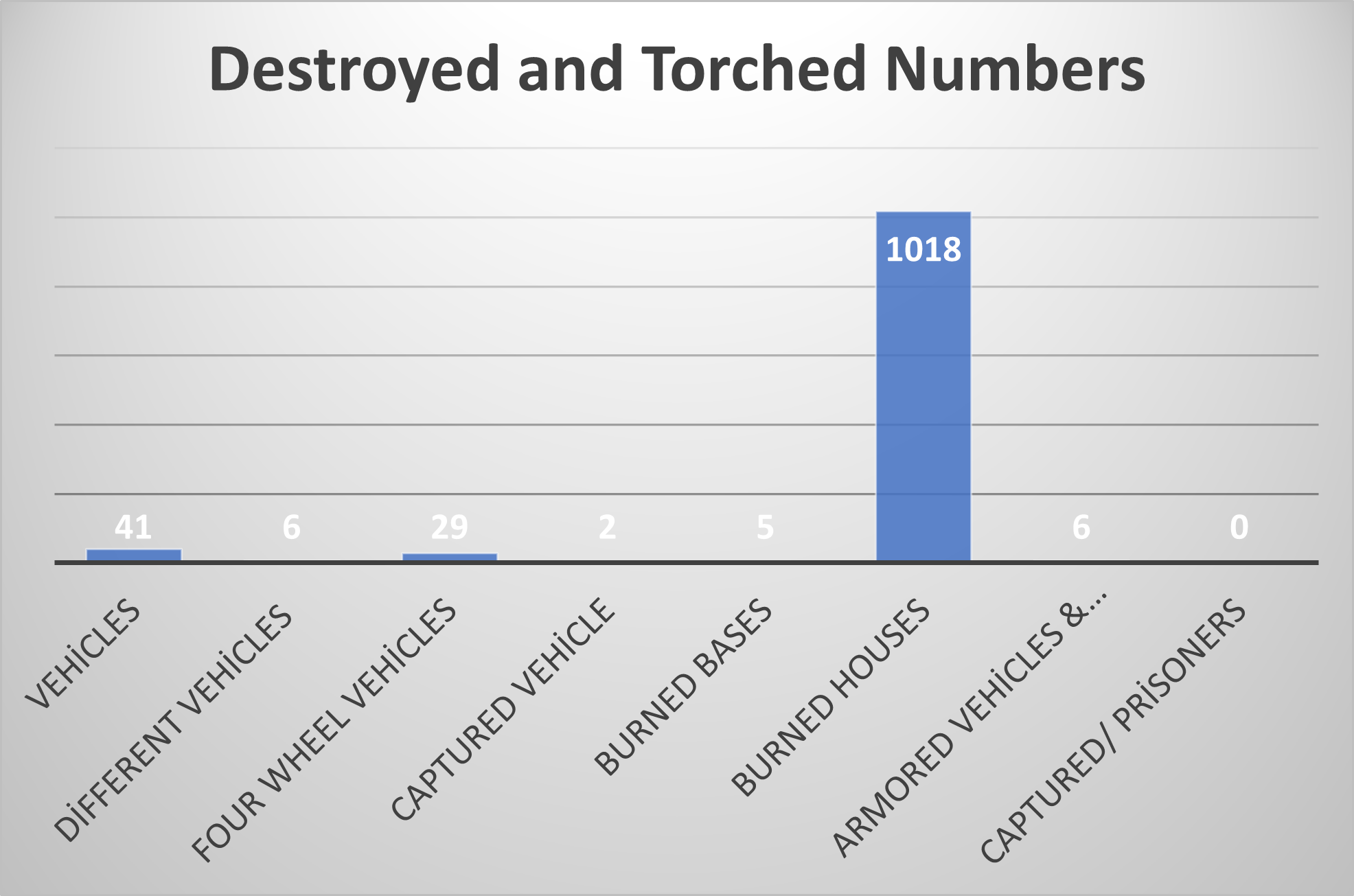
The “IS” destroyed and damaged (41) vehicles, (6) various vehicles, and (29) four-wheel drive vehicles, and also burned (5) military bases, while it burned (1018) houses, and (2) vehicles were seized, and it destroyed (6) armored vehicles.