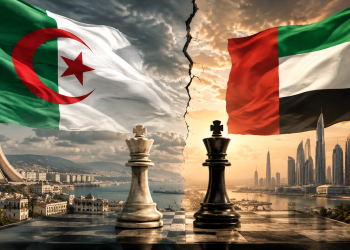
The civil war that began in April 2023 between the Sudanese Armed Forces (SAF) and the Wagner-like and Zionist-pragmatist Rapid Support Forces (RSF) quickly transformed from an internal Sudanese issue into a complex ‘proxy war’ that has shaken the geopolitics of the Red Sea, particularly Egypt. The interventions of interest-based external actors, particularly the United Arab Emirates (UAE), a major Gulf state, as well as regional actors such as Saudi Arabia and Libya, and international actors such as Russia, UK, US, and the EU, have played a key role in deepening this crisis. What’s most surprising is that Egypt, and particularly the UAE, some Muslim countries waging proxy wars in Sudan, view the issue primarily through the lens of Arab nationalism.
To begin, it must be remembered that the UAE’s role and influence in the process has the potential to inflict serious harm, primarily on the Arab world. While the world is witnessing Israel’s genocidal oppression, as witnessed in Gaza, it is also facing the Sudanese crisis, which, in our view, reflects tendencies toward a “second Israel.” Egypt, meanwhile, is struggling to cope with Israel in its northeast, and is now experiencing the nightmare of a new “Israel” being established in its south. Both the UAE’s actions and Egypt’s current predicament are seriously unsettling the Arab world and pose significant security risks to regional countries, especially Türkiye. The structure being established in South Sudan by the UAE, under the guidance of the US, Israel, and the United Kingdom, Sudan’s strategic mind, can be seen as ‘a new Israeli syndrome’.
The UAE’s Critical Influence and Support for the RSF
The United Arab Emirates is considered the most critical external actor in the conflict in Sudan. Widespread international allegations and findings by the UN observers and rapporteurs indicate that the UAE is providing arms and military support to the RSF, which lacks an ideological basis and is entirely pragmatic and invasive. The RSF leader, Mohammed Hamdan Dagalo, -a high school dropout, self-taught camel trader-, is one of the country’s wealthiest individuals thanks to the gold mines and critical underground resources he controls in Darfur and Kurdistan, and his close trade relations with countries like Russia and the UAE form the economic and strategic basis for this support and the ensuing Sudanese crisis.
Although the official Sudanese army declared the UAE an “aggressor country” and severed diplomatic relations, the UAE consistently denies these allegations, claiming to support peace and dialogue in Sudan. However, the reality now widely known is that the UAE’s direct and indirect support for the RSF, as part of the counter-revolutionary axis formed after the Arab Spring, in line with its opposition to political Islam and its commercial, economic, and geopolitical interests in the Red Sea, has significantly complicated the conflict with recent events in Sudan and laid the groundwork for a crisis that will likely last for years. A deeper analysis of the conflict will reveal that, in addition to its strategic interests, the UAE also acts out of motives specific to Arab nationalism.
Egypt’s Sensitive Position and Regional Tensions
As one of Sudan’s most critical neighbors, Egypt attaches vital importance to stability in Sudan due to its historical ties and hydropolitical interests on the Nile River. Egypt has traditionally supported the Sudanese Armed Forces (led by General Abdel Fattah al-Burhan). Having faced security crises with Israel on its border for over two years, Egypt has been embroiled in a new one with Sudan, and its foreign policy tends to adhere to the pro-Western balancing act. In this regard, the Sudanese crisis is deepening the cracks within the Arab Alliance, which includes Egypt. Undoubtedly, the UAE bears a significant responsibility for this.
Egypt’s former ally, Libyan General Khalifa Haftar, backed by the UAE, has supported the HDK, leading to serious tensions in relations between Egypt and Haftar. While Egypt is attempting to promote a diplomatic solution due to geopolitical turmoil in the Red Sea and pursue a balancing act that doesn’t alarm the West, its support for the Sudanese Army, coupled with the UAE’s support for the RSF, is creating an indirect proxy rivalry. Egypt, which has held talks with its UAE and Saudi Arabian, especially Turkish, counterparts to defuse regional tensions stemming from the Israeli-Sudanese crises, prefers to pursue a foreign policy that includes Türkiye on its side in its border disputes, particularly the Sudanese crisis.
Türkiye’s Mediating Role and Possible Intervention
Türkiye aims to play an active and peace-building diplomatic role in the Sudanese crisis, rather than a military intervention, by issuing diplomatic condemnations and warnings and maintaining dialogue with both sides of the conflict. As a natural extension of the country’s multifaceted foreign policy in Africa, Ankara has openly stated its willingness to host and mediate negotiations to resolve the tensions between Sudan and the UAE. Ankara emphasizes at every opportunity the preservation of Sudan’s territorial integrity and sovereignty, as well as the establishment of peace and stability. Türkiye’s continued active diplomacy in this process, along with its investments and infrastructure projects in the post-war reconstruction process, has the potential to strengthen Turkish-Sudanese relations.
Türkiye’s proactive stance on regional crises aims to reinforce Türkiye’s image as a reliable mediator, which has increasingly consolidated in recent years. However, it should also be considered that the security risks Egypt faces in the Sudanese crisis and its willingness to manage the process with Türkiye could, in a second scenario, lead to military intervention through a Turkish-Egyptian alliance. In this case, not only could serious tensions arise in Egypt-US relations, but also, due to the UAE factor, Egypt could face the risk of deep cracks in the Arab world. Furthermore, as has been the case before, crises in Türkiye-UAE relations, which have only recently been repaired, will inevitably arise.
Conclusion
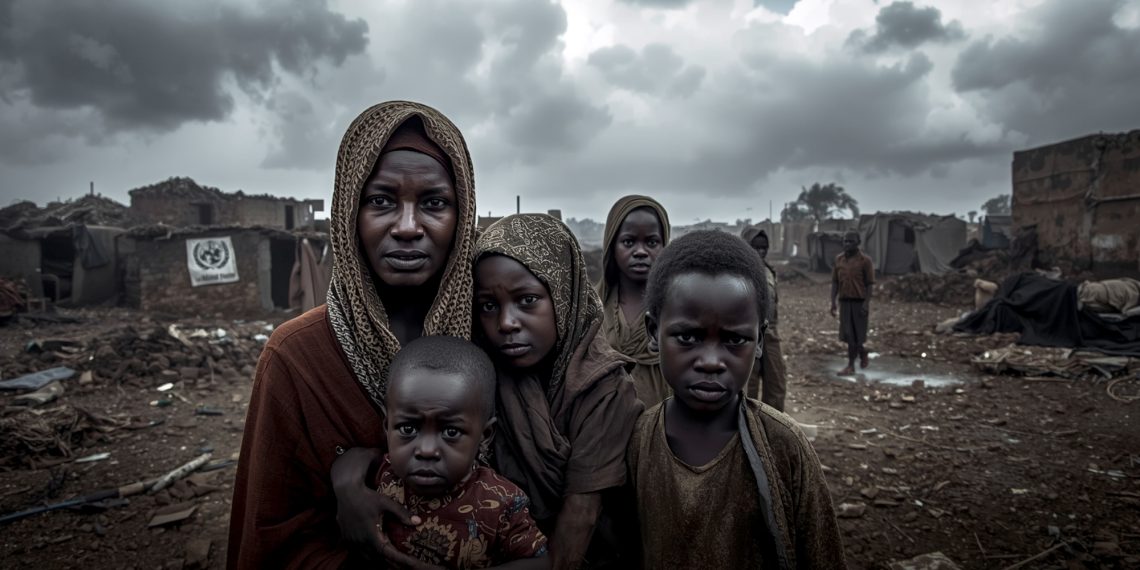
In the context of Al-Fashir, while the main driver of the humanitarian and political crisis in Sudan, which has surpassed even that seen in Gaza in recent years and could even be accused of genocide, is a local power struggle, it is clear that external actors (especially the UAE’s support for the RSF and Egypt’s support for the army) have transformed this conflict into a regional arena of competition. In this process, between 40,000 and 150,000 people (according to various estimates) lost their lives, and millions were forcibly displaced. The Sudanese people, neighboring countries, Africa, and the region suffered the most. In its official statements, Türkiye aims to fill a diplomatic void in this vicious cycle, contributing to the end of the conflict and the restoration of stability in the region.
However, achieving peace depends on regional actors ceasing their military and financial interference in Sudan’s domestic politics. Most importantly, the failure to resolve the Sudanese crisis, which has become a proxy war between Egypt and the UAE, could lead to new problems, humanitarian crises, and power vacuums, potentially opening the door to external intervention. The Sudanese crisis, which demonstrates a reflex between the UAE and Egypt to play for the leadership of the Arab world, is a new and major problem for the Muslim world; the Sudanese issue has compounded the problems already being experienced by the Muslim world shaken by the Gaza crisis. The Sudanese crisis carries extremely unpredictable consequences. Despite UN arms embargoes, the occupying party continues to be armed by its allies, leading to serious violations of international law. The recent attack on a children’s hospital by the Human Rights Organization (HDK) provides the clearest example of this.