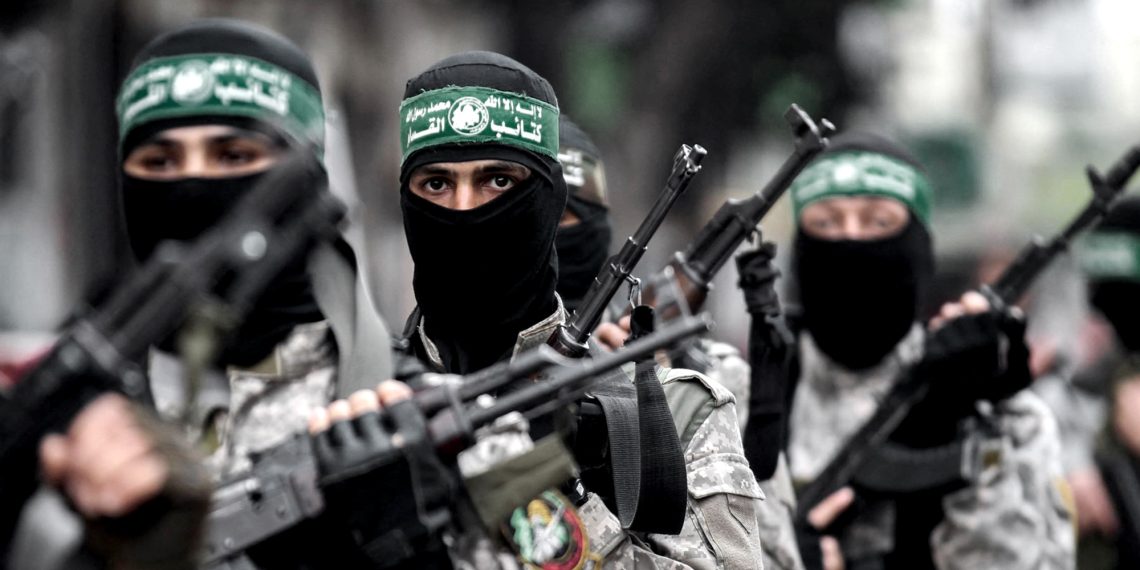
On Saturday morning,October 7, 2023 it was announced that Israel would declare a “state of war” and attacked the Gaza Strip. While we were thinking, “What is this war all about?” It turned out that HAMAS, which governs the Palestinian Gaza Strip, overcame Israel’s supposedly impenetrable defence barriers, captured a police checkpoint in the city of Sderot, close to the walled border of the Gaza Strip and took hostages.
HAMAS’ Izz ad-Din al-Qassam brigades “Aqsa Flood” operation, firing 5000 rockets and mortar shells into Israeli territory in the first phase.
Many civilians were killed and wounded. In response, Israel’s most radical government, headed by Netanyahu, vowed “revenge” and launched a relentless military campaign against the Gaza Strip.
Israel’s National Unity Alarmed by the Netanyahu Government’s Stubbornness
For 39 weeks, demonstrations and protests have been taking place in Israel, with thousands of people participating, against the judicial legislation of Prime Minister Netanyahu’s coalition government.
In late March 2023, President Herzog, recognising the damage of the demonstrations to the integrity of the country, warned the responsible authorities, including the prime minister, via social media, to “immediately stop the legislative process in the name of responsibility, in the name of the unity of the Israeli people”.
The necessity of these warnings became apparent in the armed forces towards the end of July. Some 830 members of the army, including more than 260 Air Force pilots, decided to walk off duty in protest against the judicial reform.
On the other hand, Israeli security forces have been using disproportionate force against Palestinians in the Al-Aqsa Mosque area for months, especially during Ramadan.
In fact, on April 4 during the raid of the Israeli police on Al-Aqsa Mosque, the Israeli police intervened with sound bombs and rubber bullets and attacked Palestinians who took refuge in the Qibla Mosque, where women were also present, with batons.
Netanyahu’s most radical and almost “The best Palestinian is a dead Palestinian!” government was harshly criticised by both Palestinian Arabs and the opposition.
In such an environment, Faed Mustafa the Ambassador of Palestine to Ankara, who gave a conference on the Palestinian Cause and current problems at the Strategic Thinking Institute (SDE) in Ankara in April 2023, said that Israel was weaker than ever in its history and was in an internal collapse.
In recent months, Israel, together with the Netanyahu government has stepped up repression in the West Bank, which is under the control of the Palestine Liberation Organisation (PLO) to the point of persecution. According to the PLO, some examples of this oppression are as follows:
In the first 6 months of 2023, Israel demolished 303 buildings, including schools, in the West Bank and East Jerusalem, leaving 543 people, including 272 children became homeless and 822 buildings were planned to be demolished.
Israeli soldiers and Jewish settlers committed 4073 violations such as sabotage, uprooting trees, blocking roads and injuring Palestinians and killed 8 Palestinians in 1148 attacks.
While 13 new settlements were established on Palestinian-owned lands, 44 thousand acres of land were confiscated under various pretexts and at the end of June, a new settlement decision was taken in the occupied West Bank with a total of over 13 thousand houses.
In the middle of the same month, it carried out aerial bombardments on the West Bank town of Jenin.
Although this was not in the Gaza Strip, but in PLO territory, it is understandable that HAMAS which cannot be unaffected by these events, wants to say “Enough is enough!” to Israel’s state terror.
Who is behind Hamas?
Israel blamed Iran for the HAMAS attack. Undoubtedly, it cannot be claimed that Iran directly attacked. However, considering the developments in the Middle East in recent months, the timing of the attack and the missiles fired by HAMAS point to the presence of external support.
It is also a requirement of strategy that Israel has been waiting for a long time for the attack at a moment when its internal dynamics have weakened and the government and the opposition seem to have diverged.
In addition, in the ‘Aqsa Flood’ operation, in which thousands of bullets and missiles were used, it seems unlikely that Mossad, which is famous for obtaining the best intelligence in the region, could be circumvented only by HAMAS.
Similarly, it is understood that even Israel’s air and missile defence system “Iron Dome” has its weaknesses. In this regard, the thesis that HAMAS is supported by Iran or from outside as Israel claims, is gaining strength.
Indeed, Lebanon’s Hezbollah used Iranian missiles in its conflict with Israel in August 2006, targeting Israeli settlements and for the first time left a conflict “without a win”.
China’s normalisation of political relations with Iran in the first quarter of this year by bringing together Saudi Arabia and other Gulf States was an important move against Israel and the US.
The US responded with support for the India-Middle East-Europe Economic Corridor at the last G20 summit.
For the time being, it can hardly be argued that China is behind Hamas, at least for two reasons. The first is that if the conflict escalates, China will suffer the most from the burden on oil prices and the negative impact on global trade.
The second reason is that China will operate the Haifa port as of 2021 in accordance with its agreement with Israel.
Another possibility is whether it was Russia. If it was the Cold War period, it would have been immediately recognisable.
Today, could it be to draw the attention of the world public opinion away from Ukraine? The rise in oil prices is also in its favour. Moreover, despite everything it has a certain place in intelligence.
Developments that adversely affected Hamas’s timing
Although there has been fierce opposition to the Netanyahu government in parliament and on the streets in Israel for months, it is incomprehensible that the missile attacks of HAMAS, which also target civilians, could not be thought to unite Israel for a total struggle.
The India-Middle East-Europe Economic Corridor, for which a memorandum of understanding was signed a few weeks ago during the G20 summi with the support of the United States, will connect India to Europe via the UAE, then Saudi Arabia, Jordan, Israel and the ports of Greece.
Thus, the Arab countries would deepen their economic co-operation with Israel and pay less and less attention to the Palestinian cause. Israel’s state terrorism, which had already become commonplace in recent years, was condemned by many countries and international organisations as a matter of course.
Indeed, the UAE, Bahrain and Morocco, which had previously recognised Jerusalem as the capital, have not changed their relations with Israel.
Already in late September 2023, Saudi Ambassador to Jordan (the first Palestinian Ambassador) Nayef al-Sudairi made the first Saudi official visit to the West Bank since the 1967 war, with Israel’s permission.
In turn, Israeli Tourism Minister Haim Katz visited Saudi Arabia as the first Israeli minister on the occasion of the United Nations’ “World Tourism Day,” marking the first and important step towards normalisation between the two countries.
Like Egypt’s ousted President Morsi, HAMAS, the Palestinian branch of the Ikhwan movement is outside the preferences of Egypt and Saudi Arabia.
The EU, which has fallen in line with the United States with the Russia-Ukraine war, cannot be burdened with Israel even for the sake of “human rights”. Russia is also stuck in Ukraine. Moreover, it is known that Egypt is developing joint projects with Israel for the utilisation of natural gas in the Eastern Mediterranean in Europe.
Turkey’s normalisation with Israel has begun and considering the very close Azerbaijan-Israel relations, it seems that Turkey’s efforts will not go beyond “mediation” even though it has previously given the greatest political support to HAMAS in the context of the Palestinian cause.
This leaves only Iran and Lebanon’s Hezbollah, which are too weak to deter Israel from taking action against Hamas.
Syria, unable to stabilise itself after the civil war, is also out of the equation. The Arab League and the Organisation of Islamic Cooperation, which remained quite inactive, cannot do more than advise restraint.
In response to all these, the US, which declared that it was ready to provide any assistance, including military aid, sent a fleet of aircraft carriers to the region. EU countries also sent messages of support to Israel.
What is the political goal and calculation of HAMAS which launched the attack?
The main objective in war is the political objective. Each physical objective captured by military units is a stepping stone to the political objective. The final political goal of warring states is to break the enemy’s determination and will to continue the war.
If the political goal of HAMAS, which has overcome the “Iron Dome” and Mossad and entered and exited Israel, is “There should be only a Palestinian state in Palestine!” will it be able to achieve this goal? If so, are its means and capabilities sufficient to achieve this goal?
According to the first determinations, it is understood that HAMAS has been in preparation for years and even though it has made the first attack, it will make a residential clash in the Gaza Strip.
It must have also calculated that Gaza would be blockaded and electricity, fuel, etc. would be cut off.
It may also have prepared underground shelters alternatively in response to Israel’s land operation, missile, artillery, howitzer, air and naval superiority and the opportunities that will turn the region into a ragdoll.
It will also be able to use captive Israelis as “human shields”. Likewise, it has also taken into account improvised explosive devices in residential neighbourhood clashes.
With all these preparations, will it be able to hold the Gaza Strip, let alone capture the entire Palestinian territories?
Will it be able to break Israel’s determination and will to continue the war by destroying its air bases, army, harbours and energy sources? Will it be able to break Israel’s political support, especially from the USA? In short, will the stone it throws be worth the frog it scares?
Where can the conflict lead?
It remains to be seen whether HAMAS will be able to stop Israel as Lebanon’s Hezbollah did in the summer of 2006.
As of the morning of October 8, it is known that HAMAS fired missiles, including long-range ones, at Israel in response to Israel’s incursion into the Gaza Strip.
If these missiles cannot be defended, it is possible that Israel will lose its nerve and ask for a ceasefire, as it did in 2006. Egypt, the UAE and Turkey may also come to the fore as intermediaries here.
On the other hand, Israel, which attacked the Gaza Strip with disproportionate force for 22 days at the end of 2008, may continue its operation this time until it clears HAMAS from the region.
Although Israel, which ranks among the top 10 countries in the world in terms of defence industry, has sufficient weapons, the US and European countries, which sent a message of support to Israel upon the incident may also help.
As a matter of fact, it is understood that this incident, which took place during the Yom Kippur Arab-Israeli War in 1973, can take place again with the support of the USA.
If Israel succeeds in defending the missiles and further weakens HAMAS, it may be able to continue its state terror even more severely. If the operation in the Gaza Strip is prolonged, normalisation with the Arab countries may be postponed for a while.
If Israel retaliates against Iran, the Middle East will be in turmoil again. Iran may re-engage Hezbollah in Lebanon.
If Israel agrees to a ceasefire, HAMAS will become stronger and the Abbas administration, which has postponed the general elections because of its fear of this power, will be cornered.
In that case, the Palestinian problem may become even more serious as the power of HAMAS, which is considered a “terrorist organisation” by Israel, the US and the EU, will not be recognised.
Because the US and EU countries will cut off their financial aid to Palestine. Likewise, Israel will cut the share given to Palestine from the income obtained from the ports.
If the Israeli soldiers and policemen captured by HAMAS cannot be rescued, Israel may be forced to make new concessions, even temporarily.
It will be possible to make a more detailed assessment of the development, which is still very hot, in the coming days. The last thing that can be said for the time being is that the Palestinian issue has once again become a barrier to the stability of the Middle East.
Conclusion
If there are no other known solutions, it can be seen that HAMAS is about to make the Palestinians commit hara-kiri and say goodbye to the two-state solution.
Because on the third day of the clashes, Israel started destroying the Gaza Strip from the ground, from the air and with missiles. While hundreds of buildings were demolished, first the electricity, fuel and then the water were cut off.
While the Russia-Ukraine war in the Black Sea continues, tensions in the South Caucasus and Kosovo/Balkans continue, the Middle East is now drenched in blood.
If this conflict lasts for a long time, it will fuel terrorist incidents and wars of tutelage in the region and may also cause oil prices to jump.
All indications show that the de-escalation of the conflict will be in favour of the countries of the region. If the conflict spreads, a new big war may break out in the tense world.
Because it can be clearly seen that most of the countries, which are considered to be global powers, do not have leadership cadres capable of preventing major wars.
In short, we are passing through a period when the need for restraint, not outrage, is at its peak.