The Process of Evolution:Order Building and Game Building of States
Especially after the end of the Cold War, discourses mostly originating from the USA have been accepted and stuck to the tongues all over the world.
These include global power, global trade, global economy, global climate change, global pollution and global pandemics.
As the USA started to impose the “sole global power” characteristic of the USA in a way that disturbed even its own allies, especially during the G. W. Bush era, the powerful countries which were known as “order-makers” in the last two centuries, started to use the adjective “quarterback”. It is useful to emphasise this point.
The “Order Establishing” System in the Pre-Unipolar World and the Conditions for Becoming an Upsetting Establishing State
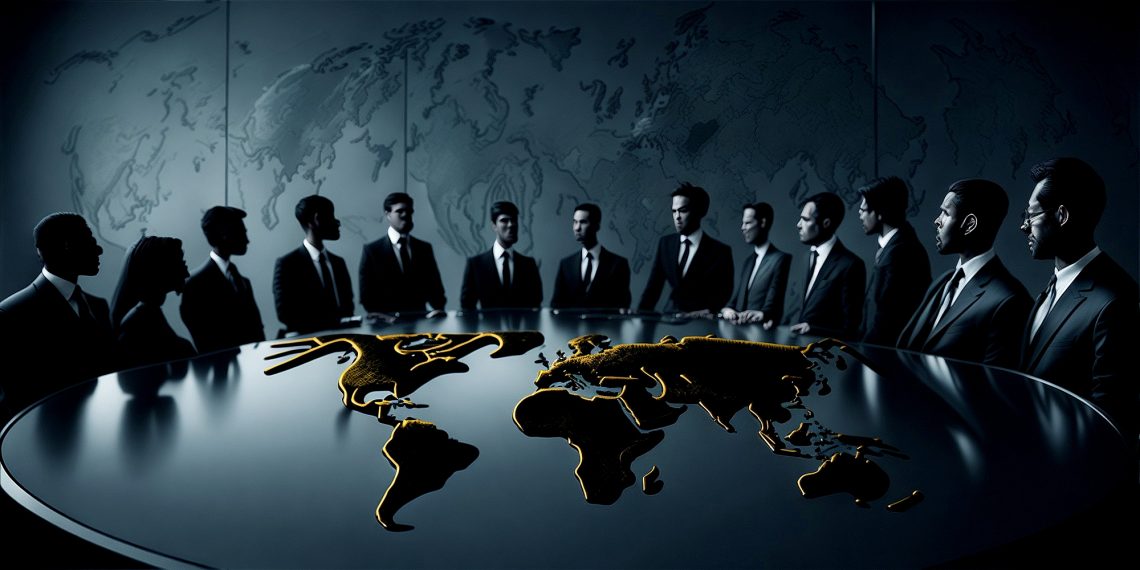
“Order-building state” means a state that uses material, spiritual, cultural, political and military means to “establish order” on a regional and global scale, mostly in line with its own national interests.
In the past such games were frequently seen in the Roman Empire, Genghis Khan, in the 16th century of the Ottoman Empire, in England “on whose land the sun never set” in Napoleon’s France, in the German Empire after its unification and in Hitler’s Germany before World War II.
In the last century of the Ottoman Empire, it was seen that France, Russia and Germany, predominantly the UK were almost on the prowl to establish their games instead of establishing order in the Middle East.
In addition to the Ottoman Empire through missionaries, this game-making which expanded to Africa and the Far East since the last quarter of the 19th century, found a new direction with “wild capitalism”.
In the 19th century, Britain and later France, Russia, Austria-Hungary, Germany and Italy, the so-called “Six Great Powers” were “order-makers” both in their colonial territories and in Europe and its hinterland.
The chief order-builder was Britain after Napoleon’s defeat at the Battle of Waterloo. At the beginning of the 20th century, this order was disrupted and the order-builders fell out against each other, leading to World War I.
At the end of World War I, the states led by Britain, the USA and France, continued to protect their national interests by establishing the League of Nations.
At the end of the war, while the United Kingdom and the United States were effective order-builders, France and in the 1930s Germany, Italy and Japan wanted to play the same role by “spoiling the game” in their regions and a new world war broke out.
At the end of the war, a bipolar world and the USA as the leader of both poles and The Soviet Union was the “Chief Order-Builder and Protector”.
The five permanent members of the “Security Council” (USA, Soviet Union, UK, France, China) of the United Nations (UN) which was established after World War II, followed the same pattern by vetoing developments contrary to their national interests.
Especially the USA and the Soviets… This system worked well until the end of the Cold War.
These quarterbacks also established military alliances such as NATO and the Warsaw Pact (VP) in order to make their national interests more effective by using their allies.
The USA on the one hand and the Soviets on the other continued to play the role of “decision-maker” over their allies.
In the meantime, it is necessary to open a separate parenthesis for NATO member Britain. Britain, which played an important role in the establishment of the UN with the “Atlantic Declaration” it signed with the USA in 1941 and then in the establishment of the NATO alliance on the pretext of the Eastern Bloc’s VP, generally continued its role as a quarterback together with the USA without much damage.
From Organiser to Gamemaker
In response to the US insistence on using its sole global power in line with its own interests, sometimes in spite of its allies, the countries that have become regional powers have started to confront the US slightly by establishing various alliances with each other (CIS, SCO, BRICS).
Having become a global economic power, China started to challenge the USA more in this field.
On the one hand, while expanding to Africa with its investments, on the other hand, it was giving trade surplus to most of the countries it traded with including the USA and EU countries.
Moreover, it was developing this superiority with the “Belt and Road” project and bringing Iran and Saudi Arabia together by eliminating the Iran-Gulf States dispute, which was fuelled by the mutual enmity of the USA.
It even invited Saudi Arabia, the UAE and Egypt, once the closest allies of the US to unite under the BRICS umbrella. In China’s approach, mutual gain (win-win) is at the forefront, rather than “protecting” the allied state and selling arms to that country for this purpose like the US.
In other words, while the US creates fear and establishes harmony with its armed power, China first disrupts the game by using soft power and then takes care to establish its own game in a fairer way.
An Example of the Playmaker States in the Last 70 Years: USA
Although all global arrangements must be in accordance with international law as defined by the UN, they may not be taken into account when the players are members of the UN Security Council (UNSC).
In other words, in order to be a quarterback, it is necessary to have a high level of political and legal power that will not be vetoed by the UNSC and will not be subject to sanctions in the international arena.
It should not be understood from this statement that only the five countries of the UNSC benefit from the game they play. Before and even after the Cold War, Israel has perfectly staged countless games in its own national interests in its geography and has been supported by the US and the Western bloc in the UNSC.
For this reason, it must be said that Israel constitutes an exception. Because thanks to its very strong Jewish lobby, it is able to find great political and even economic support especially in the USA.
In order to become a playmaker state, it is essential to have economic and military superiority in addition to legal and political support.
The USA, which possesses almost all of these advantages, achieved its ambitions before the Cold War through financial aid and sometimes military force.
Today’s USA, which has a public debt of more than 31 trillion dollars uses its military power and the system that helps the “sanctions” it once established in international institutions (World Bank, IMF, G7, WTO, international money transfer system (SWIFT)etc.
21st Century Playmaker Countries other than the USA
Russia, which was established after the collapse of the Eastern Bloc in 1991, was far away from the political, military and economic playmaking of the Soviet Union, but in 2000, under Putin’s leadership, starting from the “immediate neighbourhood” it disrupted the traditional Russian playmaking with military power, especially in the Caucasus and Ukraine, where the US was scratching its head.
By using the Wagner private military company in Turkestan, Syria, Iran and Africa where the US was trying to enter, Putin first disrupted the existing games of the Western countries and then became a playmaker.
With the end of the Cold War, the European Union (EU) which includes two UNSC members (France and the United Kingdom) came under the influence of neoliberalism and globalisation and with the end of the Cold War, they abandoned military power and concentrated on trade but lost power. While they have become dependent on the protective umbrella of the USA due to their declining military power, they have fallen far behind China, which has been breaking growth records since the early 1980s, in terms of trade.
China has fended off moves by Russia and the US by investing in their energy sectors and establishing major partnerships in order to solve problems with its neighbours.
It disrupted the US games in Asia by establishing and expanding the Shanghai Cooperation Organisation (SCO) together with Russia.
It has raised the level of its playmaking everywhere, including Africa with the power of its economy and the “win-win” principle. By bringing together the BRICS countries with Russia, India, Brazil and South Africa, the US’s global playmaker status was eroded.
In the first half of this year, in spite of the US, the Gulf States – Iran relations were first disrupted by the US and then a new arrangement was made with the mind of a quarterback.
Turkey’s Game-Breaking and Playmaker Activities
Among the discourses emphasised at the 14th Ambassadors’ Conference held in the first half of August 2023, the most prominent ones were “Turkey’s Century” “Playmaker Turkey” “Sensitive protection of rights and interests in the Aegean and Eastern Mediterranean” “Territorial integrity of Iraq and Syria” and the emphasis on the fight against terrorism.
In the Republican era, Turkey which with the discourse of “Peace at home, peace in the world!”, focused on internal stability, development and the regulation of relations with its neighbours, played a game during the Montreux Straits Convention and the annexation of Hatay.
Later on although its role as a “game-builder” was not so much, its role as a “game-breaker” continued. For example, it benefited from the Western alliance’s defence umbrella against the Soviet threat.
Later on the Cyprus Peace Operation foiled Greece’s attempt to swallow Cyprus, which was supported even by its own alliance members and its attempt to extend its territorial waters in the Aegean with the determination of “cause of war” (casus belli) in 1995.
In the conflicts in the Soviet geography and Yugoslavia, which collapsed with the end of the Cold War, especially in the Bosnian crisis, it approached the international community with proposals and tried to spoil the game of the other side.
Although the US had difficulties in its multifaceted games of persuasion in Georgia and Ukraine, which are among the countries in the region, in order to be able to freely enter the Black Sea with its ships and in convincing Turkey “through alliance” it continued to break the Montreux Straits Convention.
In Libya, Turkey broke a similar game with its political and military support to the Libyan Government of National Accord against the illegal Haftar group supported by the UAE, Egypt, Saudi Arabia and Russia.
In the Eastern Mediterranean, the Greek-Greek duo’s creation of a fait accompli by taking Israel, Egypt, France and the EU with them was disrupted by natural gas exploration on the seabed in the shadow of the navy and in disputed areas.
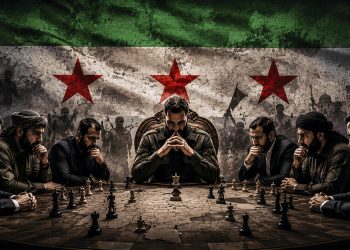
In Syria, starting with the Euphrates Shield operation against the attempts of the USA and Russia to establish a game in Syria, it took military action together with the Syrian anti-regime groups (Free Syrian Army) and ensured border security.
Turkey’s most typical playmaking was in the Second Nagorno-Karabakh War in autumn 2020. With the support given to Azerbaijan, the Russian, American, French and Iranian games in the region were disrupted.
This was followed by the establishment of the Organisation of Turkic States.
Conclusion
The desire of people to always have more and more brings about an unimaginable struggle on a global scale. Countries that established a “new world order” with the idea of “living in peace” after the atrocities and horrors experienced during the world war soon began to use this new order for their own interests.
The most typical example of this is the veto by the five permanent members of the UN Security Council of draft resolutions against many developments contrary to international law.
On the other hand, in the aftermath of the Cold War, especially in the 2020s with the collapse of the unipolar order and in the new era of multi-polar uncertainty, countries are trying to disrupt the games against them in their regions on the one hand and on the other hand, they are eager to become a “playmaker state” for the stability of the region or for their own national interests.
Although the principle of “winning together” is essential in Turkey’s sincere approach to other countries, emphasising the role of “playmaker” may harm the national interests of the country. Because such statements of statesmen remind us of revisionist historical figures such as Hitler, Saddam Hussein and Gaddafi.
The anxiety of friends and enemies can be prevented by having such discourses voiced by security policy writers or think tanks instead of state leaders.
On the other hand, economic power and the establishment of national unity should not be forgotten as the most important tools in playmaking.