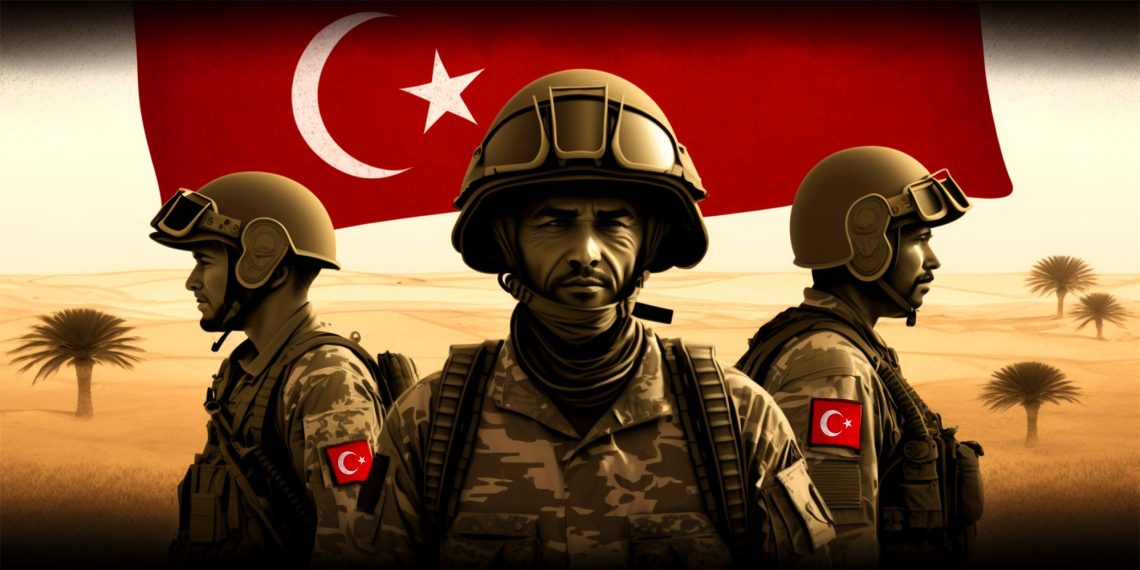
Turkey, as a rising state, is like other regional and superpowers in that it forges multiple partnerships in order to achieve its strategic objectives. One of the driving forces behind Ankara’s strategic engagements on the continent is the assumption of the rise of French anti-sentiment and explicit empathy toward Russian presence lately in states like Mali, Burkina Faso, and Central Africa. Geopolitical and geoe-conomic dynamics are aiding in the design of the influence hemisphere equation in the African Sahel, posing the question of objectives and challenges that Turkey sets and is concerned about.
Turkey’s relationship with the African Arab countries such as Egypt, Algeria, Tunisia, Libya, Mauritania, Morocco, Sudan, and Somalia are vital to Turkey, which has an important role to play in the region as an exporter of capital, management expertise, and access to external markets. It also serves as a model for capitalist development and political stability. As a result, Ankara wants to position itself as a stabilizing force in Africa, helping to fight the growing terrorist organizations in the African Sahel and West Africa, and eventually helping the continuing illegal migration crisis in Europe that has become a national security headache for European countries such as Italy and Spain.
In this stance, Algeria is positioning itself as a pivotal state to stabilize the region. Algeria sees this as a must because of its national security concerns — a parallel that Turkey is making in the Syrian dossier. Turkey, however, continues to realistically influence the Libyan dossier with the aim of strengthening its influence in Libya and encircling the strategic interests of regional and international powers that are opposed to Ankara’s role in Libya.

Geopolitical competitiveness
The number of Turkish embassies in Africa has quadrupled over the past two decades, reaching nearly 43 embassies. Ankara recently opened two new embassies in Togo and Equatorial Guinea with the aim of strengthening relations and enhancing the Turkish presence in the region.
Geopolitical competitiveness has begun to strain the two countries’ relations: Turkey and France. Disagreements arose decades ago over the question of Turkey’s full integration into the European Union. Former French President Nicolas Sarkozy did vehemently oppose Turkey’s full accession, saying this great Muslim country is “not European!” The same sentiment was expressed four decades ago by then-President Valery Giscard d’Estaing.
Turkey humanitarian diplomacy is based on aid and education. This comes in the global strategy of Ankara’s active diplomacy, as well as the role of the TIKA Agency on the continent in general and in the African Sahel in particular, as a public diplomacy tool that shaped Turkey’s image and position in the region.
The COVID-19 pandemic had struck the African continent severely, despite the low number of people contaminated. The Turkish Cooperation and Coordination Agency (TIKA) supplied medical aid and food to African Sahel countries to fight against the COVID-19 pandemic.
Diplomatic mobility and actions
The number of Turkish embassies in Africa has quadrupled over the past two decades, reaching nearly 43 embassies. Ankara recently opened two new embassies in Togo and Equatorial Guinea with the aim of strengthening relations and enhancing the Turkish presence in the region.
Ankara gives great importance to the African circle in the security field. Turkey’s policy has become more militarized since 2015 in order to expand its geopolitical influence in the region and across the continent. This was evident in the security cooperation agreements concluded by Ankara with most countries in the region, such as Mauritania, Gambia, Côte d’Ivoire, Chad, Sudan, Guinea, Nigeria, and Benin. The latest was the security agreement that was reached with Niger in July 2020 with the aim of finding a public foothold in the Sahel and Sahara regions. Some reports indicate that Ankara is seeking to establish a military base in West Africa, especially in Niger, near the border with Libya.
The UAE, nonetheless, also views Turkey’s rising influence in the African Sahel with apprehension. This prudent attitude from Abu Dhabi toward Ankara has been showing its teeth in Libya, where both states’ leaders have been demonstrating their differences on the Libyan political impasse and their roles in the dynamic of local power politics between the two camps in Tripoli and Ben Ghazi. A public disagreement has extended to African Sahel countries and West Africa as well.
Unconventional challenges from other regional powers
Turkey’s presence in the region has made the two countries’ tensions more complex, despite last summer’s normalization process between Ankara and Abu Dhabi that is making slow progress. A new page of détente has started and will pave a new road in the two states’ bilateral cooperation. Though both leaders are still not fully open to each other because of the high stakes of each country’s national interests from Yemen to Sudan to Somalia, Libya, and Niger to West African countries.
Another country that is fully involved in the African Sahel and West Africa, is Israel, whose relations with Turkey were not largely amiable until last summer, in the aftermath of the timid normalization between the two countries, after years of diplomatic discord because of Tel-Aviv’s policies in the occupied Palestinian territory and its aggressive role in the new MedEast axis: Greece-Cyprus and Egypt-Israel, an axis to destabilize Turkey.
Israel has been pushing for a silent policy paradigm in West Africa and the African Sahel for decades, following the decline of Arab states diplomacy and normalization process with Israel that led to more chaos and instability in the region. An argument that West and central African leaders used to get close to Israel and have normal relations based on economic, intelligence, and security cooperations.
The military and security vacuums were filled by Wagner mercenaries in those countries. Nonetheless, the young military leaders in Mali and Burkina Faso are trying to put an end to the ongoing allegations in Western and, in particular, French media that they are pawns of Russian President Vladimir Putin in light of the French military operations fiasco in the African Sahel and the end of the G-5 Sahel Joint Force that will be replaced by the CEMOC (Joint Military Operations Center) “Tamanrasset Plan” agreed to in 2009 by Algeria, Niger, Mali, and Mauritania, which led the establishment of this force in 2010.
Turkey attaches importance to opening diplomatic missions in all African countries in order to enhance its relations with the continent. While the number of our Embassies in Africa was only 12 in 2002, it had increased to 44 as of 2022. The last visit of Turkish President Erdogan in January 2020 was to Algeria, Gambia, and Senegal. Meanwhile, the Turkish Foreign Minister’s tour in the Sahel and West Africa in July 2020 included Togo, Equatorial Guinea, and Niger. The Turkish moves aim essentially at reshaping the regional axes and the international balance of power in the region, especially in the MENA region of growing Turkish-French competition, which reveals part of the Turkish goals and objectives in the African Sahel.
The power of Turkish diplomacy is real. Ankara has proven itself in the international political arena via its humanitarian diplomatic paradigm and strong understanding of 21st-century world affairs. These doctrines are shaping the entirety of Turkey’s foreign policy principles and objectives, both regionally and internationally, in a time of security challenges, migration, political instability, energy and food crises and violent armed group extremists in the African Sahel.