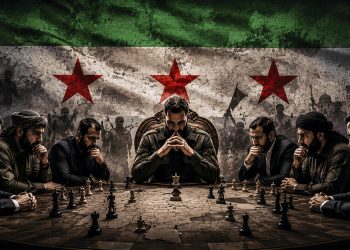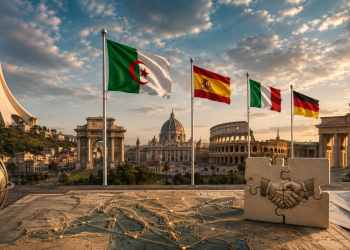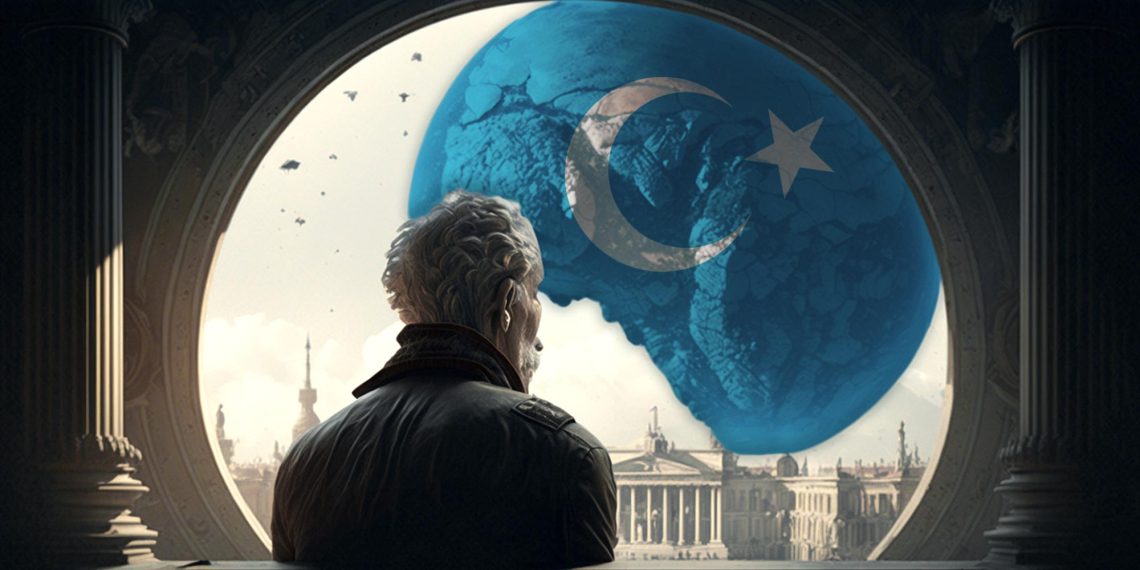
Turkestaneness is the concept of Turkistanis rethinking themselves in their own centre and self-consciousness and realising that they are one within this framework. Every idea has a root place where it emerges as a centre and spreads to the globe. The central ground where Turkestaneness will be realised is Turan or Turkistan with its historical references. Turkestaneness is not a past beautification but a vision of the future in the 21st century. It is the cultural consciousness call of the will to revive the national, religious and humanitarian feelings of Turks in the next thousand years. Turkestaneness is the ideal of rethinking and redefining oneself in the sphere divided and polarised by the Soviets, China, America, England etc. imperialists and opening a third way for humanity in the perspective of civilisation. It is the ideal that the life of the Turkish nation, which continues today in different states, is formed by the reliance on individuals who envision themselves in unity and integrity in higher concepts. The idea turns into understanding in this way. Loyalty to the common past and belief in the common future is the basis of our understanding of Turkestaneness.
The concept of Turkestaneness, similar to the unification of the European nations with the definition of Europeanism in the higher values, as well as in the values claiming universality, is the ideal of the life of the Turkish nation, which continues today in different states, based on individuals who envisage themselves in unity and integrity in the higher concepts. This is possible only by transforming the present into a value with the aforementioned concept and notion between the past and the future.
In Rolland’s novel Jean-Christophe, Rolland writes: “Today’s Europe no longer has any common book; it has no common poetry, no common prayer, no common act of faith; this is a shame that must be synonymous with destruction for all the artists of our time. There is not a single person who writes for everyone, who thinks for everyone.”
Doesn’t this sound familiar? In the context of the concept of Turkestaneness, the value of Turkish language has not been realised strongly beyond isolated efforts in the form of novels and poems showing national commonalities. The power of Kazakhs, the energy of Turkmens, the colours of Azerbaijanis, the accumulation of Uzbeks and the experience of Turkish Turks could not make us the body of a spirit. In short, the Turkish name could not be represented in a concept of morality, justice and order between the blue sky and the grey earth. Everyone gathered and dispersed in the cold and calculating circle of politicians and diplomats on their own front. The intellectuals, intellectuals, artists could not carry lights to our lives. Turkestaneness could not be carried beyond being seen as an ethnically based, crude dream of a romantic group. However, if the history of Turkestan’s contemplation and co-operation could be written, a set of values that transcends politics would embrace us.
There may be those who will immediately look at this approach as a racial unification without universal values. Being a nation is an experience and maturity far beyond the banality of racism. Turkestaneness is the will to renew the past experience of human values, our tradition and wisdom in the future, realised by our nation above Kyrgyzstan, Azerbaijan, Turkey, Kazakhstan, Uzbekistan, Turkmenistan and all other communities, states and nationalities. On the other hand, the seven powers are worried about even a shepherd’s fire burning in the Altai Mountains. They intervene as soon as they see and sense this. What is worse is that there is no realisation and will for this in us.
Turkestaneness is not to disappear in a melting pot; it is a style of integration that Europeans have recently recognised and known. We do not know mosaic, we are like a rug. Kazakh will not be another person in this pot, Azerbaijani Turk will not be another man. This is a sense of integrity and unity with social and cultural meaning. However, this is not to establish organisations on political grounds. This is a feeling, a feeling.
Although Turkestaneness will be seen on the ethnic ground, it is actually the name of a sociological and philosophical meaning of the Turkish acquis in the humanitarian sense, which expands first within itself and then towards the outside. Politicians and diplomats will not create this concept. Turkestan is the steep slope of our Ahmet Yesevî pir. Turkestans are those who walk on this steep slope.
I say yes to those who ask if it is a new custom for the old village. For those who cannot dream, the future will not offer a reasonable ground. Wait, one more concept for you, Jerusalemism is another way of Turkistanis.
Turkestaneness and Turkestanis are people of value. In the world where everything is globalised, Turkistanis have been thinking and acting with these values since the past, and they want this to spread: Let us quote Edib Ahmet Yüknevî from the 12th century, who lived in the same geography as Pir-i Turkistan Ahmed Yesevi and spread wisdom; “A man is known by his knowledge; without knowledge, while alive, he is considered lost; a knowledgeable man dies, (but) his name remains, without knowledge, while alive, his name is dead”, “A knowledgeable person is a precious pious person”. (knowledge), That (saying) is this; knock down arrogance, hold humility firmly and cling to it strongly (humility), The generous man was able to eat knowledge, look. He has spent his wealth on it This is a sense of integrity and unity with social and cultural meaning. However, this is not the establishment of organisations with political grounds. This is a feeling, a feeling.
Although Turkestaneness will be seen on the ethnic ground, it is actually the name of a sociological and philosophical meaning of the Turkish acquis in the humanitarian sense, first within itself and then expanding outwards. Politicians and diplomats will not create this concept. Turkestan is the steep slope of our Ahmet Yesevî pir. Turkestans are those who walk on this steep slope.
I say yes to those who ask if it is a new custom for the old village. For those who cannot dream, the future will not offer a reasonable ground. Wait, one more concept for you, Jerusalemism is another way of Turkistanis.
Turkestaneness and Turkestanis are people of value. In the world where everything is globalised, Turkistanis have been thinking and acting with these values since the past, and they want this to spread: Let us quote Edib Ahmet Yüknevî from the 12th century, who lived in the same geography as Pir-i Turkistan Ahmed Yesevi and spread wisdom; “A man is known by his knowledge; without knowledge, while alive, he is considered lost; a knowledgeable man dies, (but) his name remains, without knowledge, while alive, his name is dead”, “A knowledgeable person is a precious pious person”. (knowledge), That (saying) is this: “Put down arrogance, hold humility firmly and cling to it strongly (humility)”, The generous man was able to eat knowledge, look. The generous man sold his wealth with it and received praise (generosity), “Do good to the person who does evil; this is the beginning of kindness, know this well (kindness), “Forgive the fault of the imperfect man, dig up the root of enmity and eliminate it; if the fire of anger and enmity ignites and flares up, sprinkle the water of softness and extinguish that fire” (hilm), “Speak the word with thought, do not hurry; hide your word so that you will not hide your head later.
If a thousand people are your friends, do not underestimate them; if one person is your enemy, do not underestimate them” (guarding the tongue), “If two things are combined in a person, the path of virtue is closed for that person: (one of them) is to chatter unnecessarily, and (the second) is to lie” (lie), “Add politics, politics, judgement, judgement (wisdom), kindness (to these), justice; hear and understand these” (justice), “Do not think that people are good, and do not underestimate them.” (justice), “If a person is an enemy, do not underestimate him; if a person is an enemy, do not underestimate him. (justice), “The good and evil deeds of people do not pass by desire, the reward of good deeds and evil deeds is not delayed; O one who does evil and hopes for good, the one who sows thorns does not reap grapes” (goodness), “Be compassionate and merciful to the Muslim, think for the Muslim what you think for yourself; No matter how much it is washed, blood is not cleansed by blood” (mercy), “If there is food to eat, feed the hungry, if you find clothes to wear, dress the naked; do not make others suffer hardship and trouble, if someone else torments you, endure it. ” (patience), “If a man’s friend is good, he will be good himself; a man will see much good from the goodness of his friend; do not approach the bad, bad conversation will immediately make you bad-tempered” (friendship).
Turkestaneness is valuable, saintly and meaningful within this framework. Nationality and homeland are cherished and sacred because they are the place where these values are jointly understood, acted and practised.
Turkestan is a cherished homeland, a huge homeland whose borders are drawn by our feelings, thoughts and beliefs with an aesthetic consciousness. The children of Turkey, Kazakhstan, Azerbaijan, Kyrgyzstan, Uzbekistan and all of them are the children of this homeland, the children who have made a home for themselves in this homeland. The great homeland of our political borders is Turkestan and the great citizenship is Turkestaneness.
Turkistan and Turkestaneness is the third way between east and west in the centre of Pir Ahmed Yassawî and Maturidi. Just as Maturdilik has established a third way of belief between Mutazila and Ashari, Turkistan is the place of the third way in the east-west deadlock in which the world is stuck again in Turkistan, and Turkistanis are the people of this nation.
Turkestaneness is a sociology that embraces everyone, not excludes. Just as Turks were able to establish an order that provides justice and goodness to everyone in the past, they will be one of the leading nations in terms of the possibility of doing so in the future.
Just as humanity has established its last paradigm centred on Europeanism, it will be able to walk to its future through Turkestaneness. We would like to reiterate and confirm that this should not be a political but an aesthetic and artistic integrity and unity.
Teavün, solidarity and contemplation will relight the ashen lamps of Turkestan.
Dreaming, hoping and striving keep people alive. Fate is in love with endeavour.
***
Turkestan is our great country where we exist mentally and conscientiously. We have established, lived and kept alive many relics of our civilisation and culture here. The Turkish concept was formed here in history. One of the largest parts of this great geography is our current homeland, which became Turkey with the Seljuk conquest. Turkestaneness is to understand this homeland in its mental, heart and taste aspects. In this sense, it is to have the will of mental and actual movement and transformation in a country. But this realisation is not a political action. It is the will to know and live the mind and conscience of Turkistan around a concept. In this sense, besides the founding concepts, history can guide us. We can see how Turkestan flows to Turkey and how this mobility establishes a common world through historical information, beyond the level of hamaset and excitement, at the level of perception. Turkestan is the world of intentions from which our minds, hearts and tastes emerge. It is not an imagination beyond dreams. It is our reality. Today, if Turkestanis can travel in this great country with its past and its state, if this turns into a life view, the reality will tell us about our Turkestaneness in its most natural framework. In this article, we will try to make an idea about the future of our Turkestaneness through three individuals who symbolise the effects of the gentle winds blowing from Turkestan to Turkey on our minds, hearts and tastes. Turkistan and Turkestaneness is not a dream, but for those who do not have dreams, the future is an uncertainty.
Our first person in this sentence is Ali Kuşçu, a scientist who reached Istanbul from Turkistan, which is the symbol of our intellect. Ali Kuşçu is a beautiful example of Turkestaneness. Born in Samarkand and raised here, this astronomer left Samarkand upon the death of Ulug Bey and went to the Akkoyunlu ruler Uzun Hasan. It was here that he travelled to Istanbul of the Conqueror. Fatih, who wanted to make this city a great cultural centre of his time, suggested Ali Kuşçu to stay in Istanbul and teach in the madrasah. When he returned from Tabriz to Istanbul upon his acceptance of the offer, a welcome ceremony was held for him. Turkey and Turkestan, Samarkand and Tabriz would meet Istanbul in this way. Ali Kuşçu is appointed as a professor at Hagia Sophia, where he prepares the curriculum of the Fatih Complex and teaches astronomy and mathematics. A huge world continues to feed Turkey in Fatih Istanbul. During his stay here, he measured the latitude and longitude of Istanbul and made various sundials. Ali Kuşçu played an important role in the teaching of mathematics in madrasas. This contribution from Turkestan to our intellect and the accumulation of this great world is what makes us Turkestanis for the common. A great river and accumulation flowed to Turkey. Today, this intellectual mobility is waiting to be revived and lived more intensely among Turkestanis. This is an issue that is beyond politicians and diplomats but in need of their wisdom. It would be useful to take this into consideration while including Ali Kuşçu in our world of thought.
One of the winds blowing from Turkestan to our hearts in Turkey is Mevlana. Mevlana is one of the greatest representatives of this flow that started with Ahmet Yassawi. Born on 30 September 1207 in the town of Vahsh in the Balkh region of Khorasan, which is located within the borders of Afghanistan today, Mevlana had to migrate from Balkh after a while (1212) and settled in Nishabur with his family. Later, his father Bahaeddin Veled left Nishabur and travelled to Karaman (Larende) via Baghdad, Damascus, Malatya, Erzincan, Sivas, Kayseri and Niğde (1221). The Seljuk ruler Alaeddin Keykubad called Mevlana’s father to the capital Konya and asked him to settle here. Accepting the Sultan’s invitation, Bahaeddin Veled came to Konya with his family (1228). This great vessel, which had been filled in various cities of Turkestan, finally blessed the waters of Turkey. This personality, whose Turkestan identity is obvious, carried the great meaning accumulation of Turkestan and Turkestanis to our homeland in the formation of Turkish identity. Today, his body is still in Konya, hosting thousands of people and distributing meaning. This wise child of Turkestan cities, like Ali Kuşçu, is one of the most exceptional examples of how our world is a riot of colour and richness.
Abdulkadir Meragi is another Turkestanian who came out of Turkestan and visited our taste. He is called ustad-ı sâlis, the third master, to indicate his place in music after Farabi and Ibn-i Sina. Meragi, who was known from Maveraünnehir to Bursa, from Baghdad to Cairo, composed musical works similar to Farabi and Ibn Sina. This great musician, who was born in Meraga in today’s Iran, came to Tabriz after the death of his father, who was a scholar. After Timur’s conquest of Azerbaijan, Meragi’s life with Timur began. In 1397, Timur sent him to Samarkand like many scholars and men of art and it is believed that he took a position in the palace during these years. Thus, Meragi’s activity in Turkestan continued. After a while, Meragi had to flee Samarkand and came to Baghdad. This great Turkestan musician travelled to Bursa in 1421. He presented one of his works to Sultan Murat II, who had just ascended the throne. Sultan Murat II showed his appreciation to Meragi, who was a person fond of music. Abdülkâdir Merâğî also presented a copy of his work Makâsıdü’l-Elhân to the Sultan at this time. The relations initiated by him did not stop there. Meragî’s younger son Abdülaziz, his father’s son, settled in Istanbul and presented his work Nakaratü’l Edvar to Fatih. His grandson Mahmud, who was a composer himself and lived during the reign of Bayezid II, had a music book called Makasidü’l Edvar. As can be seen, the river of music originating from Turkestan continues to feed Turkey in Bursa and Istanbul.
In this sense, Turkestan and Turkestaneness, to which we belong, represent a wide cultural environment. The great country founded by a nation open to communication with various elements of civilisation and culture has also experienced this mobility in its own environment. Aren’t these opportunities, which are both distant and very close for today’s Turkestanis with the possibilities of social media, inspiring for the future? Wouldn’t it open a third way for humanity stuck between the East and the West if this world of meaning starts to recognise, understand and think in common again in matters subject to pleasure, which is the expression of our mind, heart and aesthetic sense? Can’t the examples of Ali Kuşçu, Mevlana and Abdulkadir Meragi still tell us that this is more than a utopian dream? In this way, the meaning of Turkestaneness will begin to form and manifest its rational, heartfelt and pleasurable principles. In this sense, Turkistan is more than a geography and a place. It is a cultural meaning beyond politics and diplomacy. Turkestaneness is the heir to this meaning.
Civilisationalist Nationalism
Civilisation is the largest form of organisation ever achieved by human beings on the globe. Civilisation, which also means a way of life and a world view, is extremely important for human beings as the ability to sustain their existence at the highest level in the material and spiritual spheres and to share this with other people. For this reason, people are civilisationalists in the ultimate goal of their development. When a society/nation creates its own civilised philosophy in its own conceptions of existence, knowledge and morality on its own cultural plane by making all the accumulation of humanity a companion, it means that it has now gained a ground for a certain period or for longer periods in terms of constants. After that, the theoretical framework of the activities of establishing society, state and city, which we understand by civilisation, has been formed. Here, civilisation is the evolution of the imaginations that people have formed under certain historical and material conditions from the theoretical plan to the practical one. Nations that are able to do this go down in history as civilisation-building nations. For nations that have lost the consciousness of being civilisationalist or that have weakened in terms of reviving the essence of their past, intellectual and material captivity, imitation and overshadowing in history are in question. Against this, there is a need for a serious past and a careful future consciousness to be formed today. Here, the concept and phenomenon considered as nationalism took place in the concept of Turks as the manifestation of a feeling that has always existed in history as self and self-consciousness under a modern name. It is not racist, but due to the religious references in its concept and the ancient structure of the Turkish tradition, it has always had a nature that is open to communication, inclusive and not strange to live together, on the contrary, it has developed. Nationalism has a structure that creates consciousness and tension about the realities of human existence. For this reason, it is this concept of civilisational nationalism that will enable a nation and nationality to be conscious of civilisation, which is the highest way of thinking, understanding and explaining itself. For a long time, Turks have had the ideal of recalling what they have lost, identifying the theoretical, and entering into a process of civilisation in the sense of forming the future with the practical. For this reason, I feel the need to develop this concept and explain its content; Turks should carry the ideal of civilisation again and strive for the future in this way. As Erol Güngör put it in his work Turkish Culture and Nationalism, “Nationalism is the movement to make national culture itself a source of civilisation and to save the society from becoming an open marketplace of degenerate changes. Therefore, nationalism is also a cause of civilisation”, the will to give birth to the principles of politics that will make Turkey the homeland of a cause of civilisation is extremely important and vital. In this context, Nevzat Kösoğlu touches upon the relevance of nationalism to civilisation when he says that nationalism is based on the understanding that national cultures will contribute to world civilisation, will be a source of it, and will colour it by saving it from monotony; this is the sociological nature of the matter. Prof. Dr. İbrahim Kafesoğlu said: “Our nationalism is a way of thinking that respects right and justice, cares for the cultivation of our national culture, and endeavours to help the world civilisation as much as it can. Ahmet Hamdi Tanpınar, in his novel Mahur Beste, said: “My son Behçet, do you know what the bankruptcy of a civilisation is? A civilisation is a set of spiritual values that make a human being. Do you understand the magnitude of the problem now?… You are ignorant; you read and learn. You are backward; you move forward. You have no men; you train them, and one day they will appear. You have no money; you can earn it. There is a remedy for everything. But when a human being is corrupted, there is no remedy… In our country, human beings are out of balance. For him, life is governed by a pile of dead values that are incoherent, inconsistent and do not respond to the life of the day. When we look at the world we see differently, when we are left to ourselves we think differently. We live in a mass of contradictions, the whole Orient is in agony.”
The main issue that civilisationalist nationalism focuses on and attaches importance to is closely related to our answer to the question of what civilisation is. Since the definitions of civilisation are extremely vague and answered from different foci, confusion arises. The basis of the human imagination of civilisational nationalism is to be civilised and the essence of being civilised is the feeling and idea of having a civilisation, which is the main backbone of the society-state-city centre. This should be our Red Crescent for centuries to come. When we look at society today, we see that there are polarisations and drifts that seem irreconcilable and arising from different origins and process definitions. While the individuality and personality of a civilisationalist nationalist human being is created by the basic dynamics of freedom and existence, society will serve as a roof as a crystallised assembly of the basic motives of this individual. This individuality will be a person of a movement whose mind fills the hives of this life style with the values of his own culture within the integrity of the civilisation’s solidarity and cooperation in society, the structure of the state on the basis of justice and humanity, and the city’s knowledge, art and economy-centred structure. This is not an alternative but a call for a future movement. This definition is not an attempt to invent an alternative type of nationalism, but an effort to think about the future by identifying and following the values, principles and movements at the core of a civilisation-centred Turkish existence. The issue should be seen and explained from here.
If Turks are to imagine a future, it must be on the time-space axis and in the future perspective.