Introduction:
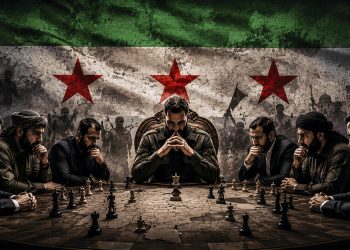
If there is only one victor, who is it? The answer to this question appears simple yet esoteric at first glance. However, it may well be the most important question of the present moment because the answer defines victory in a world undergoing fragmentation. Although the main drama of the so-called war in Gaza ended with a ceasefire and a declared victory for none: though some might say Hamas, since it is still existed as a player to recon with. Hence the ground was never more than a side scenario to a larger tripartite conflict raging in the greater Middle East region: Hezbollah versus Israel and the United States on one side, and Iran on the other. Victory cannot be declared for a party involved in only one front of a three-player conflict; that would deny a reality evident from any map; indeed, from any sensible understanding of international relations.
As symbols and paradigms shattered under the catastrophe, however, betrayal gnawed at the state of affairs as Israel’s two main allies heralded the Abrahamic Accords and smaller regional nations, while public support for Iran and its allies grew among the Arab and Muslim street. For the US the control of Iraq was lost to the favor of Iran, and the surveillance through vulnerable social and public media became a double-edged sword. Peace was made in the Gulf Cooperation Council (GCC) without Saudi Arabia. On one hand, Yemen yielded to domestic unrest. On the other hand, Syria, Sudan, and Libya veered off-course. On another front, China offered the only solution to Russian isolation in the form of loans backed by leverage principally from natural resources. U.S. reliance on Asia-Van-Guard company had all but transformed the war in Ukraine into a business-continuity opportunity, and at this particular moment, the final curtain fell on G7 pretensions of global relevance.
The Destruction of the Structure:
Could we dare to say; despite of all the destruction of the infrastructure, Iran’s might quietly be reshaping the Global Order? Even if public attention is focused elsewhere, the Middle East’s tectonic plates are in motion, leading to a preponderance of players seeking stability, the establishment of new concerns of equal or greater weight for the key players, and the emergence of different alignments, yet without the area attaining the same political-institutional structure or stability. Shifts in policy and the weakening of the transatlantic link, while concomitant with some external change, also affect, even momentarily, the powers that are simultaneously providers of stability and the source of instability. The key to change lies not in the local balance of hard power, as revealed by an examination of relative military capabilities and of sources of finance, but in the evolution of soft power, and especially of deterrence.
Yes, even before the war, Iran has quietly reshaped the Middle East through a strategic realignment that has less to do with changing external circumstances than with the response of established powers to those circumstances. The destructive process is not producing a new order that would allow local players to rely on the order-promoting capabilities of the established powers. In the absence of a shared interest in promoting the establishment of such an order, the established powers are preoccupied with the pressing global security challenges arising from the incipient reshaping of the global security balance with Russia and China. Iran was drawing benefits from developments whose sources are in different parts of the world and is adapting power resources to new processes that favor it. The approach strategy of the United States, combined with its diminished commitment and capacity for hard power operations on the ground in the Middle East, is prompting a change in the strategic orientation of Saudi Arabia, the United Arab Emirates and Qatar towards China, Russia and Iran; a diminishing of concern over Iranian actions, calculations being reoriented towards the distance between China, Russia and the United States, and local political relations increasingly becoming influenced by economic versus political considerations.
The Wreckage of Meaning:
Israel’s post-conflict narrative, once characterized in the West by an aura of righteousness commanding international support, morphed rapidly into one of de-legitimization. Statements from politicians and intellectuals alike; and the editorial sheets of the world projected the destruction of Gaza as the soul-destroying spirit of the Zionist movement. Even a notion that Israel would have struck Iran had it not been embroiled in the conflict may have suited the position since that was exactly what the Iranians seemed to have prepared their playground for the last twenty years was now galvanized into action.
That war; from the Israeli and US point of view, meant deterrence, restoration of authority, the resumption of the assault against Iranian capabilities and ambitions and the suppression of proxies, sounded hollow an hour into the battle; rather it signaled decay. In an era where the political and military level were not aligned, even the credit of a distorted discourse; stability versus instability, became redundant. What was important was what the attack did not do, not what it achieved. A warped priority was no longer necessary. The new dictator of the world need not pretend quiet, for Sinai or northern Saudi Arabia could become the next destination, even with Abbas in charge. A prison break or an Israeli kidnap was enough to garner global attention; even though Jerusalem had not become Berlin yet, but had become virtually divided.
The conflict’s redefinition of meaning had also changed its significance for the balance of power. Israel was supposed to disturb the stability all others sought. Stability now was defined by those who could absorb Israel’s attacks without retribution, who could hide behind the hysteria of world leaders in the aftermath of each such attack. Victory in this new discourse consisted of spurning and avenging an assault. It no longer lay in deterrence or dissuasion. The vision ceased to be one of New York dominating Washington. Rather, Black could now dominate White, Kidnap the Negro millionaires and overturn the sanctity of each Monroe, and Garbos would take a paid sabbatical just to discredit the land their ancestors had searched for.
And yet, while kingdoms and black-and-blue nations condemned attacks on black-and-blue covering their white faces, the whites surrounding the last fortress of apartheid became their defenders. Though struck had not yet begun to play in Cambridge, with the dead rising from their graves, and the living being crushed into silence by the shells of 200 and 300 millimeters watched over by the 808s-479s of King Gun and the great sirens coined by the noble sister of the virgin leaving the sacred mountain free from the El Al uproar burnt in the Balinese mystery-a strange folk did take to the streets accusing the world of not having bombed the concentration camps.
The Loss of Prestige and Deterrence:
It is safe now to say America at a crossroads since its power is increasingly and intricately linked to the complex and multifaceted idea of deterrence, yet it is now predominantly perceived as an emerging form of soft power realpolitik. In terms of physical reach, the United States possesses the capability to project a stabilizing military presence and strength across a wide range of regions around the globe; however, symbolically, its overall power is often perceived as unconvincing and ambiguous by the international community. Notably the Arab Gulf countries who are seeing Iran neutralizing all the American bases as base-less significance. The Americans inhabit an undeniably enviable and influential role in the evolving dynamics of the international IPCC, which reflect the shifting winds of global awareness, understanding, and policy-making. This duality of perception underlines the challenges faced by the U.S. in asserting its power and influence on the world stage amidst changing geopolitical landscapes.
They are socio-culturally quite close to the Europeans, as they actively engage in a wide variety of diplomatic and strategic dialogues that effectively strengthen and deepen their connections. The United States is trying to operate energetically and assertively within complex, often distant alliances, working diligently and strategically to minimize losses whenever possible, whether economic or political, but the latest Iran gamble might prove otherwise. Simultaneously, it tends to overlook the presence of corrupt, terrorist-riddled, and oligarchic regimes that unfortunately exist in various parts of the world while turning a blind eye to their significant impact on global stability and peace. In the United States, there exists a strong and persistent desire among both its influential leaders and everyday citizens to be recognized and decidedly regarded as a truly great nation on the global stage.
This desire continues unabated and unyielding, without the necessity of actively taking steps to deter the potential threats that arise from not only foreign adversaries but also from internal discord and division. However, those in positions of power and influence inevitably find themselves grappling with the dysfunction and deep-seated discontent that are often exacerbated by their very attempts at maintaining the perception of enduring greatness and stability. This ongoing struggle reveals the complexities of their international stance as well as the myriad domestic challenges that they must contend with, leading to a situation where the lofty ideals of effective leadership and the notion of unity starkly clash with the harsh and sometimes unforgiving realities of effective governance and social cohesion. As such, the dissonance between ideals and reality highlights the daunting challenges leaders face in navigating both the expectations of their constituents and the pragmatic necessities of policy implementation.
Americans currently find themselves navigating a complex and challenging double minority condition; neither the long-established Republicans, with their deep-rooted traditions, nor the emerging, radical new Democrats possess a level of trust in their representatives. Rational thinking would indicate that actively seeking to bridge the existing gaps, or at the very least, closing them in a timely manner, could facilitate a scenario where the two political camps could come together and work in a constructive manner against their shared common enemies. Such collaboration could also lay the groundwork for an adept Deterrence Management, enabling the United States to harness and apply its full potential in addressing and counteracting Alexis de Tocqueville’s two profound dangers he identified: that of internal despotism and external despotism; though President Tramp discarded both of them. But, by recognizing the importance of unity amidst diversity, Americans can foster a more effective political discourse that prioritizes the collective good over individual party interests.
America is experiencing a moment of transition during which an unprecedented crisis of its soft power has weakened the credibility of its deterrence. After the Vietnam War, Americans ignored the strategic challenge posed by the Soviet Union’s detente policy, attempted to extend the War of Independence to Latin America and the Middle East, and pursued a soul-manufactured upsurge of power. Rationality tells us that bridging gaps, or at least closing them speedily, would allow the two camps to work constructively against their common enemies. This would also create the conditions for a skillful Deterrence Management to apply the full potential of the United States against Alexis de Tocqueville’s two great dangers, internal and external despotism.
The End of NATO:
If we are to demand a new balance of Global Security, does NATO still exist in our current global landscape? If it does, then one must consider not only its relevance but also the very acceptability of the alliance in its various forms, which is increasingly open to serious questioning. The world we inhabit has changed radically and continues to change at an accelerated pace. New threats have emerged, along with geopolitical alliances that are reshaping the way nations interact, departing significantly from the simple East-West bipolarity that characterized much of the 20th century. This bipolarity, which adapted to the dynamics of World War II in its concluding phase, appeared to function effectively until a certain moment after the collapse of the Soviet Union. However, the complexities of today’s international relations demand that we reassess NATO’s role, its strategic importance, and whether it can adapt to the multifaceted challenges that now define global security.
Possibly, it was at one time for the sake of a greater collective security against an imagined and vague common enemy, the now mostly dormant and sleeping bear that long ago evoked fear and suspicion. Over the years, this perceived threat has evolved, and the bear’s identity has shifted, becoming associated with China. However, it is essential to recognize that China has never truly served as an enemy for any of the member states that make up NATO. While it has been characterized as a rival for the United States of America, particularly regarding military conflicts, the uproar and dust that arise in the South China Sea illustrate tensions. Yet now, the center of attention for NATO seems to rotate and shift beyond the strait of Gibraltar, focusing on circumstances far removed from old battlegrounds.
In recent decades, the United States has maintained a relentless and often complicated engagement in the Middle East, involving itself in a multitude of ongoing conflicts that have persisted over long periods of time. The wars fought in that tumultuous region have not been geared toward achieving any clear or cohesive success; rather, they have resulted in a series of significant failures marked by a continuous and notable loss of prestige and credibility for the United States on the global stage. Yet still, these complicated entanglements have continued to persist, leaving many observers and analysts to question the ultimate purpose, motivations, and potential outcomes of such endeavors, as well as the long-term implications for both the United States and the countries involved in these conflicts.
Former U.S. President Trump’s “America First” policy has significantly contributed to growing doubts regarding the future of NATO. In light of this uncertainty, the European Union has taken steps to build its defense forces, which serve as a complementary project alongside NATO. This development points to a current lack of unity within NATO itself, as member states find it increasingly challenging to align their interests effectively. Nevertheless, NATO continues to exist as an alliance comprising active members who share certain common interests, even if they lack a unified and coherent goal moving forward. Currently, NATO is navigating through a complex and uneasy situation, from which it must find a way to emerge successfully, potentially necessitating a reevaluation or even a significant transformation of NATO as we know it.
Conflicting Goals Between Israel and Its Allies:
The diverging and increasingly contrasting goals of Israel and the West have raised crucial and pressing questions regarding the future of their long-standing security cooperation, which we call it “alignments under Strain”. The relentless hammering of Israel, combined with its continuous neglect of various Arab initiatives and ongoing military conflict and war-fighting, has exposed deep-rooted, longstanding contradictions that exist between Tel Aviv and its allies in the region. Understanding these complex tensions, as well as the prospective loss of trust that may develop within the U.S.-Israel alliance, is essential for both effectively reinvigorating U.S.-Arab-Israeli security coordination and reestablishing a credible and effective deterrent posture against Iran and its various partners in the Middle East.
Recent history demonstrates that Israeli escalations require Arab states that put their feelings toward Iran on hold to clash with their Iranian neighbor. When Israel failed to do so in earlier wars, Tehran and its partners refrained from reaching Jerusalem’s nuclear facilities; hinting that a ceasefire or ceasefire proposal would be acceptable; and leaving trade relations; direct and indirect, with the Gulf states intact. In the clash between Israel and the Islamic regime in Iran, U.S. support for Israel has placed its Arab partners in a quandary, and the widening gap between the two sides over the war against Tehran and the possibility of a new nuclear deal reflect differing concepts of regional security.
History suggests that there are various other possible avenues that could be explored. Indeed, this complexity is part of the intriguing paradox surrounding the strength and resilience of the state of Israel. The limited historical memory often exhibited by the United States leads to a tendency to view the Jewish state primarily in a short-term context. In contrast, European nations and Arab states distinctly shape their policies by taking into account a longer historical perspective, one that stretches beyond immediate events and concerns. This difference in outlook results in contrasting approaches to the issues at hand, reflecting how history influences geopolitical strategies across different regions.
The Greater Israel Dream:
A not so hidden goal of Israel is its long anticipated goal of quietly isolating America in the Middle East. Though the declared twin visions of Greater Israel serve as a powerful testament to the profound and radical transformation of Zionist ideology that has occurred over the course of time, illuminating the deep and troubling chasm that separates Israel from its neighboring Arab states. This stark and undeniable reality raises serious and pressing questions about the motivations and decisions of many Israelis, who have made the deeply regrettable and hateful choice to attack their Palestinian neighbors instead of extending a compassionate hand to offer them aid or support in their times of need. The implications of such choices echo throughout the region, impacting not just the individuals directly involved but also the broader geopolitical landscape.
This troubling trend highlights an alternative objective, one that has been long concealed beneath the surface, which has recently come to light and is now impossible to ignore any longer. Such a significant transformation shifts Israel’s role dramatically, turning it from the West’s vigilant watchdog, which was originally meant to guard and uphold Western interests, into its main adversary; a position that raises many concerns. This change puts the United States in a particularly difficult position, forcing it to compromise its essential interests in the region, all in the name of defending a rabidly expansionist and evidently ungrateful ally. This ally seems increasingly out of step with the core values and long-term goals that the West espouses, leading to a complex and troubling dynamic.
Two distinct taxonomies might aptly be labeled “Greater Israel”; one referring specifically to its claimed geographical and political enlargement and the other addressing the escalating hostility that its controversial moves frequently provoke within the Arab world, ultimately threatening to isolate the United States right at the heart of the region. The first taxonomy transforms what is often labeled “the irreconcilable conflict” with the Palestinians into an irreconcilable death wish that hinders any possibility of peace. Meanwhile, the second taxonomy reduces the United States to the role of a reluctant policeman, racing from one explosion or crisis to the next, perpetually engaged in damage control rather than implementing long-range strategies for mitigation and resolution. This dual taxonomy illustrates the complexities and the intricacies of the situation, showing how intertwined these issues have become in the geopolitical landscape.
The ultimate evolution we are witnessing now incurs collateral damage that spreads far beyond the immediate vicinity of the conflict; indeed, the monstrous force newly born in the turbulent Middle East poses a significant threat that might well unleash a cataclysm capable of engulfing the entire world in chaos and destruction. The two-faced war between Peterson and Laden, while it marks the end of its second tumultuous year, provides further critical lessons regarding the increasingly divergent and disparate objectives of the principal combatants engaging in this battle, one of which strives to maintain and protect the tenuous balance of the status quo, while the other fervently seeks its utter and complete destruction. The Arabic concept of al-nakhza, which has been drawn altogether from the Hebrew word “nakhza,” meaning “to rest, to stop,” thus takes on a new and more urgent meaning: arrest the rest, halt the ongoing cycle of violence!
The Shattering of Arab Trust in America:
The war certainly is redefining, rebuilding or reframing new and old alliances; from Lebanon, Egypt, and the oil-rich Gulf States, which were once viewed as partners of the United States, are now becoming increasingly critical of American policies and actions regarding the region. In the aftermath of the September 11 attacks, several of these countries rallied to America’s side, condemning the horrific assaults and calling upon the international community to unite in the fight against terrorism. However, despite having previously adopted a cooperative stance with Washington, these nations are now expressing discontent and dissatisfaction with the current American policy approach in the Middle East, feeling that it does not adequately address their concerns or the complexities of the region’s dynamics.
Particularly in the Arab world, it is becoming increasingly difficult for those governments to preserve their relations with the United States without paying an especially high domestic price. Mass anti-American demonstrations have been occurring in capitals such as Cairo and Amman, and what is regarded as a trend toward extremism has gained popular support, especially among the young. In a world increasingly driven by emotion and Islam, Arab sympathy for the United States has turned at an alarming speed into hate. No longer is it sufficient for the United States to maintain a firm line, for reaction is determined not only by the policies of Washington but also by the intentions and perceptions of the very different community of Islamic peoples. For it is toward that community that an enormous body of sympathy is directed within every Arab country.
Transcontinental Alliances and Disputes:
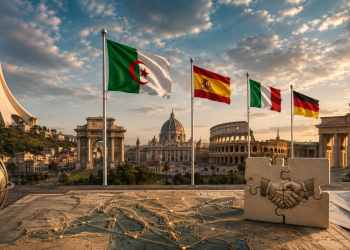
A new map for cooperation has been drawn right now, disappointed in the ill conduct of the fragmented world, which was once characterized by chaos and uncertainty in various forms, is slowly but surely stabilizing and transitioning into new arrangements of alignment. When we take a closer look at all four major power centers; namely America, Europe, China, and Russia, it becomes increasingly evident that certain groupings and coalitions are beginning to emerge more distinctly. To the left, there lies a vast continent filled with sad souls who seem to have little in common aside from a long-standing tradition of collectivism. This diverse group primarily consists of a mix that includes both Eastern Europe and Northern Europe, each bringing its own unique histories and cultural narratives into the complex tapestry of relationships that define this region. The dynamics between these areas reveal a blend of aspirations and challenges that continue to shape their identities and interactions on the global stage.
To be blunt, much of Canada and the vast majority of Northern Europe seem to be heading toward a similar future that is marked by disintegration and fragmentation. This trajectory appears to be increasingly evident as shared challenges mount and social cohesion diminishes. Furthermore, there will also emerge a significant crescent shape on the political map, which will represent the great fez of Islamic countries. This influential crescent stretches from Algeria along the northern coast and moves down the African continent. It continues its journey eastward through Persia, encompassing Arabia, and Pakistan, then extending north into the various Stands. This complex geopolitical landscape is poised to change in ways that we are just beginning to understand, and it may lead to new alliances and tensions that could reshape international relations for years to come.
Moving back across the Atlantic to South America and along the Pacific Rim, another region is taking shape. And here, too, there is a great deal of commonality. The racial, historic, geographic, and economic ties of South America and Mexico with the United States supersede all other factors. Especially so with the nations of Central America and the Communistic countries that feel itself tied to China. This grouping of nations can play a far more important role in the development of the world than the collective of color. It is with these peoples and their needs that a clear and coherent successful foreign policy should rest and develop. The terrorist incident at the airport show how much more progress and influence the United States has in this sector of the globe than any other. The United States must also take into consideration the rests need for support and assurance, and not use it merely as a token of good faith towards Communist China. The great internal conflict of the Middle East area must also be economically solved if arms shipments and care packages are to be valid and trusted.
Faded visions of Symbolic economic stages vividly illustrate the potential for a significantly more harmonious direction in our world. These intricate and vital trade routes, including the strategic Panama Canal, should encompass not only well-planned road infrastructure but also comprehensive rail systems, thereby creating a much greater sphere of stability. This enhanced stability serves to guard against the insidious contamination from the Bolchevic powers loitering to the south, which promotes a form of new colonialism expressed through dependency, as observed in the troubling secession of missiles from both Canada and Japan, along with the newly emerging influence of EN Sadium. Our collective vigilance in this domain is essential for fostering an environment that discourages such dependency and nurtures self-sufficiency among nations.
The “Dove Peace”, as echoed in the latest news and media reports, emphasizes a profound yearning for tranquility and serenity in these intricate and complex geopolitical times that we are experiencing. However, even the challenging task of exciting a sufficiently large and engaged market that would genuinely interest either of the Communist powers seems to stretch far beyond the typical bounds of logic and reason. The intricate interplay between these diverse economic and political forces remains fraught with numerous challenges and deep contradictions. The global landscape continues to evolve and transform, raising critical questions about the long-term sustainability of such dependencies and the fading prospects for genuine collaboration amidst the underlying tensions, differing ideologies, and a complex web of interests that define our current reality.
Conclusion:
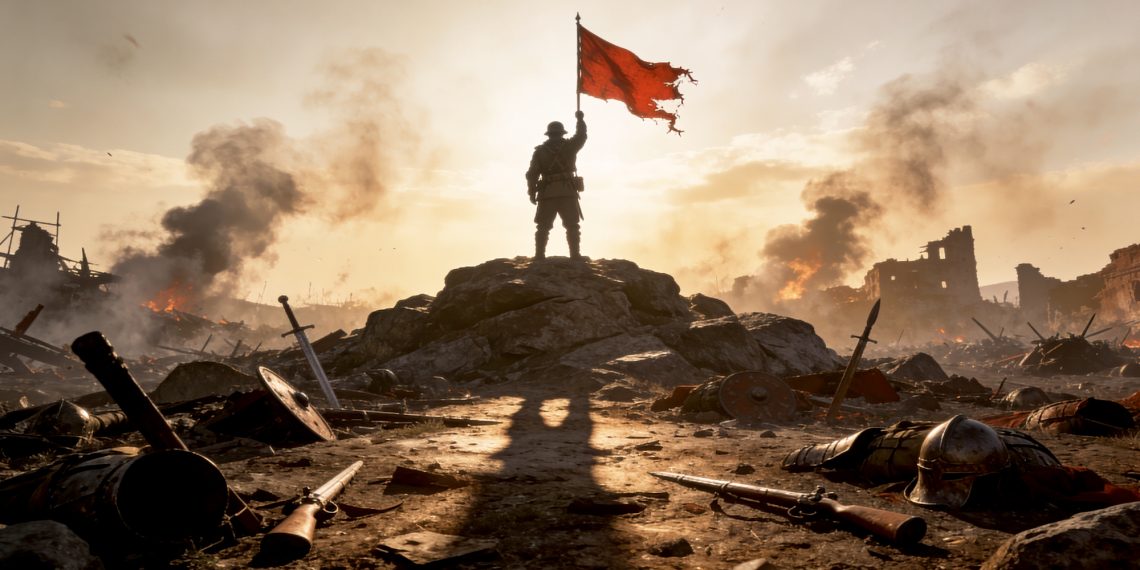
Again we are concluding with another note, or rather a question of dismay; how can we be redefining victory in a fragmented era? If there is only one victor, who is it? Recent developments in world conflicts imply a certain victor; perhaps because only one of the three direct participants of the Tripartite War is still capable of achieving an objective that shaped its participation in the war and had for decades just secured its consent by silent acceptance. But if Iran’s evolving role is indeed the cause behind the rapid deterioration of the regional order and the establishment of an anti-Iran front, what Tehran needs should no longer be called victory, for it reflects not Iran’s will and aspirations but rather the internal and external weakening of its rivals. Indeed, the expanding geographical and ideological front political Islamist movement should not be interpreted so much as the culmination of Iran’s policy as a simple reaction to the new situation created by the growing ambitions of Israel’s en MER-MAC doctrine.
The decision makers in Tehran have, over an extensive period of time, been strategically striving not for the complete regional hegemony that had long been assumed, but rather for the effective and robust prevention of any external threats that might jeopardize their sovereignty and national interests. As each Iranian demand is accepted, often without significant resistance or challenge, by the United States and the wider international community, the previously constructed and artificial image of Iran’s supposed omnipotence gradually fades away, diminishing into obscurity over time. This evolution in perception reveals a more nuanced understanding of Iran’s position on the global stage, highlighting the complexity of its geopolitical maneuvers and intentions.
Just as the dramatic collapse of the USSR fundamentally altered the entire global distribution of power and influence, despite the ongoing efforts made by the Russian leaders to maintain their influence and authority on the world stage, so too have the profound shattering of Arab trust in America and its deeply rooted profound incapacity to act effectively as a stabilizing factor in the tumultuous and highly complex Middle East served to increasingly isolate Israel from its traditional allies and longstanding partners. This growing isolation of Israel in international relations is beginning to feedback directly into America’s own prestige and deterrent capabilities on the world stage, creating a dangerous feedback loop that further diminishes U.S. influence not only in the region but also increasingly beyond its borders. The repercussions of these intertwined dynamics could lead to significant shifts in alliances and geopolitical strategies in the coming years.