The following report monitors the activities of Jamaat Nusrat al Islam wal Muslimin across several African countries during January 2026, based on an analysis of the group statements disseminated through selected social media platforms.
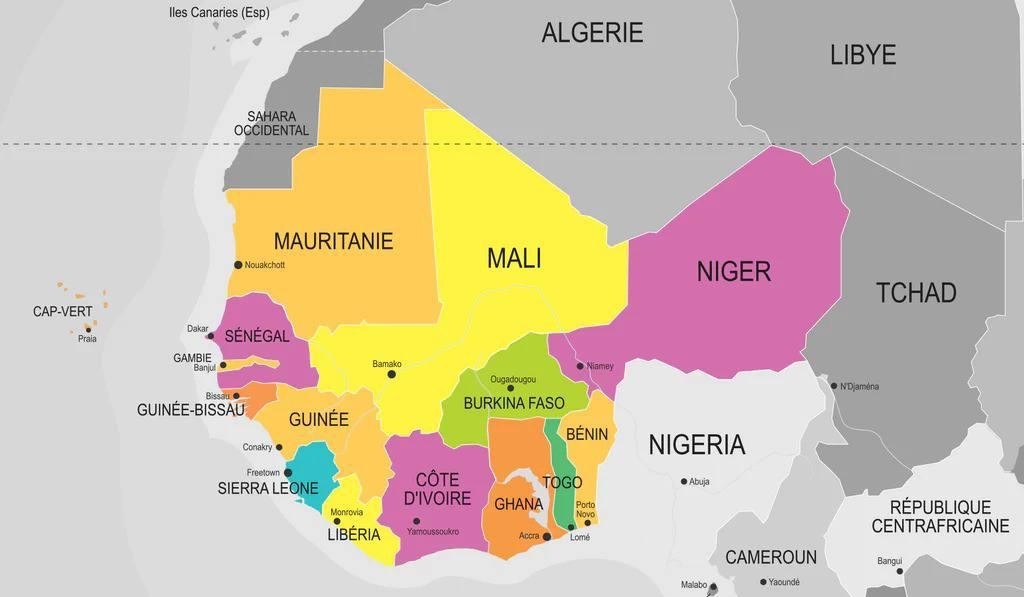
The war of the poor continues, with no victor visible on the dusty horizon. Hope has abandoned the Sahara and the vast savanna plains. In Africa, an exhausted continent, the year 2026 appears set to extend an irreversible escalation of massacres and coups. Turkey continues to sell additional armed drones, China supplies increasing quantities of armored ammunition and surveillance equipment, while jihadist groups adapt to the new reality. The African Union still bets on a military victory capable of suffocating jihadist movements, while proponents of the so called gray truth look on with deep anxiety, fearing reckless political decisions that could reshuffle the landscape. The ambiguity of this phase and the severity of its threats push major powers to fuel chaos, carrying with it the risk of being consumed by it. Africa is no longer an international priority amid the fragmentation of conflict zones worldwide, leaving the continent forced to defend itself alone when it can no longer afford mercenaries and merchants of death.
The flames of war persist, alongside ransom taking, executions of alleged spies, and the imposition of road blockades. Jihadists have launched a scorched earth policy without abandoning previous phases of their strategy. They are implementing what they consider the final decision for confrontation with an adversary that remains standing despite repeated setbacks. Factories, gold mining sites, and even engineering infrastructure directly linked to quality of life are deemed expendable. From the rubble of collective destruction, the emirate of Jamaat Nusrat al Islam wal Muslimin is expected to emerge. This approach is not new in itself, and its impact on the outcome of any potential victory cannot be underestimated, even if that victory proves Pyrrhic. Gradually, the dynamics of destruction extend across the broader Sahel alliance space. The Sahel reflects the entrenchment of a latent and monotonous war.
The parties to the crisis display a stalemate of mutual attrition. Every gain, whether the return of internally displaced persons or the recovery of lost territory, is sooner or later met with renewed escalation of violence, varying in intensity and duration. Jihadists fall in large numbers, yet their resolve hardens due to the continuous influx of recruits, most of them adolescents emerging from secret training centers. As violations attributed to the Sahel States Alliance against unarmed civilians increase, the social base for recruitment consolidates further in favor of jihadist groups. Thus an unproductive confrontation persists, producing no decisive victory for any side, while mutual destruction continues with no realistic prospect of peace in the near future.
In Mali, particularly around the capital Bamako, Jamaat Nusrat al Islam wal Muslimin claimed responsibility for a series of attacks targeting pro government units. These included the seizure on January 4 of a tactical position in the Falani area of Koulikoro region, followed the next day by the capture of sites near the city of Dougoufry in Segou region. The group also claimed responsibility for an ambush on January 3 between Kassaro and Souribougou in Kayes region, targeting a convoy of Malian armed forces and elements of the Russian Africa Corps escorting fuel tankers. According to the group account, the spoils included weapons ammunition identity documents and personal belongings.
With an intensified media presence, the group released images starting January 6 that it said depicted the Abu Issa al Ansari camp, presented as a center of gravity for its recent operations. Across western Mali bordering Mauritania and Senegal, security monitoring data indicate a rise in property seizures by militants, benefiting from expanded freedom of movement by so called collectors of forced zakat. In these areas, state presence continues to decline, and local communities attempt to adapt to the existing vacuum, as residents hesitate to report militants due to exhaustion and fear of retaliation. In many regions where official deterrence has eroded, localized non aggression arrangements or forms of forced cooperation with armed battalions have emerged.
From Léré and Téréla to Soumankidié and Oumar Fara, extending to Kayes, and from Silifili and Blékouato and Brara to Tiogoub, the presence of customs and soldiers has vanished from daily life. Village mayors have sought refuge in regional capitals, while appeals from residents near combat zones receive no response from armed forces. Ultimately civilians are compelled to coexist with extreme fragility. Observers of this partial state withdrawal from western Mali note a striking absence of highway banditry, alongside a low level of ordinary crime.
In response to this erosion, the Malian Armed Forces General Staff has sought to highlight certain field achievements. On January 3 it announced the liberation of a hostage near the village of Gourele Hery northwest of Nioro, a stronghold of the Sufi leader Sheikh Bouyé Ould Hamahallah, who is himself a target of the group. The extraction operation concluded a narrowly targeted military patrol.
Two individuals suspected of possessing a large quantity of explosives were also arrested during a checkpoint inspection at the exit of Ferkessou on National Road 10 southeast of Sikasso, an area witnessing repeated improvised explosive device incidents. The suspects were handed over to the gendarmerie on January 2 for further investigation. Despite the unfavorable context, the Malian armed forces reaffirm their confidence in the effectiveness of operations against bomb makers, noting that the most recent explosive device discovered and dismantled in the area dated back to December 27.
Parallel to this, a Russian Telegram channel known as Departamente circulated information claiming that elements of Jamaat Nusrat al Islam wal Muslimin had seized control of a gold mine in Morila in central Mali. The mine had been operated by AngloGold Ashanti and Randgold Resources. According to the channel, militants detained seven employees on January 4 before later releasing them without casualties.
Also in Mali, the density of statements issued by the General Staff during January attracted attention, both in frequency and geographical scope, suggesting unprecedented military momentum. Between January 13 and 17, Malian armed forces announced a series of airstrikes across western central and northern regions. Armed gatherings were targeted near Kayes, around Andéraboukane, in the Menaka area, and northeast of Saraféré in the Timbuktu region. Strikes also hit locations northeast of Siby in the Banamba district of Koulikoro, followed by further raids that disabled a gold processing facility east of Tessalit in Kidal region near the Algerian border. Official accounts reported the neutralization of a significant number of terrorists and the destruction of dozens of motorcycles vehicles and supply assets.
In his speech on January 20 marking the sixty fifth anniversary of the Malian army, General Assimi Goita praised what he described as the rise of a seasoned professional and more flexible institution. A careful reading of the speech reveals a deeper attempt to reassure frontline units and officers amid internal divisions and growing doubts over the central authority ability to contain spiraling violence. The leadership may have found comfort, perhaps mistakenly, in the sudden silence of the Azawad Liberation Front, which abruptly ceased publishing statements on its attacks.
However, fairness requires acknowledging a simultaneous and equally significant field development, as evidence shows that the opposing side momentum has not diminished. The same period witnessed a marked escalation in attacks against Malian army patrols across multiple axes, particularly in Kayes Koulikoro and Sikasso regions. Jamaat Nusrat al Islam wal Muslimin claimed responsibility for detonating an armored vehicle with an explosive device between Fasso and Nioro in Kayes region, targeting a military vehicle on the Sikasso Loulouni road in the south, and executing an ambush against a military convoy between Fasso and Biema in the central western area. The group also announced control over an advanced military post in Nionsombougou in Koulikoro region.
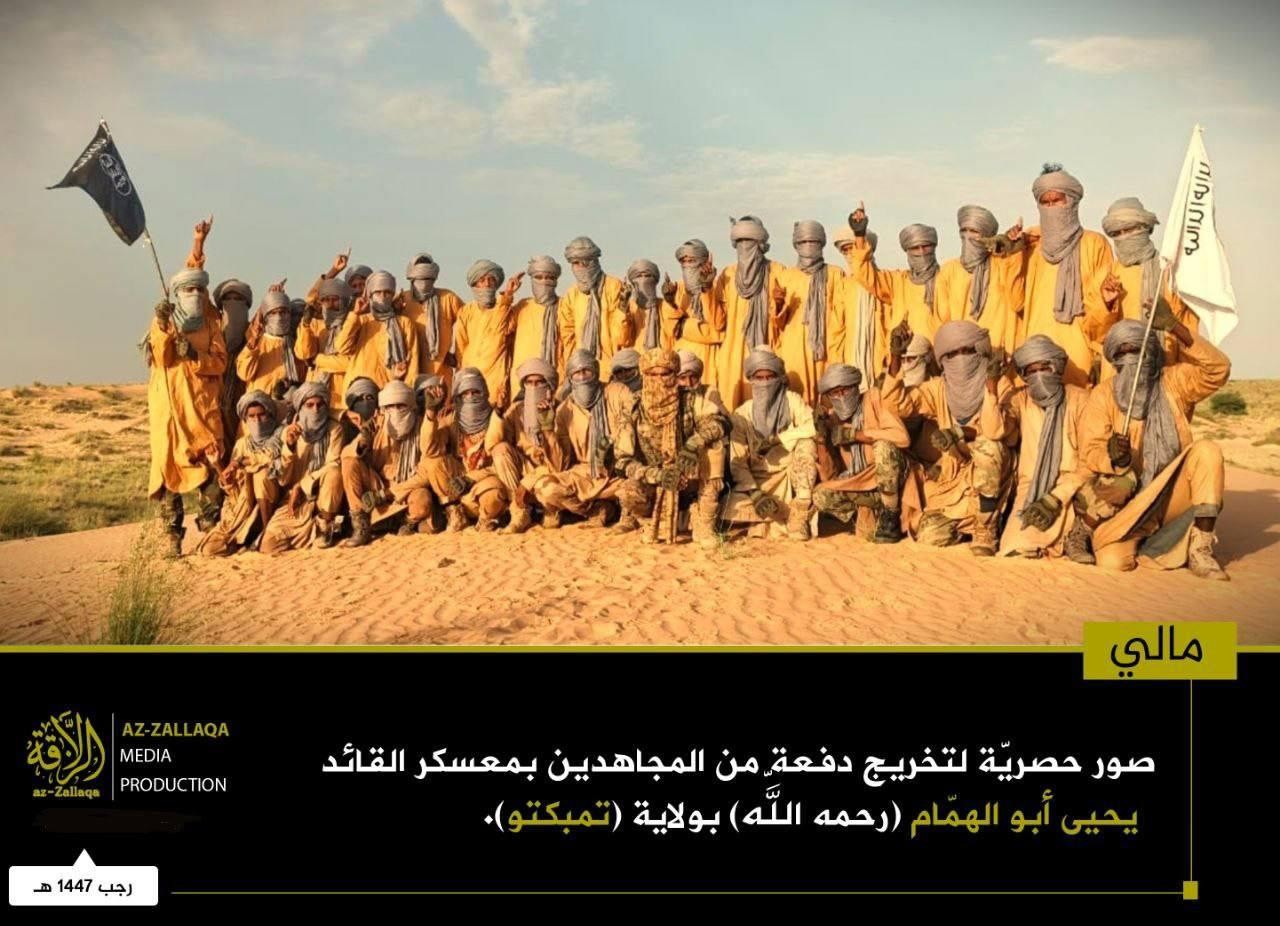
In the same context, the group released images documented the graduation of a new batch of fighters from a training camp named Yahya Abu al Hammam near Timbuktu. Abu al Hammam was a senior leader in al Qaeda in the Islamic Maghreb killed in 2019. The naming carries clear symbolic significance, reaffirming the group loyalty to its al Qaeda reference at a time when it had attempted since summer 2024 to present itself as a more moderate local force influenced by what was termed the Syrian shift.
In Mali, the al Qaeda affiliated Jamaat Nusrat al Islam wal Muslimin carried out a series of military initiatives, including the seizure of a headquarters belonging to pro government militias in the town of Diaw in Mopti region on January 7. Militants also targeted a Malian armed forces convoy with a rudimentary explosive device along the Bougouni Kolondieba axis in Sikasso region. On the same day, the group released images of a meeting held in Timbuktu attended by fighters clerics and local notables, reflecting an advanced stage of so called empowerment aimed at consolidating societal anchoring in the north. The images depicted an atmosphere of apparent calm.
Related data indicated a large scale attack in the western central area within the Bafoulabe zone of Kayes region on January 12. Dozens of militants on motorcycles targeted several industrial sites previously attacked during the past summer. Vehicles and equipment were burned and several hostages were forcibly taken to an unknown destination. Based on the previous weekly bulletin, state presence in western Mali has declined further, with attackers operating with reduced caution.
According to the Malian Armed Forces General Staff, regular forces carried out airstrikes on January 11 against three enemy gathering sites west of Biblin and south of the Kikoro forest in Dioula region. Clashes resulted in the neutralization of around ten fighters and the destruction of an unspecified number of motorcycles. A second strike south east of Tinkeleni in Bougouni region killed additional fighters and destroyed dozens of two wheeled vehicles. A third strike targeted an explosives laden vehicle east of Kidal. The armed forces also reported thwarting an ambush attempt against a patrol near Léré in Timbuktu region, citing human and material losses among the group without providing precise details.
Fuel shortages continue to disrupt an already fragile economy. On January 6 Sky Mali airline announced the exceptional cancellation of some flights due to kerosene shortages.
On the political front, former Malian prime minister Choguel Kokalla Maiga addressed an open letter on January 14 to Algerian president Abdelmadjid Tebboune, expressing deep concern over the unprecedented deterioration in relations between Mali and Algeria. His tone was cautious and conciliatory, contrasting with the sharp exchanges during the eightieth session of the United Nations General Assembly in September 2025. Maiga argued that public statements and mutual accusations damaged both countries images and negatively affected regional stability, calling for strategic patience and the invocation of shared historical memory. Now positioned within the opposition, Maiga appears to be presenting himself as a potential mediator without explicit alignment.
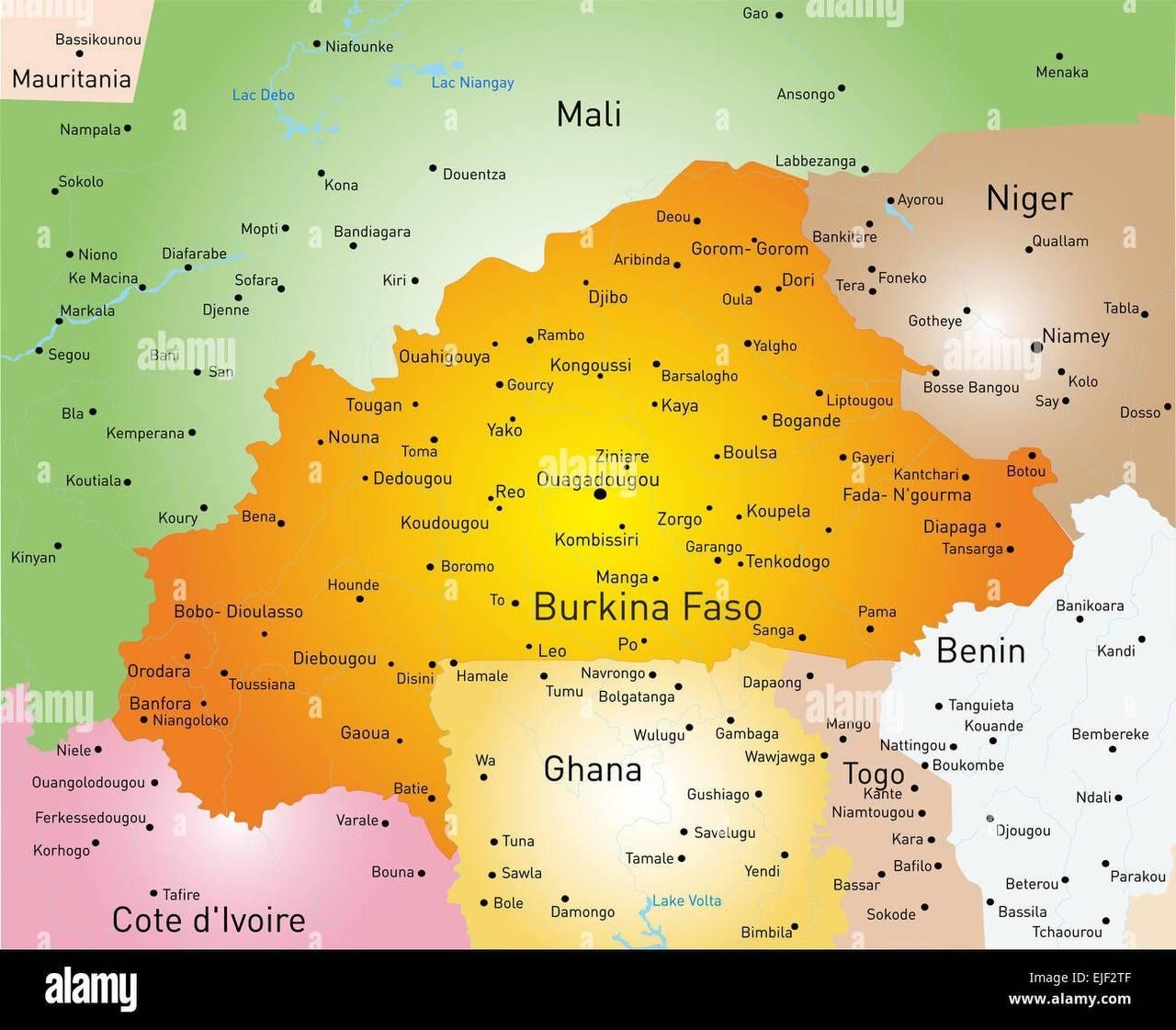
In Burkina Faso, Jamaat Nusrat al Islam wal Muslimin claimed a series of scattered attacks targeting regular forces and the Volunteers for the Defense of the Homeland militia. These included an attack on December 31 in the town of Boni in Dedougou region, followed by the seizure of three military positions in Madouba Yorona and Touba in the northeast on January 1, before another attack on January 5 near Banfora in Tannounyan region formerly known as the Cascades area. Conversely the Burkinabe News Agency praised what it described as successes of resistance against terrorism between November and late December. Military authorities confirmed the neutralization of fighters specialized in using small drones to drop explosives, who were responsible for killing dozens of soldiers during 2024 and 2025.
According to the same source, militants attempted to deploy a booby trapped drone near Titao in Yagha region in the north, before being pursued into dense forest and eliminated when the explosives detonated. Similar attempts were recorded in Nakambé region in the central east, where other groups were preparing aerial attacks, and one team was neutralized while attempting to return to its base.
In the same area, hundreds of militants under pressure from government operations attempted to move logistical equipment toward the Kabonga forest, but most of the equipment was detected and destroyed. In Tapoa region in the southeast, a plot to drop explosives on the town of Kantchari was uncovered, and its perpetrators were tracked and eliminated along with the equipment intended for an imminent attack. Others met the same fate while engaging in illegal gold mining activities.
In a later disclosed development, a special intervention unit from the twenty sixth rapid intervention battalion stationed in Ougarou foiled a plan on December 19 to mine the Piega bridge in Gourma region in the east, after dispersing the armed elements and aborting the operation.
In Burkina Faso as well, Captain Ibrahim Traore continues to consolidate his grip on the state and society following the thwarting of the latest coup attempt before it materialized. On January 17 Togolese authorities agreed to extradite former transitional president Lieutenant Colonel Paul Henri Sandaogo Damiba, ousted in September 2022, in response to an official request from Ouagadougou accusing him of involvement in a mutiny attempt and financial crimes. The decision raised widespread concern among human rights organizations amid recurring reports of torture enforced disappearances and abuses outside major cities, particularly after the reinstatement of the death penalty in December 2025.
Operationally, Jamaat Nusrat al Islam wal Muslimin statements in recent days show a notable increase in attack tempo and geographical spread. On January 19 the group announced control over a military site in Nieme and the looting of a barracks near Dedougou, capital of Banwa region. On January 14 armed groups attacked a gathering of Volunteers for the Defense of the Homeland in the town of Sebi in Balé region, while the previous day they targeted a military site near Kello in Bam region. Attacks also included a site in Labarani and a militia convoy in Siba province in the Liptako area, reflecting an expansion of confrontation without decisive outcome.
The group expressed satisfaction with the succession of hostile acts confirming the expansion of its operational space and diversity of tactics. In Burkina Faso it claimed the assassination of two leaders of the Volunteers for the Defense of the Homeland near Ga in Koulpelogo region on January 6, followed the next day by the seizure of a fixed army position near Bassoum. On January 10 an explosive device detonated during the passage of a pro government patrol between Moussakantou and Kalan in the far south bordering Côte d Ivoire, an area that had witnessed relative calm in the previous two months.
On the same day another explosive device destroyed a militia vehicle on the Ntou road in Loroum province in Tannounyan region. During daylight hours the group seized a militia post in Boussila in Koulpelogo region, then a military site on January 13 in the village of Kliou in Yagha region.
Fixed infrastructure was not spared from escalation, as recalled by the partial destruction on January 8 of the bridge linking Benena in Mali with Djibasso in Burkina Faso in Banwa region. The town of Lankoue was also subjected to a swift attack by the group within hours, leading to the hurried withdrawal of soldiers and the flight of civilians.
In Niger, Jamaat Nusrat al Islam wal Muslimin launched an attack on January 5 on the town of Torodi located between Niamey and the Burkinabe border. Militants seized military positions and shelled regular forces with heavy artillery. The clashes resulted in the killing of the regional governor Captain Chaibou Mali along with members of his family.
The Islamic State in the Sahel in turn claimed responsibility for an improvised explosive device attack on January 1 targeting army vehicles near the village of Tilibiss in Tahoua region, resulting according to the statement in killed and wounded soldiers.
Domestically, the National Movement for Freedom and Justice affiliated with elected president Mohamed Bazoum warned of the dangers of storing quantities of uranates in densely populated areas, particularly in Niamey, considering it a threat to public health. The movement called for the removal of radioactive materials and the opening of an independent investigation to verify compliance with nuclear safety standards. At the same time Niger opposition forces, alongside Jamaat Nusrat al Islam wal Muslimin, the Islamic State in the Sahel, and lawyers for the French company Orano, closely monitor the transfer of an estimated one thousand tons of these materials toward the port of Lome, where a vessel flying the Russian flag awaits shipment. To date, the fate of this cargo remains unclear amid an investigation opened by the Paris public prosecutor in mid December 2025.
Also in Niger, the group announced on January 9 its control over two camps near Torodi in Tillaberi region. According to its account, the operation resulted in the killing of several soldiers, the seizure of vehicles and light and medium weapons, the destruction of equipment, and the release of civilians previously detained by authorities under counterterrorism measures.
This rapid escalation places the cohesion of the Sahel States Alliance under severe strain. Since January 6 the Nigerien government, through a decision signed by the minister of transport, has imposed sanctions on transport sector workers who refuse to deliver fuel shipments into Mali despite the issuance of official requisition orders.
On the political and economic level, the Nigerien minister of mines received the Turkish ambassador on January 9 accompanied by representatives from the Ministry of Energy and Natural Resources and officials from public companies.
The identity of those responsible for the massacre of Bosséyi in Téra district of Tillaberi region on January 20 remains unknown due to the absence of any official claim. However several African news outlets suggest the involvement of Jamaat Nusrat al Islam wal Muslimin or the Islamic State in the Sahel, without conclusive evidence regarding motives.
In Mauritania, a cross border regional project to enhance water security and build stability was launched in Nouakchott on January 19 in partnership with Mali and Senegal under the supervision of Minister of Economic Affairs and Development Abdallah Ould Sheikh Sidia. The project is funded with seven million dollars from the United Nations Peacebuilding Fund and will be implemented over two years under the supervision of UNICEF and the International Organization for Migration. It is expected to benefit approximately six hundred eighty thousand people, particularly in Guidimakha Gorgol and Assaba regions, through the construction and rehabilitation of water facilities and the reduction of conflicts linked to resource scarcity.
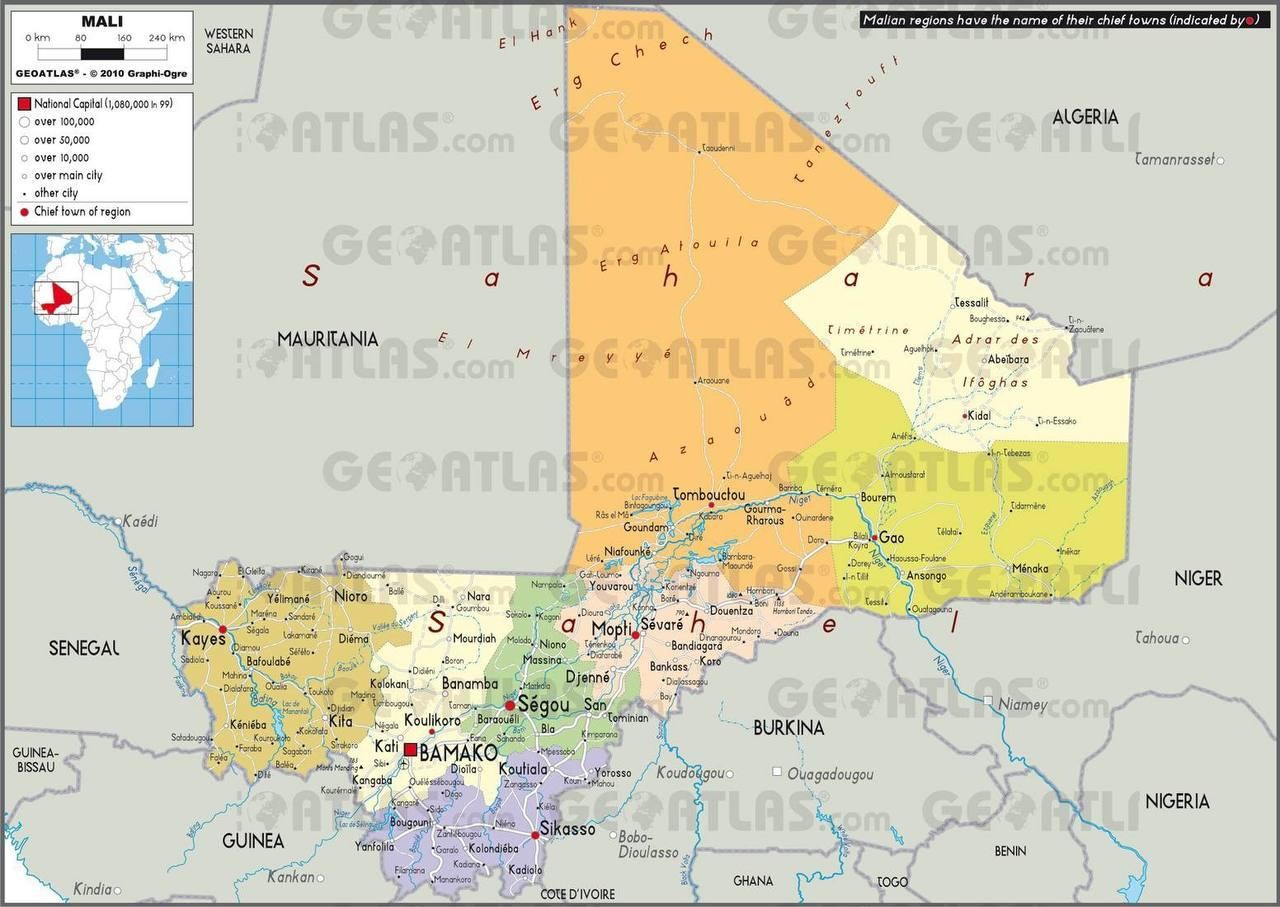
In the same humanitarian context, data released by the Office of the United Nations High Commissioner for Refugees on January 13 revealed a continuous influx of Malian refugees into the Hodh Ech Chargui region. Since October 24 2025 a total of seven thousand nine hundred thirty one refugees from one thousand two hundred seventy six families have been registered, distributed around Mbera camp and the surroundings of Bassiknou Nema and scattered rural areas. Children constitute sixty eight percent of arrivals, women nineteen percent, while men represent the smallest proportion. Most refugees originated from the Timbuktu area, particularly Goundam Garando Razelma and Koumaïla, fleeing violence hunger the collapse of services and the destruction of homes.
The report indicated that a drone strike on the Dougoufry market on January 6, along with clashes in Garando on January 12 that resulted in the burning of homes and food stores, were among the main drivers of mass displacement toward Mauritanian territory. UNHCR confirmed that needs now exceed response capacities despite humanitarian interventions, as Nouakchott searches for alternative funding sources amid growing economic pressure and the repercussions of migration agreements with the European Union.