In a time of international politics uncertainty, change is on the horizon, South Africa managed to have a rare G20 multilateral victory despite U.S. objections. South Africa, which held the G20 presidency this year, managed to rally all but two member countries, the U.S. and Argentina, to adopt a declaration, disregarding Washington’s warnings and temporarily silencing doubts about the G20’s relevance. Analysts and delegates said the outcome reinforced the G20’s role after years of struggling to reach meaningful agreements, underscoring the enduring strength of multilateralism.
The result angered the U.S, which will host next year’s G20. Washington accused Pretoria of using its presidency to challenge the G20’s founding principle of unanimous consensus, asserting that U.S. President Donald Trump would restore the group’s “legitimacy” during his term as host.
It is the first G20 summit to be held in Africa. The forum’s expansion shifted from its initial focus on global financial and economic issues when it was founded in 1999.
In light of a tumultuous international system, where International order is in a critical time of credibility. How new actors are shaping world economics and politics affairs, in a matter of rising regional powers – dealing neck to neck. With superpowers — who are making the African continent a new geopolitics and economics sphere of power and influence.
The Greater South
In the equation of Global South Vs Global North, on this stance the BRICS + who is becoming a serious pillar on world stage geopolitics and economics; a new dynamic is pushing the South in a posture of solidarity, equality and sustainability. Thus equality is a legitimate imperative in the African continent that has suffered a great deal from natural disasters, military coups, corruption, terrorism, and bad governance for decades.
As a result, a new generation of political and military leaders alike, intellectuals, and youth are making African countries at a juncture, facing mobility challenges shaped by rapid urbanisation. Development and stability play a critical role in the economic, social, and environmental landscape of these countries. Yet, with these challenges come opportunities to reshape urban mobility systems that are equitable and sustainable for people in countries like Nigeria, Rwanda, Ethiopia, Kenya, and in North African countries.
Though the U.S boycotted the meeting, citing that South Africa was mistreating its white-minority Afrikaners. Nonetheless, the question of mistreating white-minority Afrikaners in South Africa, was already a moment of political drama last summer in the White House between the U.S president and his South Africa counterpart. Leaders gathered at the summit adopted a joint declaration to address the climate crisis and other global challenges without input from the United States. Washington claimed that South Africa had “weaponized their G20 presidency to undermine the G20’s founding principles.” Meanwhile, Brazil’s President Luiz Inácio Lula da Silva declared the G20 summit in South Africa a success.
Soft Isolationism
A solid argument between the South and North and the future of a Pax Americana in light of a “zigzag doctrine” of President Donald Trump foreign policy, a combo of isolationism and internationalism. A doctrine that has been orchestrated by President Donald Trump in his eleven months in the White House, President Donald Trump has been demonstrating this approach, he has already withdrawn from UNESCO and the World Trade Organization. He is attempting to preach the end of multilateralism in practice, trying to strengthen unilateralism (peace through strength).
The backdrop of rising geopolitical and geo-economic competition and instability, heightened conflicts and wars, deepening inequality, increasing global economic uncertainty and fragmentation. In the face of this challenging political and socio-economic environment not only on the African continent.
Subsequently, Africa is in a blurry zone, wars and famine are still shaping the western media narrative Sudan and East Republic Democratic of Congo in two regions, and is preparing to aid a million people dying of hunger due to a prolonged man made famine menacing the national security of its neighbors in terms of migrants and human trafficking in East Africa like its Central to Horn of Africa. According to the news media reports these regions are under the control of local militia groups. Recently, the U.S. administration is playing peace mediation to end these wars and urge the belligerents for instance in Sudan for a humanitarian truce to allow passage of relief supplies to the population.
Sudan is a torn country having suffered in civil war for decades. The country is in total anarchy, despair, and now, the worst famine since the ‘80s in Ethiopia. As a result the population suffers the lack of basic amenities and now faces the outbreak of infectious diseases and death.
Natural disaster and natural resources
The famine is affecting neighboring countries, Chad and South Sudan. Given the geographic scale of the region affected, this famine represents the most severe food security crisis in Africa in decades. A major factor in the region’s struggle for national security, famine is a major cause of continuing instability. Consequently, famine rhymes with war militia groups supported by regional powers for more instability and chaos that would impact the entire African Sahel to Horn of Africa as a solid base between the Gulf of Aden and Sudan’s shores, challenging international navigation and staging raids against international maritime trade as well.
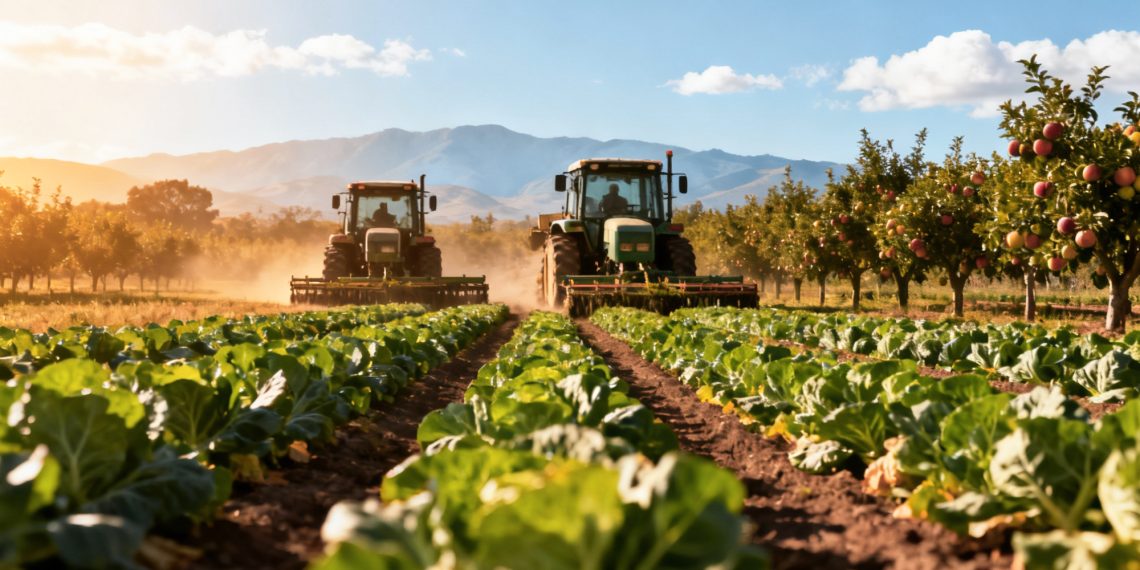
The G20 resolutions for Africans might look like the UNSC resolutions when it comes to the Southerners, equality, solidarity and sustainability are empty slogans. Africa wants, funding agricultural development and hydraulic projects for a modern irrigation system could minimize further drought. Subsidizing a new technique for water desalination could lead to the creation of small, portable units distributable to disaster sites or remote locations. A sustainable water supply could improve sanitation and hygiene and slow malnutrition. Such an effort could boost the morale of millions of Africans farmers and local NGOs leaders on the fields.
New Africa needs accountable governments with good governance and public policies to prevent natural disaster catastrophes. Africa has become a hub of Super and Regional powers by all means for natural resources and rare earth minerals, but African leaders have a responsibility to reach out with those Super and Regional powers for the best of their people — and make Africa no longer to those powers a disputed battle for its wealth. While the Global North, his lack of assistance allows millions of young Africans to die tragically in the harsh Sahara and the Mediterranean, looking for a better life, the Northerners must wonder why the youths of that continent resort to piracy, terrorism, and political violence instead of political stability, food security, economic growth and development.