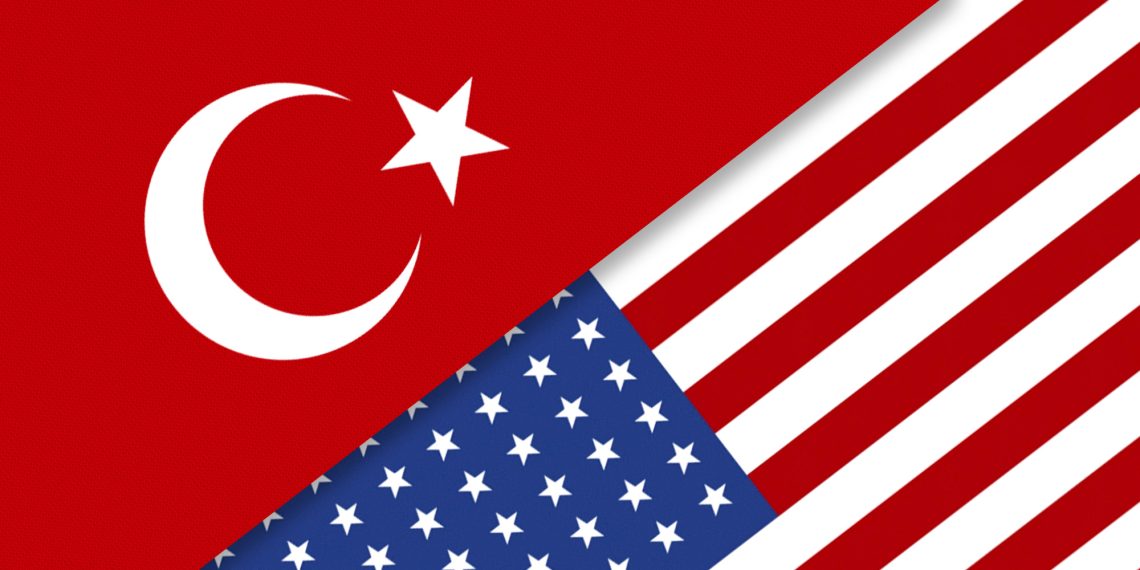
It is well known that the US has been making intensive efforts for regime and power changes on a global scale in line with its own interests. In fact, the same process was also carried out by the Soviet Union during the Cold War. In recent years, however, the US and occasionally the UK have come to the fore in this regard.
It has not yet been forgotten that under the guise of “democracy”, the US has paved the way for developments reminiscent of the “Colour Revolutions” in the Black Sea littoral countries of Ukraine, Georgia and even Armenia in recent years. Under the pretext of “democracy and human rights”, the US supports the opposition in the elections in countries with which it does not agree or more precisely, in countries that do not comply with the interests of the US as a result of these interventions, permanent internal conflicts and turmoil may even arise.
In the past, when electoral intervention was not enough, it was seen that it actually intervened militarily. The first examples that come to mind in the aftermath of the Cold War are what happened in Panama, followed by Afghanistan, Iraq, Libya and Syria with the “Arab Spring”. The period when it targeted the Turkish Armed Forces with fabricated trials such as Ergenekon, Sledgehammer, etc. has not yet been forgotten in Turkey.
The US, which frequently repeated its interventions in the governments of Latin American countries before the Cold War, has recently tried it in the Middle Eastern countries of Iran, Iraq and Egypt. It can be seen that it is even manoeuvring in Saudi Arabia in order to bring forward the future king candidate.
The current Joe Biden administration in the US had also clearly given the message that “instead of armed action, support would be given to the opponents of those who oppose the enemies of the US”. The relations between the two countries were put on the table both because of these strategies and because of the statement in the 2023 Turkey Report of the US Congressional Research Service that “even if there is a change of power in Turkey, the relations between the two countries are not expected to improve much beyond rhetoric”.
The Beginning of Turkey-US Diplomatic Relations
In November 1800, when the first American warship “George Washington” visited Istanbul under the command of Colonel William Bainbridge, an agreement was signed between the two countries. The agreement envisaged the construction of warships in America and the supply of technical materials to the Ottoman Empire. In 1830, a trade agreement was signed between the USA and the Ottoman Empire.
The number of consulates of the USA, which opened its first consulate in the Ottoman Empire in Izmir in 1831, increased rapidly and reached to 45 in 1911. On April 11, 1867, the Ottoman Empire opened an embassy in Washington for the first time and Bulak Bey was appointed to this post.
Meanwhile, with the arrival of Protestant missionaries Pliny Fisk and Levi Parsons in Izmir in 1820, the number of American missionaries in the Ottoman Empire increased rapidly. In the same year, one of the first American missionaries, the Prosbiterians, landed in Beirut and from 1830 onwards, American missionary movements began to gain strength and intensity in the Ottoman geography.
In the period 1831-1850, there were 7 Protestant churches established by 268 American missionaries who accelerated their activities in Turkish lands, especially in areas where Armenians were concentrated. By the beginning of World War I, the number of churches established by American missionaries had reached 163 and the number of missionaries had reached 15,348.
In fact, apart from these Protestant missionaries, there were other American missionary activities such as “Messianic” (Millenarian) or Mormon missionary activities for the Jews. At the beginning of World War I, 151 American missionaries and 1200 local workers were serving in nine hospitals, 8 colleges, 24 secondary schools, 369 primary schools and 137 churches.
First Conflict with the USA
The book on the so-called Armenian Genocide by Henry Morgenthau, Ambassador to Istanbul during World War I, according to the fabricated stories of his Armenian servant, attracted attention in the USA. Heath W. Lowry, in his book “The Story of Ambassador Morgenthau”, claims that Morgenthau’s aim with this book was to persuade the United States to support the Entente States in World War I. At that time, when the US sent a warship to Ottoman waters before the Ottoman Empire entered the war, Ahmet Rüstem Bey, the US Ambassador to Washington, made an anti-US statement to the American press and was asked to apologise to the US or leave the country. Upon this, he resigned and Abdülhak Hüseyin Bey was appointed in his place.
Although the United States called on its citizens and missionaries to “leave Ottoman territory” at the beginning of the war, the missionaries continued. The number of these missionaries, who usually helped war-torn Armenians, halved in 1916 and by 1917 only 24 missionaries and their family members remained. When the USA declared war against Germany in February 1917, the Ottoman Empire broke off diplomatic relations with the USA on the grounds that “the USA was at war with its ally, the German Empire”.
US President T. Woodrow Wilson, who also supported Britain and France in the Paris Conference and Sevres negotiations after World War I, had encouraged some Kurdish tribal chieftains in the east of the country to establish a Kurdish state due to his ideas on granting autonomy to minorities living in the Ottoman Empire. Moreover, even the “American Mandate Group”, which was initially embraced by some Turkish intellectuals, was established. These activities of the USA were against the staff of the War of Independence.
Turkish-American Relations in the Republican Era
On August 6, 1923, a mutual “General Agreement” was not accepted by the US Senate. However, a new treaty of the same scope was signed on February 17, 1927.
After World War II, US President Truman announced that the Soviet threat would be balanced by providing aid to Turkey and Greece. Within the scope of the “Marshall Aid” project, which envisaged economic aid to European countries, a protocol was signed between Turkey and the USA in 1948.
In the face of the increasing Soviet threat, Turkey sent troops to Korea to ensure its security under the US-led NATO umbrella, and then became a member of the NATO alliance in 1952 with Greece with the support of the US.
Relations with the USA started to deteriorate in the last periods of the DP. In 1959, when Turkey was suffering economically, Prime Minister Adnan Menderes went to Washington to apply for a loan but his request was rejected. Later on in July 1960, it was announced that Menderes would visit Moscow but this visit could not take place due to the coup d’état of May 27, 1960. The first statements of the May 27, coup plotters reiterated “Turkey’s commitment to NATO and CENTO”.
“The Johnson Letter: The True Face of the United States and the First Compromises
Although there were problems in the 1960s with events such as the U-2 drone crisis and the Cuban Crisis, the most significant breaking point in Turkey-US relations was the “Johnson Letter” sent by the US President in 1964 on Cyprus. In the letter, which was in the nature of a memorandum, it was stated that NATO members would not be liable for a possible Soviet intervention in Turkey in the event of a military intervention by Turkey in Cyprus without the consent and agreement of NATO.
As seen in the Turkish-Greek and Cyprus issues, the USA, which did not hesitate to support Turkey in the case of overlapping interests, did not hesitate for a moment to act against Turkey when it came to countries and nations closer to it, Or, for the sake of votes in the domestic public opinion, it saw no harm in meeting the demands of the Armenian and Greek lobbies despite Turkey. Turkey was seeing the true face of the US, which it had once “admired” in order to come under the US-led Western defence.
Turkey’s siding with the Arab countries in the 1973 Arab-Israeli War in order to attract the support of the Arab League in the Cyprus problem was another breaking point in relations with the USA. The 1974 Cyprus Peace Operation and the imposition of an arms embargo on Turkey in December 1974 due to Turkey’s insistence on poppy cultivation despite US pressure caused the US to lose prestige in Turkish public opinion.
After the September 12, 1980 coup d’état, President Evren, during his visits to Arab countries in the first half of the 1980s, was met with reaction in the United States when he referred to Israel as “the greatest source of instability in the region”. In 1981, 61 US senators sent a letter to the Turkish Embassy in Washington warning that Turkey’s Israeli policy would damage Turkish-US relations. As relations were strained, a US sports delegation, wishing to visit Turkey, was denied a visa.
The Post-Cold War Zigzags in Turkish-American Relations which improved with Özal
Turgut Özal, who came to power in 1983, was interested in mitigating the damage caused by the Armenian, Greek and Jewish lobbies in the US by establishing closer relations with the US. Özal, who was in favour of improving relations with Israel, even told Arab leaders that “…we have to think about our interests. We know the role of the Israel Lobby in the USA!”. In time, Turkey under Özal did not follow a policy of balance between Israel and the Palestinians.
At the end of the Cold War, during the intervention of the USA and its allies in Iraq in early 1991, Turkey tried to provide all possible assistance in the relations between Turkey and the USA which were managed almost single-handedly by President Özal, and during the subsequent “Hammer Force” and “Operation Provide Comfort”.
While Turkey supported the US, the US brought together the Kurdish groups in the region (KDP, PUK) and started the process of statehood. The PKK terrorist organisation also gained important positions. In 1992, during Bill Clinton’s presidency, relations with the US were not very bright due to arms purchases, SMS loans and “human rights violations” during the fight against terrorism in Turkey.
In 1994, the USA delayed the delivery of ships and some aircrafts that had been taken out of service, even after their training had been completed. In 1996, the US Senate cancelled the Turkish aid programme on the pretext of the “Armenian Question”.
Under the REFAHYOL government and Prime Minister Necmettin Erbakan, Turkey-US relations became more painful. However, during the crises in Bosnia-Herzegovina and Kosovo in the Balkans, the two countries displayed a very harmonious cooperation. In 1999, the US (CIA) handed over PKK ringleader Öcalan.
After the 9/11, 2001 global terrorism in the USA, Turkey gave full support to the US demands to fight against terrorism in international institutions. It joined the US decision to send troops to Afghanistan towards the end of December 2001. It supported the Active Endeavour operation in the Eastern Mediterranean, which was established to prevent terrorism by participating with a warship.
The 2003 US Intervention in Iraq and Ruptures in Turkish-American Relations
After the Cold War, when it was frequently said in EU countries that ‘NATO had lost its importance’, General Tuncer Kılınç, Secretary General of the National Security Council (MGK), gave one of the first known reactions against global and powerful countries with his words “Cooperation with Iran and Russia instead of the EU!” at the symposium on “How to Create a Peace Belt Around Turkey?” organised by the War Academies in March 2003.
At the same time, negotiations were also held with the USA about opening a second front to Iraq from Turkey and Turkey’s establishment of a security belt with the Turkish Armed Forces in the north of Iraq. When the Turkish Grand National Assembly did not approve this on March 1, 2003, Turkey-US relations began to deteriorate again after a long time.
First came US President G.W. Bush’s insulting Turkey as “horse-trading”. Following this, he described the invasion of Iraq with the blunder of “a new crusade”.
On July 4, 2003, he put a sack over the heads of Turkish Special Forces personnel in Sulaymaniyah in northern Iraq and interrogated them. It turned a blind eye to anti-Turkish developments in Kirkuk. It prepared the ground for the PKK terrorist organisation to flourish again. It caused the New Silk Road, the Turkey-Iraq trade route, to fail again.
Graham E. Fuller, a former chief of the CIA’s Turkey desk, summarised the deteriorating relations between Turkey and the US after the Cold War in a book he wrote in 2007:
– Turkish concerns about the divergence between US aims and policies towards the Middle East and Turkey’s own interests.
– Turkish concerns about the loss of US sovereignty in the Middle East through political, economic, military and strategic actions outside Turkish control.
– Turkish concerns that the US does not care about Turkish national honour and dignity.
– Strategic ties with the US limit Turkey’s other options in the region.
– Concern that the confusion caused by alliances could drag Turkey into unwanted regional conflicts.
– In particular, Turkish concerns about the extent to which US security commitments can be relied upon when US interests are challenged.
– The US-led global war on terrorism is increasing tensions in the Muslim world and polarising relations between the Islamic world and the West.
– The war in Iraq, which harms Turkish interests, encourages Kurdish independence, accelerates the disintegration of the country and creates radical Islamist terrorism.
– The US is not making serious efforts to solve the PKK problem in Iraq.
– The US is restricting Turkey’s freedom of action in Iraq.
– The US policy on Iran hinders Turkey’s energy policy with Iran and serves to intensify Iranian nationalism and the spirit of resistance against the West.
– Attempts to find a military solution to the Iranian nuclear issue will not be effective and will promote regional instability to the detriment of Turkey’s interests.
– It does not treat Turkey with respect and does not seriously consult Turkey on strategic and military actions affecting Turkey’s security and interests.
– With its unconditional support for Israel, it deepens the Palestinian problem, polarises Muslim-US tensions and harms Turkey’s interests.
– US policy preferences create negative reactions all over the world, making it difficult for Turkey to adopt or co-operate with these policies.
The US imposition of democratisation on the Islamic world exacerbates instability.
According to Fuller: “Whatever the future holds, one thing is certain: Turkey, the old, predictable and loyal American ally, is history!”
Nerve Endings Affecting Turkish Public Opinion in Turkey-US Relations
The most prominent nerve endings of the G.W. Bush era, which gradually crossed the boundaries of the US alliance and raised relations to the level of creating tensions, are as follows: (a) The US’ reluctance to provide Turkey with the modern weapon systems it wants, while providing significant arms, ammunition, training and political support to the PYD-YPG, which is a threat to Turkey.
(b) The US’ protection of FETO members who attempted the July 15, 2016 coup attempt to take over Turkey and change the democratic legal order. (c) The US’ interest policies in Iraq since 1991 which have harmed Turkey.
(d) The great damage to Turkey’s security and economy by settling in Iraq and Syria. (d) The economic and security problems caused to Turkey by the US sanctions on Iran and by forcing Turkey to comply with these sanctions. (e)) The legal operation against Halk Bank executives and thus Turkey through Reza Zarrap, the Iranian money launderer.
(f) The damage caused to Turkey by the US economic sanctions in the case of Pastor Brunson. (g) Turkey’s different policies in the opposite direction on Egypt and Palestine. Indirectly contributing to the instability of the region by supporting Israel’s unrestrained actions in the Palestinian issue.
(h) Threatening attitude and CAATSA sanctions upon the purchase of the S-400 anti-missile system from Russia when the advanced air/anti-missile weapon system needed by Turkey was not provided by NATO countries.
In this context, it froze the delivery of F-35 aircraft to Turkey, its production partner. (i) From time to time, its requests to go to the Black Sea in violation of the Montreux Convention. (i) Its recognition of the so-called “Armenian Genocide” in April ,2021, which was previously threatening to Turkey. (j) Its diplomatic support to Greece on the Eastern Mediterranean maritime jurisdictions. Its decision to sell arms to the Southern Cyprus Administration after a long time. (k) Its reaction to Turkey’s “neutral” stance in the Russia-Ukraine war.
Steps to Improve Turkey-US Relations
It is in the interest of both sides that the two countries, between which the faults between them have been broken to a great extent, mend their relations.
Turkey is no longer the country of the Cold War era or even 15-20 years ago. Moreover, as seen in the second Nagorno-Karabakh war and the Russian-Ukrainian war, Turkey is not a country to be thrown aside for the small calculations of the USA but a country that should be embraced with all its might. The US administration, Congress and think tanks, just like the European countries, show an incredible lack of foresight. They fail to see that Turkey, the strongest country in the region that can stop Russia in the Black Sea, which is understood to be a threat to Europe, can also be the most important ally against China which has recently settled in the Middle East.
However, due to the increasingly sharpening polarisation with Russia and China, the United States does not need new “enemies” who will leave its side and get closer to the opposite pole, on the contrary, it needs to embrace its existing allies and win new friends.
In this context, some of the activities that the US could initiate in order to improve relations between the two countries are as follows:
F-16 aircraft and modernisation parts that Turkey wants instead of F-35 aircraft.
Withdrawing its support to the PKK/PYD in Syria and withdrawing from Syria. Considering co-operation with Turkey in the future of Syria.
To give up the activities in the north of Iraq that disturb Turkey.
In particular, in order to contribute to the development of Armenia and to free this country from the influence of Russia and Iran, Turkey persuaded Armenia to fulfil the conditions set out in the Nagorno-Karabakh Ceasefire of November 10, 2020 for the improvement of relations between Azerbaijan and Armenia.
Handing over the FETÖ ringleader and leading cadres who attempted a coup in Turkey to Turkey or preventing the terrorist group’s anti-Turkey activities.
Lifting sanctions against Turkey.
Neutrality in the Turkish-Greek conflict.
In addition to a two-state solution to the Israeli-Palestinian conflict, Israel should be restrained in various areas.
At least a start can be made with the passage by Congress of a $20 billion package for Turkey’s F-16 fighter aircraft which is an important point of contention between the two countries.